DID Press: Five years after the chaotic withdrawal of U.S. forces from Kabul, Afghanistan has become, in the view of international public opinion, a symbol of the failure of a major power, according to an analysis by Simon Tisdall, senior international affairs commentator at The Guardian. He argues that the U.S.-led invasion and NATO-backed occupation of Afghanistan, launched after the September 11 attacks, has come to represent the costs of rushed intervention and failed Western state-building.
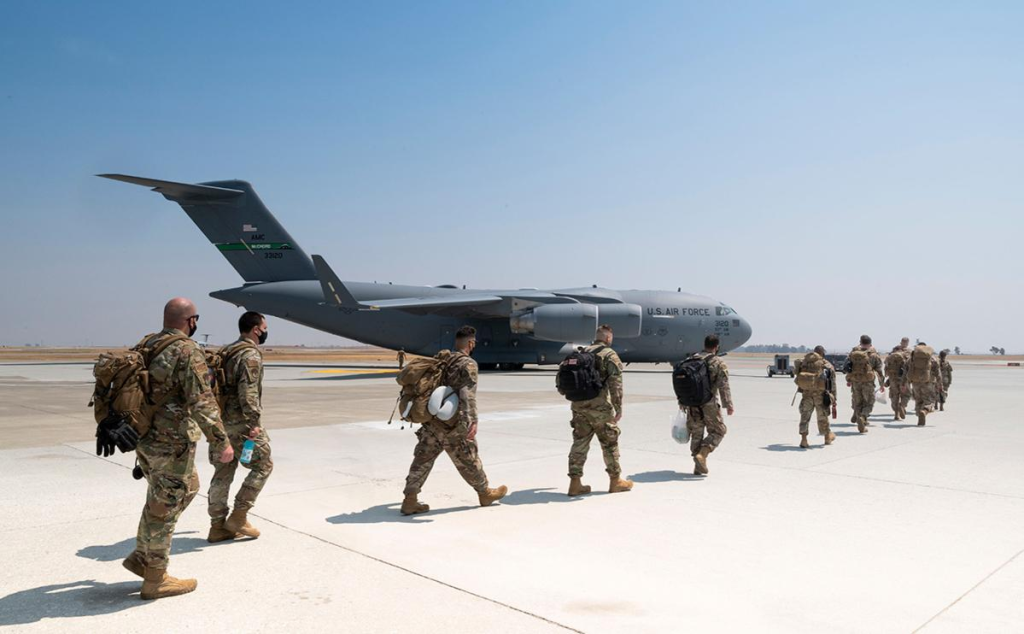
Tisdall writes that the war cost the lives of more than 2,400 U.S. service members, 450 British troops and tens of thousands of Afghan civilians, while failing to produce a durable political outcome. He describes Afghanistan as a stark example of the enormous human and financial costs of prolonged wars with limited results—an experience that should serve as a warning to political leaders and military commanders but continues to be overlooked.
Although al-Qaeda was dispersed and the Taliban returned to power in Kabul in 2021, Tisdall argues that Afghanistan became a symbol of the “endless war” paradigm, a term first associated with U.S. involvement in Vietnam. He notes that rather than discouraging policymakers and generals from entering poorly defined conflicts, the same pattern was repeated in Iraq, after the United States and Britain invaded in 2003 and withdrew years later following enormous costs and limited strategic gains.
According to Tisdall, a similar pattern is now emerging in Iran. A conflict that U.S. President Donald Trump had described as a “little tour” has entered its sixth month and is rapidly escalating, raising concerns that it could develop into another prolonged war.
Citing Carter Malkasian, a professor at the British National Defence College, Tisdall argues that the central assumption behind maintaining U.S. forces in Afghanistan—preventing the country from becoming a sanctuary for international terrorism—was fundamentally flawed. Malkasian has noted that, over the past five years, no terrorist attack against the United States has been carried out by a group based in Afghanistan. Tisdall says Washington spent roughly $1 trillion and deployed more than 775,000 troops to Afghanistan in pursuit of a threat he argues was significantly overstated.
Tisdall warns that the greatest danger today is not necessarily the return of terrorist sanctuaries, but the collective forgetting of the human, financial and geopolitical costs of endless wars.
“Momentary fears should not erase the historical memory of these costs,” Tisdall writes.
The analysis also revisits the 2003 invasion of Iraq, which was justified in part by claims that Saddam Hussein possessed weapons of mass destruction and was pursuing nuclear weapons. Those claims were later discredited. Former U.S. Vice President Dick Cheney also accused Iraq of supporting al-Qaeda, an allegation that was never substantiated.
According to Brown University’s Costs of War project, about 940,000 people were killed in direct violence in the post-September 11 conflicts in Iraq, Afghanistan, Syria, Yemen and Pakistan between 2001 and 2023, while as many as 3.8 million people died indirectly from the consequences of those wars.
Tisdall argues that wars are often driven by motives beyond their publicly stated justifications, ranging from commercial interests to geopolitical dominance. He cites the historical Trojan War as an example, arguing that its causes extended beyond the traditional story of Helen of Troy and involved broader struggles over trade and power.
He further contends that U.S. wars have repeatedly been presented under slogans such as defending democracy or containing communism, while also serving broader objectives of maintaining global influence.
In his conclusion, Tisdall identifies insecurity and fear as recurring drivers of U.S. decisions to go to war. He argues that Trump and Israeli Prime Minister Benjamin Netanyahu have exaggerated the Iranian threat in ways that echo the justification for the 2003 Iraq invasion, while maintaining that Iran does not possess nuclear weapons and that there is no conclusive evidence of a recent effort to acquire them.
Five years after the U.S. withdrawal from Afghanistan, Tisdall concludes that the central lesson remains unchanged: endless wars do not necessarily deliver security or stability; instead, they leave behind destruction, enormous costs and a painful legacy for generations.