Dissecting Life in Afghanistan Five Years Under Taliban Rule
DID Press: As the Taliban enters its fifth year in power, official news and reports are often filled with polished diplomatic language, dry economic statistics and political statements. But understanding the tangible reality of life in Afghanistan requires looking beyond this thick layer of claims and rhetoric and into the streets and neighborhoods of Kabul, Kandahar and Herat, as well as remote villages, where people’s daily lives are caught between two painful and debilitating crises: “pervasive and paralyzing poverty” and the “systematic and complete exclusion of women from society.”
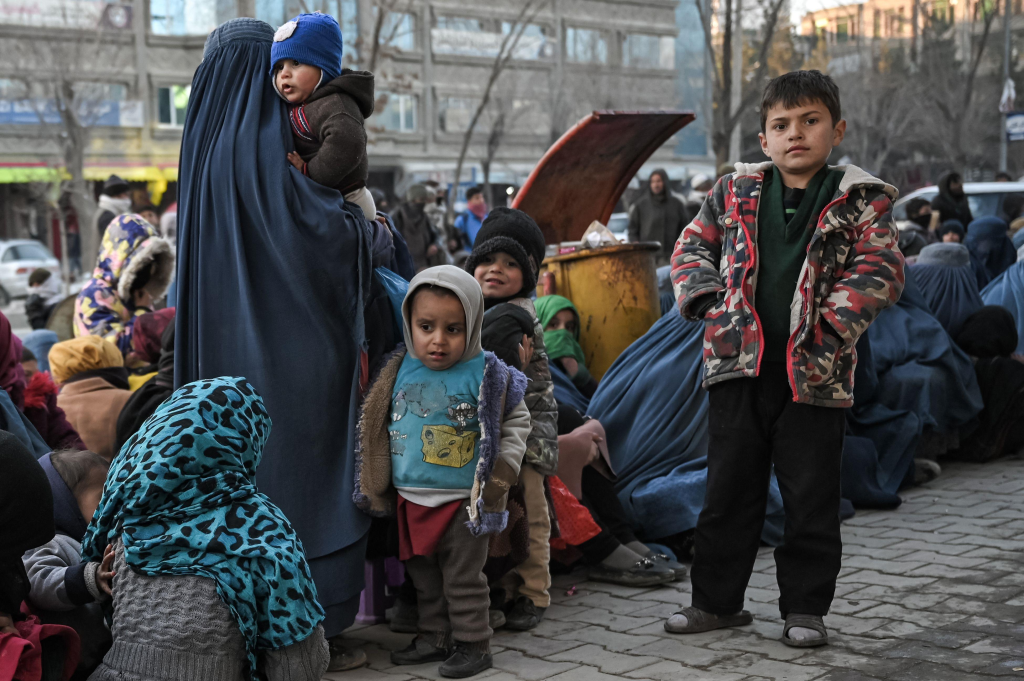
If an ordinary citizen in Kabul or elsewhere in Afghanistan is asked about the economic situation today, the term “survival economy” would likely be explained in the simplest and most painful way possible: an exhausting, around-the-clock struggle simply to keep food on the table and survive another day.
Over the past five years, with a sharp and unprecedented decline in domestic and foreign investment, the flight of investors, the closure of factories and small businesses one after another, as well as a severe liquidity crisis, the main wheels of the country’s economy have effectively ground to a halt. Poverty is no longer a marginal phenomenon or something confined to low-income and vulnerable groups. It has also taken a heavy toll on the middle class, teachers, former government employees, doctors and shopkeepers. People’s growing dependence on international aid and remittances from migrants demonstrates how close Afghan society has come to a complete livelihood crisis.
Women in Afghanistan are paying the heaviest and most costly price for this situation. When we speak of the exclusion of women, we are not merely discussing an abstract human-rights issue or a topic debated in international forums; we are talking about tangible economic, social and psychological consequences that directly affect the survival of families.
With schools and universities closed to girls and women barred from working in most government and private sectors, as well as aid organizations, half of the country’s educated, productive and potentially active workforce has effectively been confined to their homes. For women who were the sole breadwinners or heads of households in many families, being forced out of work means the loss of half a household’s income amid the current crushing economic pressures. The process has not only cast the future of a new generation of girls into uncertainty and despair, but has also accelerated the cycle of poverty and frustration inside households.
The major and fundamental contradiction of the current rule emerges precisely at this point. The Taliban have consistently presented nationwide security and the end of internal warfare as their principal achievement and the main basis for their legitimacy. But the question must be asked: What kind of security? When absolute uncertainty about the future and crushing economic pressure are accompanied by rising crime, urban armed robberies, banditry and social insecurity, while more extremist groups such as ISIS remain active in parts of the country, it becomes difficult to speak of “real, structural and sustainable security.” Security in which poverty relentlessly threatens people’s livelihoods, household tables grow smaller by the day, and people fear the appearance and conduct of members of the ruling authorities increasingly resembles enforced silence and intimidation rather than genuine social stability.
The cumulative result of this widespread deadlock is a deep and entrenched sense of despair across all segments of society. When young people see neither prospects for employment, income and advancement nor a future in which girls can continue their education and participate in society, a new, broad and unprecedented wave of forced migration is a natural consequence. The flight of human and financial capital toward neighboring countries, including Iran, Pakistan and Central Asian states, along with the departure of educated professionals and the depletion of society’s pool of skilled and experienced people, is a dangerous process that threatens Afghanistan’s human capital for decades to come.
Taken together, an examination of Afghan society in the fifth year of Taliban rule shows that governing a country and leading a nation cannot be sustained through security slogans, intimidation or the closure of social and civic space alone. A society whose access to food, employment and freedom is simultaneously restricted or denied will sooner or later suffer internal erosion and collapse.
Continuing along this path risks turning Afghanistan into an increasingly isolated and impoverished society, dependent on a trickle of foreign aid and deprived of hope for the future. The damage caused by such a situation would not only be borne by the Afghan people, but could also have serious and potentially lasting consequences for the security and stability of the wider region.
By Sayed Baqer Waezi – DID News Agency