DID Press: The “Golden Triangle” in Southeast Asia, once one of the world’s main centers of opium production, is witnessing a renewed expansion of poppy cultivation, with Myanmar once again emerging as the world’s leading known source of illicit opium. The development indicates that drug-production networks in the region are expanding again after years of suppression.
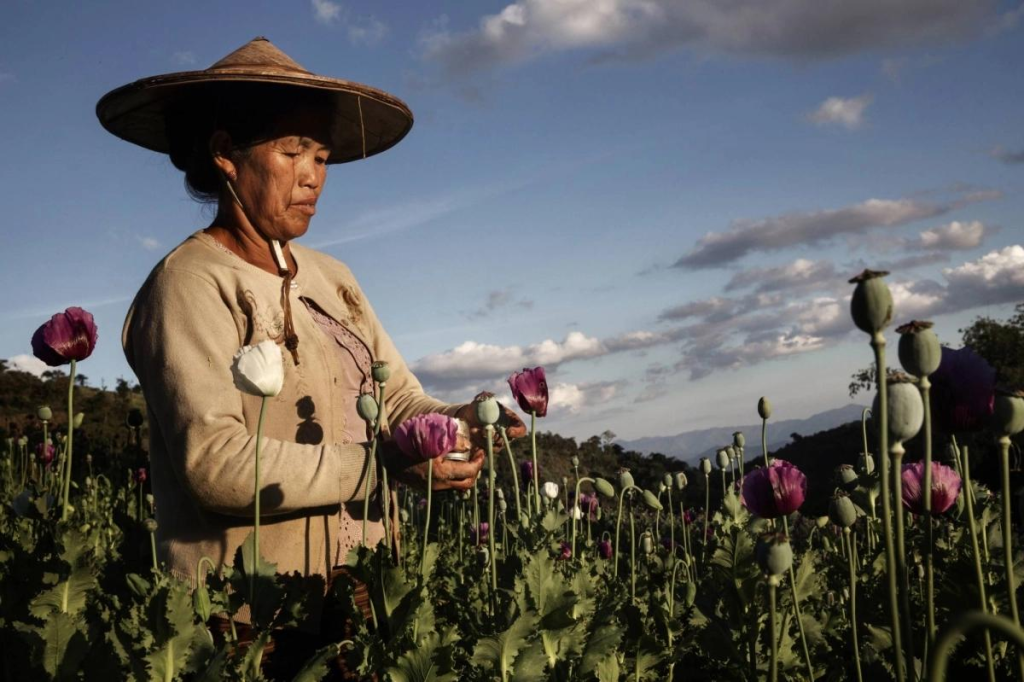
The Golden Triangle, a mountainous and forested area where the borders of Myanmar, Laos and Thailand meet, was considered the heart of the world’s illicit opium industry for decades. Drug traffickers referred to the resin extracted from poppies as “black gold,” a substance that can be processed into heroin.
In the 1990s, around two-thirds of the world’s poppy cultivation for illicit opium production took place in the region. As governments intensified efforts to combat drug cultivation and trafficking, alongside political and economic changes in the region, the situation gradually changed. By 2006, the Golden Triangle’s share of global illicit opium production had fallen to about 5%.
The trend has now reversed in Myanmar. According to the United Nations Office on Drugs and Crime (UNODC), Myanmar has again become the world’s leading known source of illicit opium.
A significant share of Myanmar’s poppy fields is located in Shan State, in the east of the country and near the borders of the Golden Triangle. Insecurity, weak central governance and difficult economic conditions in parts of the country have created favorable conditions for the renewed expansion of poppy cultivation.
Myanmar’s return to the top of opium production is not merely the revival of an old underground industry; it is also a sign of another shift in the global map of drug production. The region that was once at the heart of the world’s “black gold” trade is once again at the center of the illicit opium economy.