DID Press: A new report by the U.S. Department of War’s Office of Inspector General says the six-month war with Iran significantly depleted key U.S. munitions stocks and exposed major bottlenecks in the country’s defense-industrial base. The findings challenge President Donald Trump’s repeated claims that the United States has virtually unlimited ammunition.
According to the report, Operation Epic Fury, which began on February 28 and was assessed through June 30, cost an estimated $33.4 billion, including $22.3 billion in expended munitions. The inspector general said the scale of weapons consumption resulted in strategic inventory shortfalls and exposed bottlenecks in the industrial base responsible for replenishing U.S. munitions.
The report said the Pentagon is working to streamline production and storage processes for critical materials and components in an effort to replenish depleted stocks and reduce procurement delays. However, expanding production capacity will require considerable time.
The findings could raise concerns among U.S. allies, particularly Ukraine and Taiwan, which depend heavily on Washington for weapons supplies and for strengthening their deterrence capabilities. Analysts have previously warned that replenishing some U.S. munitions could take years because of production constraints.
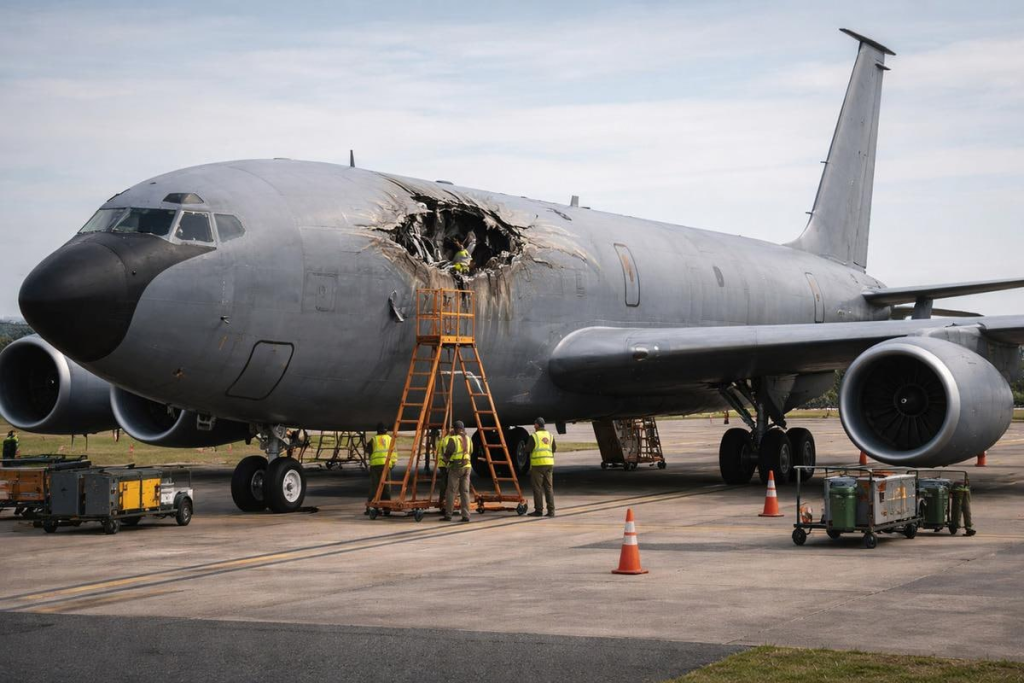
The report also documents significant losses and damage to U.S. military equipment. It lists four F-15 fighter jets destroyed, one F-35 damaged, seven KC-135 aerial refueling aircraft damaged and up to 30 MQ-9 Reaper drones destroyed.
The assessment further says Iranian attacks damaged or destroyed hundreds of buildings and structures at U.S. military bases across the Middle East, including in Kuwait, Bahrain, Qatar, the United Arab Emirates, Saudi Arabia, Iraq, Oman and Jordan. Those infrastructure-repair costs were not included in the $33.4 billion estimate.
The report underscores the strain placed on U.S. air-defense stocks. Separate reporting has indicated that the United States used nearly 80% of its THAAD interceptor inventory during the conflict.
The findings suggest that, despite the United States having the world’s largest defense budget, sustaining a prolonged high-intensity conflict can place substantial pressure on its strategic weapons inventories and production infrastructure. The report therefore raises broader questions about Washington’s ability to sustain simultaneous military commitments and supply allies across multiple theaters.