DID Press: Azerbaijan has amended regulations governing uniforms in state schools, banning clothing elements deemed incompatible with the “principle of secularism in public education” and the uniformity of school attire. Although the revised rules do not explicitly mention the hijab, some sources have interpreted the provision as providing a basis for restricting Islamic headscarves in schools.
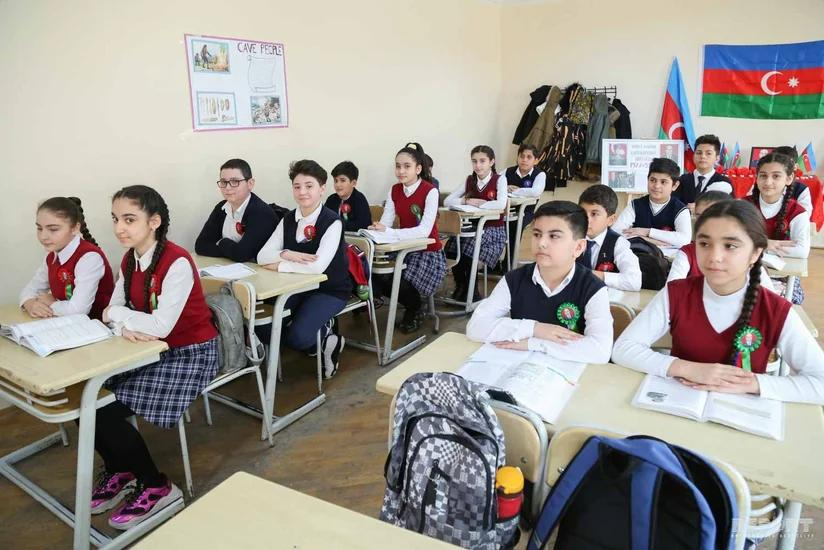
Under the new regulations, students at state schools must wear clothing that conforms to the designated school-uniform model. Elements considered inconsistent with secular principles in public education or with uniformity of school attire are prohibited. Parents are also responsible for ensuring that their children comply with the dress requirements.
The measure comes amid a broader role for the Azerbaijani government in regulating religious affairs. According to the official State Committee for Work with Religious Associations, the activities of 179 religious clerics in Azerbaijan were terminated in 2023, while 137 people were appointed to serve in mosques and shrines after completing an interview process.
Official regulations also show that the appointment and assessment of mosque clerics take place within procedures established by the State Committee. The body oversees the selection of imams and other religious personnel and says individuals may serve as clerics in mosques only after completing the required interview and receiving official approval.
The Azerbaijani government has justified such policies as part of regulating relations between the state and religion, combating extremism and preventing foreign influence in religious affairs. Critics, however, view the approach as an expansion of state control over religious practice.
Against this backdrop, the hijab debate in schools extends beyond student clothing. Alongside policies governing the appointment of clerics, mosque activities and religious education, it has become part of a broader debate over the limits of state intervention in the public expression of religion in secular Azerbaijan.