Five Years of Isolation and Reversal: Assessing Taliban Rule on International Day of the Girl
DID Press: As the world marks the International Day of the Girl, attention has once again turned to one of the region’s most pressing human rights and education crises. Five years have passed since the Taliban returned to power in Afghanistan. For millions of Afghan girls and women, this period has been marked by isolation, mounting restrictions and an unprecedented reversal of progress in the country’s recent history.
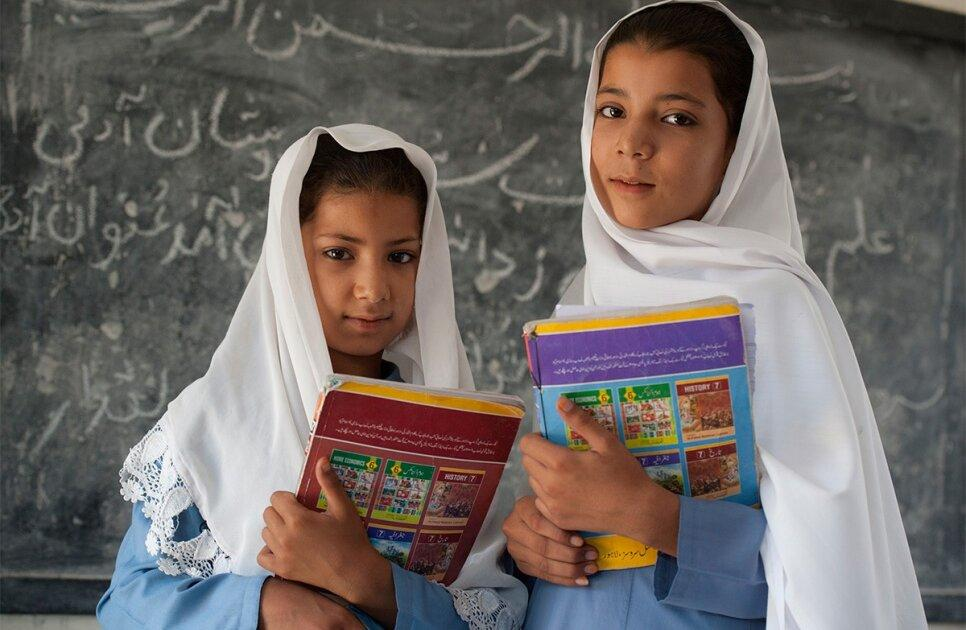
According to the latest figures from the United Nations Educational, Scientific and Cultural Organization (UNESCO), restrictions on girls’ education beyond the primary level have left an estimated 2.4 million Afghan girls excluded from secondary education. The situation is far more than a political impasse; it is a profound humanitarian, structural and generational crisis that threatens Afghanistan’s future, stability and resilience.
In a statement marking the International Day of the Girl, the United Nations Development Programme (UNDP) reiterated that Afghanistan’s future depends directly on the opportunities available to girls today. The agency emphasized that every girl deserves the opportunity to realize her full potential, adding that investment in girls’ education, skills development and well-being is not merely symbolic. Rather, it is fundamental to building stronger, more resilient communities and a self-reliant country.
One of the most painful and contradictory aspects of the past five years of deprivation has been the repeated attempts to justify restrictive policies in the name of ethnic traditions, religion and local culture. Recent remarks by some Taliban officials suggesting that mentioning women by name in meetings and public gatherings is contrary to Afghan culture have exposed a rigid interpretation of tradition that, according to the author, bears little resemblance to Afghanistan’s diverse society, beliefs and history.
In response to such views, former Afghan President Hamid Karzai has emphasized that Afghans have long taken pride in recognizing and celebrating the position, achievements and courage of their women and girls, both at home and internationally.
Afghanistan’s historical and cultural values have never been inherently tied to hostility toward knowledge, the promotion of ignorance or the exclusion of girls through coercive policies. Conflating authentic local traditions with ideologically driven restrictions is, the author argues, an unsuccessful attempt to legitimize policies that have confined and discouraged half of society’s active, capable and talented population.
This contrast highlights a central point: despite the immense pressures of the past five years, Afghan society has not broadly accepted the exclusion of women as an established cultural norm.
The economic, political and developmental realities of the modern world are clear: no country can achieve progress, lasting security or self-sufficiency by marginalizing half of its population. Five years of educational and social restrictions on Afghan girls have not only undermined future employment, livelihoods and leadership opportunities, but have also become a major obstacle to Afghanistan’s international recognition, regional support and development investment.
The exclusion of women from the professions of teaching, medicine, engineering and management threatens to create a long-term crisis for Afghanistan’s health system, education sector and economy. The consequences could deepen over the coming years and prove difficult to reverse.
The key to reopening Afghanistan’s doors to diplomatic engagement and helping its people escape extreme poverty lies not in political statements or public-relations campaigns, but in the immediate reopening of schools and universities to girls.
Five years of denying Afghan girls an education represent a profound historical test for the conscience of the international community, international institutions and neighboring countries. The figure of 2.4 million girls excluded from secondary education is not merely a statistic in a report. It represents 2.4 million talents, dreams and opportunities that could contribute to rebuilding a country devastated by decades of conflict.
Waiting longer will make the damage increasingly difficult to repair. Until Afghan girls can return to classrooms and develop their abilities, claims of stability, security and sustainable development in Afghanistan and the wider region will remain unfulfilled.
By Sayed Baqer Waezi — DID News Agency