How the Taliban Is Seeking to Control Afghanistan’s Narrative
DID Press: Taliban’s return to power in Afghanistan has involved more than a change in the country’s political structure and the establishment of a new governing system. Alongside taking control of state institutions and imposing social restrictions, the group has focused on controlling the flow of information and shaping the narrative about Afghanistan communicated both domestically and internationally.
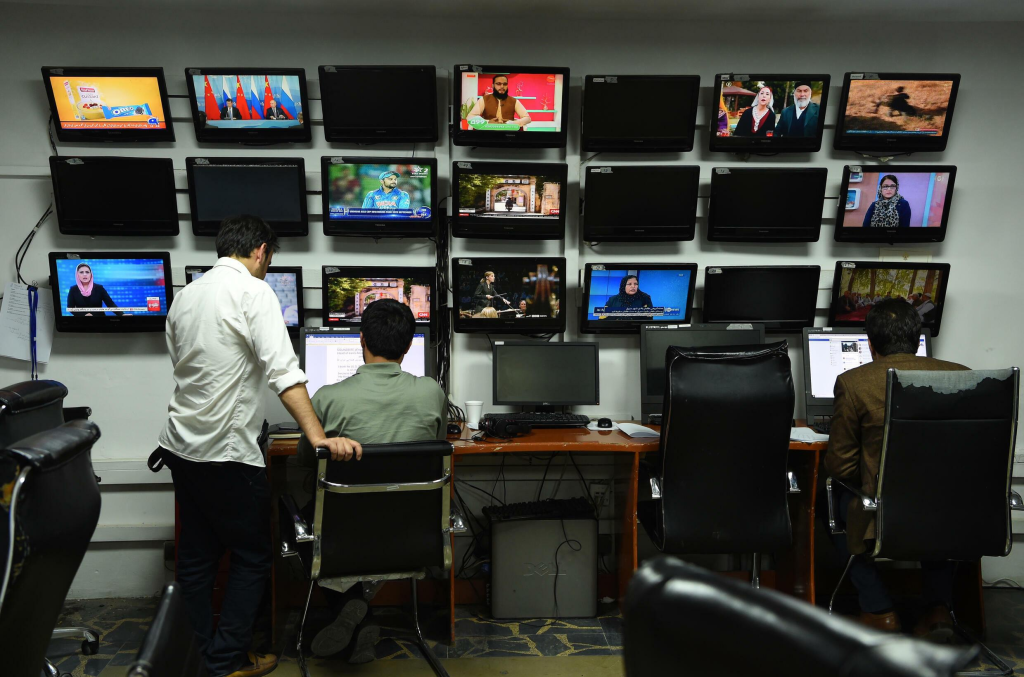
A recent report by Reporters Without Borders (RSF) on the Taliban intelligence agency’s Branch 015 has once again brought the issue into focus. The report points to links between security surveillance, the suppression of journalists, media censorship and propaganda activities on social media.
At first glance, these measures might be seen as a continuation of the Taliban’s restrictions on the media. However, examining the report alongside previously published documents concerning funding for the group’s propaganda activities suggests that the issue extends beyond conventional censorship. In simple terms, the Taliban appears not only to want certain news stories suppressed, but also to determine what qualifies as news, who is allowed to speak about it and how audiences ultimately understand it.
According to Reporters Without Borders, Branch 015 of the Taliban intelligence service, established after the group returned to power, is responsible for monitoring media content, summoning and threatening journalists, and taking action against critical media outlets. Accounts from journalists who have reported arrests, torture and security-related pressure illustrate how professional journalism in certain areas can become a security issue.
Taliban officials, however, reject these allegations and maintain that action against individuals is taken in accordance with the law. Nevertheless, these accounts raise serious questions about the independence of the media in Afghanistan.
Media control, however, cannot be achieved simply by shutting down a television channel or preventing the publication of a report. When journalists know that publishing stories about poverty, women’s rights, security conditions or the conduct of government officials could expose them to security-related consequences, they gradually begin avoiding sensitive subjects. This is where direct censorship turns into self-censorship.
In such an environment, even media outlets that remain operational may gradually lose a significant part of their fundamental role: asking questions and reflecting the realities of society.
A more significant dimension of the issue is the intelligence apparatus’s involvement in producing and managing narratives. The recent report refers to units within Branch 015 tasked with monitoring social media, identifying unwanted content and conducting propaganda campaigns. It also describes a studio where videos of forced confessions by detainees are recorded.
These details suggest that information control is not limited to removing opposing content; it also involves producing material that reflects the government’s preferred narrative.
Documents revealing the allocation of 70.7 million afghanis for a propaganda programme shed further light on this issue. According to documents previously published by several media outlets, around 1,500 pseudonymous social media accounts are being used to promote the Taliban, undermine its opponents and circulate narratives aligned with the group.
If accurate and fully implemented, these figures point to an organised effort by the Taliban to use social media as a tool for influencing public opinion.
Social media platforms are no longer merely spaces for exchanging views; they have become major arenas of political and media competition. In such an environment, the repeated circulation of a message by large numbers of accounts can create the impression that a particular viewpoint represents the dominant opinion in society.
The use of fake identities, coordinated messaging and attempts to discredit critics can also blur the distinction between genuine public opinion and an artificially constructed online environment. As a result, audiences may face not only restricted access to information but also increasing difficulty identifying the sources and credibility of the content they encounter.
The consequences of this approach extend beyond the media environment. When independent outlets are weakened and opportunities for different viewpoints are reduced, society loses some of the tools it needs to assess the government’s performance.
Under such circumstances, issues including poverty, unemployment, restrictions on education and the situation of women may be pushed off the media agenda. The result is a growing gap between the realities of people’s lives and the image of Afghanistan presented to the outside world.
The policy also carries international implications. The Taliban needs an acceptable image of its performance to expand political and economic engagement with countries in the region and around the world. Promoting positive narratives while discrediting opponents may form part of the group’s efforts to influence international public opinion.
However, propaganda alone cannot replace political accountability, economic improvements or the removal of social restrictions. A significant gap may emerge between the image a government seeks to project and the reality experienced by its citizens.
Excessive information control could also ultimately work against the Taliban’s own interests. Media outlets that merely echo government positions risk gradually losing their audiences’ trust. The elimination of criticism and independent reporting also limits the ability to identify real problems and correct misguided policies.
A government that does not receive unwelcome information, or treats its publication as a threat, may also struggle to develop an accurate understanding of society.
Ultimately, the recent report and the documents concerning propaganda activities point to an emerging model of information control built around three main elements: restricting independent news production, imposing security surveillance on media outlets and social networks, and expanding government-backed propaganda narratives.
The scale and extent to which these mechanisms are being implemented require independent and continuous investigation. Nevertheless, the published evidence raises an important question about Afghanistan’s future: Will the media be allowed to report the realities of society, or will they merely reflect what the government wants people to hear and see?
The issue is not simply the freedom of a number of journalists or the ability of a few media outlets to operate. It concerns Afghan society’s right to know, to ask questions and to hear different accounts.
Controlling the news may silence critics for a time, but it cannot permanently change the realities of a society. The truth may be removed from media pages, but eliminating independent media cannot make reality itself disappear.
By Sayed Baqer Waezi — DID New Agency