Washington Seeks Compliance, Not Independent Allies in Muslim World
DID Press: One of the fundamental questions in the contemporary history of the Muslim world is why Muslim-majority countries, despite their large populations, natural resources, strategic locations and extensive human potential, continue to face foreign influence over many of their political, economic and security decisions.
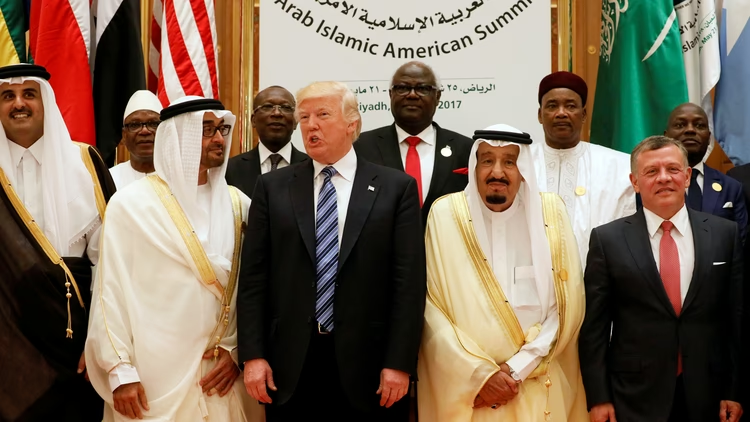
History has repeatedly shown that the United States does not want independent allies in the Muslim world. Rather, it prefers governments that operate within the framework of its interests and strategies. Under such a relationship, commitments and agreements with the leaders of Muslim countries remain valid only as long as they align with Washington’s interests. The direction of US policy towards the Muslim world is one-sided: it expects obedience from the other party without guaranteeing reciprocal respect for its independence, national sovereignty and political will.
The fates of General Zia-ul-Haq, Mohamed Morsi and Imran Khan, despite their different historical and political circumstances, offer cases worth examining. Each leader, at a different point in history, faced questions concerning independence, national authority and the limits of relations with major powers.
1. Zia-ul-Haq: From Strategic Ally to the Mystery of His Downfall
During the 1980s, General Zia-ul-Haq was one of the United States’ key allies in the war in Afghanistan against the Soviet Union. At the time, Pakistan served as the main centre for supporting the Afghan mujahideen, while US and Pakistani intelligence agencies worked closely together to train, equip and transfer assistance to them.
However, on 17 August 1988, the aircraft carrying Zia-ul-Haq crashed near Bahawalpur. The US ambassador to Pakistan, Arnold Raphel, and several senior Pakistani military officials also died in the incident.
In the political climate of the time, many viewed the crash as the result of an intelligence conspiracy, and suspicion was directed towards the CIA. In the belief and analysis of the author of this article, Zia-ul-Haq’s death was not an ordinary accident but part of a major political and strategic calculation.
According to the author, after the Soviet Union’s strategic defeat in Afghanistan, the United States was concerned about the emergence of a powerful Islamic bloc comprising Iran, Pakistan and Afghanistan, with the participation of some Arab countries. Such an alliance, the author argues, could have changed the regional balance of power and reduced the Muslim world’s dependence on Western powers.
2. CIA, MI6 and ISI: From Intelligence Cooperation to Political Missions
Pakistan’s intelligence relationship with the United States and Britain has been extensive over several decades. CIA–ISI cooperation during the war in Afghanistan and security cooperation following the September 11 attacks are among the best-known examples of this relationship.
Following Zia-ul-Haq’s death, Pakistan gradually moved away from the path of independence and national authority, the author argues. Some political and military leaders exchanged national authority for foreign political and security missions.
One of the most painful examples, according to the article, was the arrest and handover of certain leaders and commanders of Islamic movements to the United States in exchange for financial rewards. Within this context, the fate of Dr Aafia Siddiqui remains one of the deep wounds of that period.
Pakistan’s Defence Minister Khawaja Muhammad Asif said in an interview with Sky News in April 2025 that Pakistan had spent approximately three decades carrying out “dirty work” for the United States and the West, including Britain, and that this policy had been a mistake.
These remarks once again raise the question of whether Pakistan sacrificed its independence and national credibility in exchange for missions whose principal interests were defined beyond its borders.
3. Mohamed Morsi: An Elected President and Egypt’s Bitter Fate
Mohamed Morsi, Egypt’s first elected president following the 2011 revolution, was removed from power in a military intervention on 3 July 2013 and imprisoned. He eventually died on 17 June 2019 while attending a court hearing.
Morsi came from the Muslim Brotherhood movement and held positions on regional issues, particularly Palestine and Gaza, that were not aligned with the policies of the United States and some regional governments.
The article argues that the coup against Mohamed Morsi and Zia-ul-Haq’s death should be examined within a broader strategy aimed at preventing the emergence of an independent Islamic power. It alleges that the CIA, alongside Israel’s Mossad and Britain’s MI6, played a central role in this strategy.
According to the author, Morsi was unwilling to turn Egypt’s political independence into obedience to Israel’s demands. The situation in Gaza, the article argues, shows that the United States, by laying the groundwork for Morsi’s government to fall and Abdel Fattah el-Sisi to come to power, helped strengthen Israeli policies in the region.
4. Imran Khan: Independent Foreign Policy and Confrontation Over Afghanistan
Imran Khan sought to restore Pakistan’s national authority and pursue a more balanced foreign policy. Under this approach, Pakistan would be able to maintain relations with China, Russia, Iran and other countries based on its own national interests.
However, the author argues that Washington could not tolerate such independence. Khan’s removal on 9 April 2022 through a parliamentary no-confidence vote was, in the article’s assessment, a “soft coup” resulting from domestic and foreign political pressure.
Imran Khan also described the event as US interference and cited a diplomatic document known as the “cipher”.
Another major strategic disagreement between Imran Khan and the United States concerned Afghanistan following the withdrawal of US forces. According to the author’s analysis, Khan’s differing positions on certain Afghanistan-related issues were among the important factors behind his political disagreement and confrontation with Washington.
Following his removal, Pakistan Tehreek-e-Insaf (PTI) faced political pressure and restrictions, while Khan himself was imprisoned. This has raised concerns about a possible repetition of Mohamed Morsi’s fate, the article argues.
5. Quranic Lessons and Strategic Advice for Muslim Leaders
Islam links dignity and independence with justice, trustworthiness and accountability. The Holy Quran states:
“Yet all honour belongs to Allah, His Messenger and the believers.” (Surah Al-Munafiqun, 63:8)
These verses carry a clear message for Muslim leaders: independence without justice, authority without responsibility and governance without trustworthiness are incompatible with Islamic principles.
The experiences of Pakistan, Egypt and Afghanistan offer several important lessons:
First: Do not sacrifice independence for foreign assistance. Economic, military and political support is valuable only when it does not undermine national decision-making authority.
Second: Place the army and intelligence services at the service of the nation, rather than turning them into instruments for implementing foreign projects or eliminating domestic opponents.
Third: Maintain balanced relations with major powers. National interests, mutual respect and the preservation of independent decision-making should be the guiding principles.
Fourth: Do not sacrifice political leaders or opponents through secret deals. Citizens’ rights, judicial justice and political freedoms must be protected for everyone.
Fifth: Encourage cooperation and strategic convergence across the Muslim world so that Muslim countries can reduce their dependence on and vulnerability to foreign pressure.
Sixth: Recognise Afghanistan as an independent regional partner. The security of Pakistan and Afghanistan is interconnected.
Final Word: The Dignity of Nations Depends on Their Independent Will
From Zia-ul-Haq to Mohamed Morsi and Imran Khan, historical experiences in the Muslim world present an important lesson: whenever political independence, national authority and the interests of the people come into conflict with the calculations of major powers, the likelihood of pressure, interference and confrontation increases.
The United States, the author argues, prefers governments that are aligned with and obedient to its interests rather than independent allies with their own political will in the Muslim world. The experiences of Pakistan, Egypt and Afghanistan should serve as a historical warning to Muslim leaders: no foreign power can secure another nation’s independence and dignity on its behalf.
The real answer lies in building an independent economy, a national army, an accountable intelligence service, a fair judicial system, governance based on the rule of law and genuine cooperation among Muslim countries.
The future of the Muslim world requires leaders who are neither servants of foreign powers nor autocrats towards their own people, but rather servants of their nations, guardians of justice and accountable to God.
An independent nation survives through the will of its people, not through the approval of foreign powers.
By Dr Abdul Rauf Tawana – DID News Agency