Gallup Survey Shows China Leading US in Global Leadership Approval
DID Press: In the latest report from the advisory institute Gallup, China has outpaced the United States for the third time in global leadership approval ratings, marking the widest gap in nearly two decades.
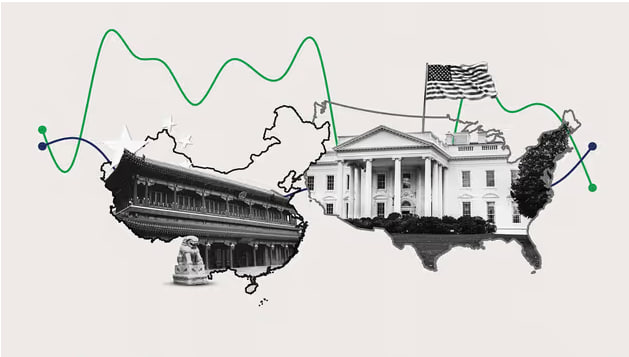
The 2025 survey, conducted across more than 130 countries and territories, indicates that 36% of respondents approve of China’s leadership performance, compared to only 31% for the United States. According to Gallup, this 5-percentage-point gap represents China’s largest recorded advantage.
The report shows that U.S. approval fell from 39% in 2024 to 31% in 2025, while China’s rating rose from 32% to 36%. At the same time, disapproval of U.S. leadership reached a record 48%, while China’s disapproval remained unchanged at 37%.
World Turning Against Washington?
To provide a clearer picture of global sentiment, researchers also examined the “Net Approval” index (the difference between approval and disapproval). In 2025, the U.S. registered a net approval of -15—the lowest in its history—while China’s net approval stood at -1, nearly neutral.
Gallup emphasized: “The world has never held such strong and distinct views about the U.S. and China.” Currently, “more countries are leaning toward China than the U.S.” This marks the third time China has overtaken the U.S. in Gallup’s historical data, previously occurring during George W. Bush’s tenure and early in Donald Trump’s first term.
Traditional Allies Drift Away
The decline in U.S. standing is especially pronounced among its closest allies. Among the 31 NATO members, approval of U.S. leadership fell 14 percentage points to just 21%.
Germany experienced the largest drop, with support for the U.S. plunging by 39 percentage points, followed by Portugal with a 38-point decline. Another Gallup report from January indicates that China is now more popular than the U.S. in eight NATO countries, while the U.S. leads in only three.
Uncertain Outlook for 2026
Gallup noted that the 2025 surveys were conducted before key events in early 2026, including the U.S. withdrawal from 66 international organizations in January and the outbreak of war with Iran in late February—developments likely to further damage Washington’s global credibility.
The conflict with Iran has created serious fractures in the U.S.-led coalition. European countries criticized the lack of consultation, while Gulf states face potential economic risks from Iran’s responses.
Abram Pauly, a senior nonresident fellow at the Atlantic Council, warned: “Depending on the outcome of this conflict, some Gulf countries may question the reliability of the U.S. as an economic and security partner.”
Overall, the report presents a shift in the global soft power balance, with China strengthening its position while the United States confronts one of its most severe credibility challenges worldwide.