Taliban’s Language Policy Sparks Cultural Identity Concerns in Afghanistan
DID Press: Taliban have not provided clear criteria for which words are considered “foreign” or how replacements should be determined. This lack of clarity raises the risk of subjective interpretations at different administrative levels, potentially causing inconsistent implementation. Such a scenario could reduce bureaucratic efficiency and confuse citizens.
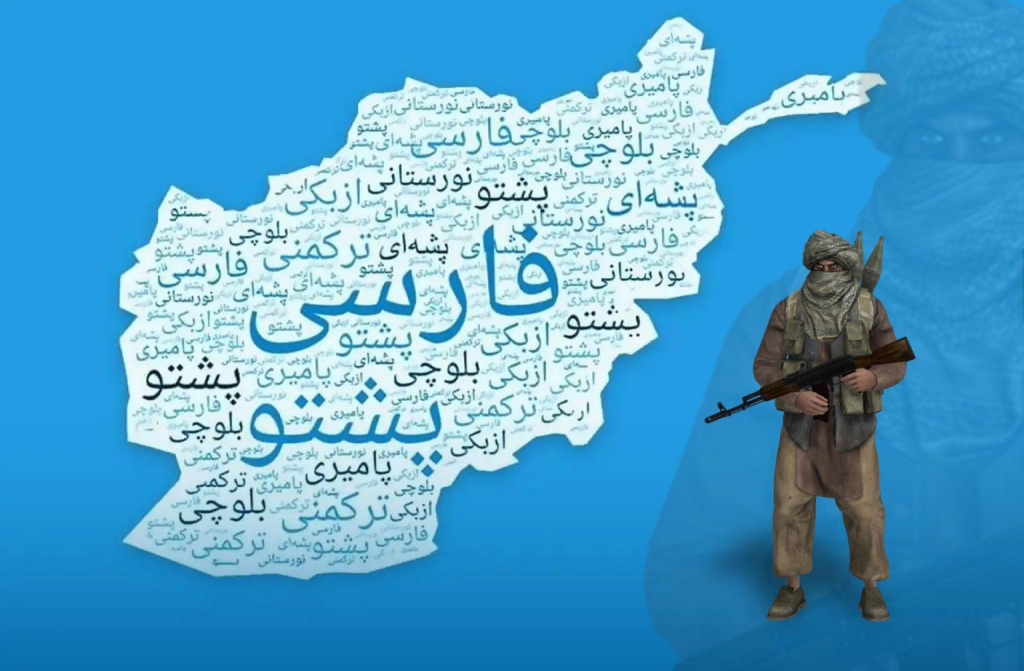
The recent directive from Mullah Hibatullah Akhundzada to review and replace foreign terms in government offices is framed as an effort to localize administrative language using Islamic and Afghan vocabulary. A committee of several government bodies has been tasked with reviewing commonly used administrative terms and proposing suitable equivalents. While this could simplify administrative language and make it more understandable to the public, it raises serious questions about its objectives and consequences.
In many countries, localizing administrative terminology is normal, usually aimed at strengthening national identity and reducing linguistic dependence on foreign terms. However, it becomes more sensitive when such changes extend to cultural and linguistic identity. In Afghanistan, Persian (Dari) is a core element of the country’s cultural and historical identity, widely used across society. Any linguistic policy that diminishes or removes this language could provoke widespread concern.
Recent reports indicate instances where Persian words have been removed from official signage and administrative structures. Examples such as replacing “university” with other terms reinforce concerns about a gradual shift in language policy, prompting some analysts to describe it as “Persian-erasure” within Afghanistan’s cultural landscape.
Another challenge is the ambiguity in defining “foreign” terms. The Taliban have not clarified which words fall into this category or the criteria for their replacement. This could lead to subjective interpretation across administrative levels, resulting in inconsistent application, reduced efficiency, and public confusion.
The policy’s impact on Afghanistan’s linguistic diversity is another concern. Afghanistan is a multilingual country, with Persian, Pashto, and other local languages widely spoken. Any policy that weakens or removes a language risks undermining social cohesion and widening cultural gaps.
Analytically, the Taliban’s approach can be viewed as an effort to redefine cultural identity and align the linguistic system with the group’s ideology. Emphasizing Islamic and local vocabulary reflects an ideological perspective on culture and language. The key challenge is how well this approach aligns with Afghanistan’s social and linguistic realities.
Ultimately, the Taliban’s language policy sits between “reform” and “erasure.” If limited to replacing specific terms while preserving widely used languages, it could enhance administrative communication. But if it leads to the gradual removal or restriction of Persian, it may have broad cultural and social repercussions. For stability and cohesion, Afghanistan needs policies that respect linguistic diversity and treat it as a cultural asset, rather than marginalizing it.
By Sulaiman Saber – DID News Agency