DID Press: Amid one of the most critical geopolitical periods in recent decades, global attention has returned to the Middle East and Iran’s pivotal role—a nation that, contrary to Western expectations, has not yielded to mounting pressures. Instead, acting with historical and security-based calculations, Iran has become a key player in shaping the region’s future order.
As the world moves toward a potential large-scale confrontation, the West’s central question remains: why does Iran refuse to back down under increasing pressure?
Sadiq Çelik, a Turkish journalist and analyst, writes in Cumhuriyet that Western views of Iran are superficial and based on headlines, while understanding Iran requires considering its “historical memory.” The 1979 Revolution was not merely a political change; it ended a relationship of dependency and created a defensive mindset aimed at preventing future foreign control. From this perspective, Iran’s current resilience is not ideological stubbornness but a survival strategy to avoid repeating past vulnerabilities.
Çelik emphasizes that the core disagreement between Iran and the West lies in the definition of “rationality.” The West sees rationality as calculating costs and benefits and retreating when risks rise, whereas Iran defines rationality as avoiding any appearance of weakness. Tehran understands that deterrence is not only about restraining the enemy but also about sending a signal of strength domestically. For Iran, the internal perception of weakness is more dangerous than external threats.
He also highlights Western double standards in the nuclear arena. Israel, India, and Pakistan possess extensive arsenals but are not considered global threats because they are integrated into the global order. In contrast, Iran’s refusal to accept a post-1979 “client” status turns every move into a red flag. Unlike Gulf states, Iran has kept U.S. bases away from its territory, maintaining strategic independence.
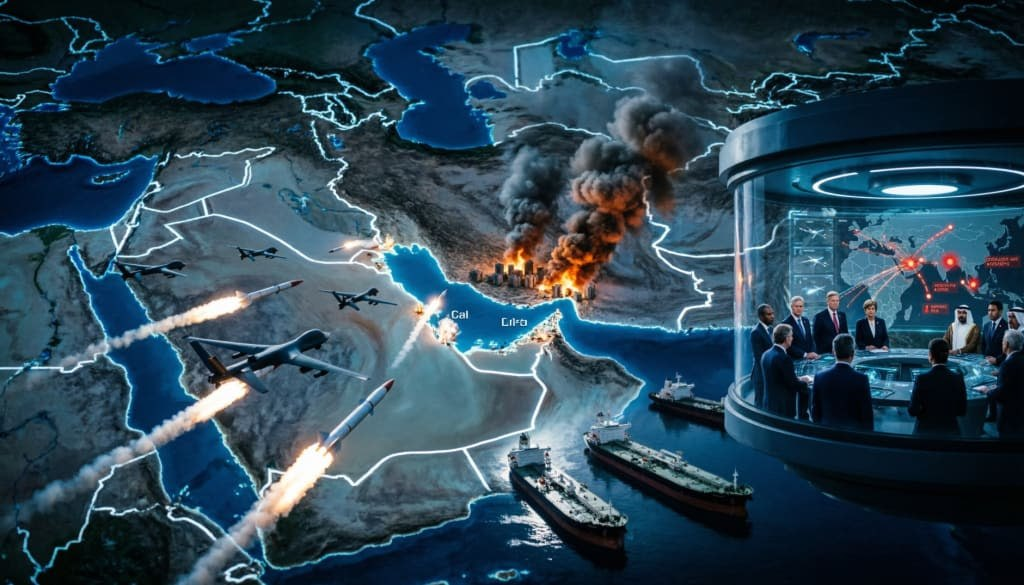
Çelik notes that, contrary to Western and Israeli expectations, military pressure and targeted eliminations of commanders have not caused internal collapse; instead, Iranian society has grown more cohesive. Iran’s geography, functioning more powerfully than armies, controls the Strait of Hormuz and undermines Gulf security. At the same time, threats from Donald Trump regarding ground operations have been met with a clear Iranian response: any attack will also involve the countries hosting the forces.
He adds that Houthi actions in the Red Sea and the mobilization of Iraq’s Popular Mobilization Forces indicate that the conflict is regional, with blocked straits disrupting global energy, fertilizer, and food supply chains.
Çelik concludes that Iran, like Turkey, carries an “imperial memory,” which the West misinterprets, viewing Iran as a “solvable problem,” while the country’s defiance is rooted in history and the imperative of survival.