Karim Khurram Warns of Emerging Global ‘Leadership Vacuum’
DID Press: Former Afghanistan Information and Culture Minister Karim Khurram says the world is moving toward a “global leadership vacuum” rather than a direct confrontation between major powers, arguing that current international dynamics resemble the “Kindleberger Trap” more than the “Thucydides Trap.”
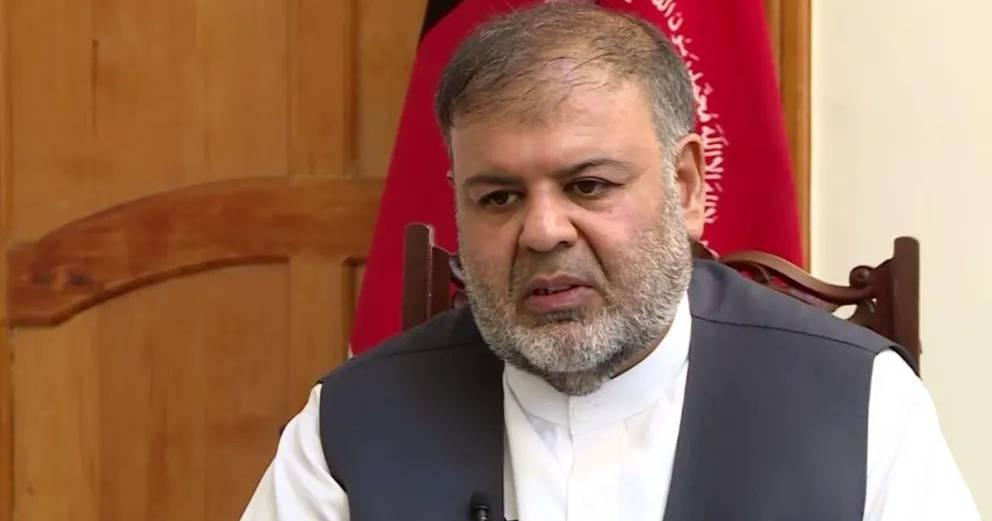
Commenting on Donald Trump’s recent visit to China and his meeting with Chinese President Xi Jinping, Khurram said the widely cited “Thucydides Trap” — the theory predicting conflict between a dominant power and a rising challenger — no longer fully explains the state of global affairs.
According to Khurram, today’s international order more closely reflects the “Kindleberger Trap,” a concept associated with economist Charles Kindleberger that describes instability caused when a declining hegemon withdraws from global leadership while the emerging power refuses to assume that role.
Khurram argued that the United States is gradually losing its dominant global position, while China, despite its rapid economic rise, shows little willingness to become the world’s leading power.
He noted that Beijing lacks both the historical experience and political appetite for global hegemony, adding that China’s foreign policy differs from the expansionist traditions historically associated with Western colonial powers.
Referring to China’s diplomatic efforts, Khurram said Beijing achieved some success in mediating between Iran and Saudi Arabia, but still struggles to build broad international consensus. He pointed to disagreements during recent BRICS foreign ministers’ meetings and China’s unsuccessful attempt to organize an Afghanistan-focused conference similar to the Moscow talks.
Khurram also emphasized that China has limited experience in building large-scale alliances and remains primarily focused on economic interests rather than assuming the costly responsibilities of global leadership.
He argued that even after the U.S. withdrawal from Afghanistan, Beijing avoided taking on a major economic or political role in the country, despite expectations of deeper engagement.
The former Afghan minister further highlighted criticism surrounding some Chinese overseas investment projects, including debt concerns in countries such as Sri Lanka, and said China’s soft power influence remains limited. He added that Beijing also appears reluctant to transform the yuan into a dominant global reserve currency.
Khurram concluded by warning that the world is entering a multipolar era marked by weakening international institutions, prolonged conflicts, trade tensions, and growing regional instability. He said weaker states are likely to face increasing pressure from regional powers amid the absence of a clear global leader.