UNSC Warns of Deepening Humanitarian and Security Crisis in Afghanistan
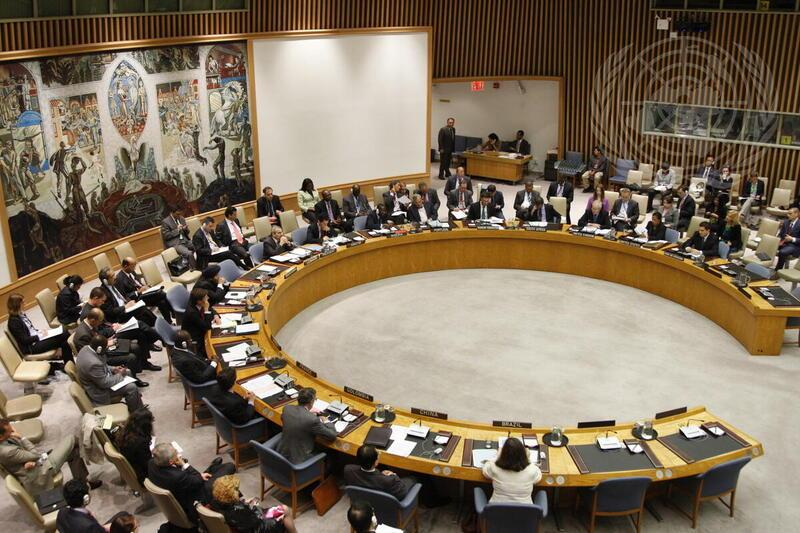
DID Press: A meeting of the United Nations Security Council on Afghanistan was marked by sharp criticism of Taliban policies, renewed warnings over the country’s deteriorating humanitarian and security situation, and an unusually tense exchange between representatives of Afghanistan and Pakistan.
Fragile Stability, UNAMA Warns
Georgette Gagnon, Deputy Special Representative of the Secretary-General and acting head of the United Nations Assistance Mission in Afghanistan, said Afghanistan has achieved a degree of economic stabilization in some areas but described the situation as “highly fragile.”
She warned that the large-scale return of migrants is placing significant pressure on public services and the economy. Given Afghanistan’s young population, limited access to education and employment could jeopardize the future prospects of an entire generation.
Women and Girls at the Center of Concerns
The situation of women and girls emerged as a central focus of the meeting. UNAMA reported that approximately 3.8 million girls remain excluded from education, with an estimated 250,000 more reaching school age each year without access to secondary education.
Gagnon stressed that ongoing restrictions represent not only a human rights concern but also a major obstacle to Afghanistan’s long-term economic development. She also cited reports of women being detained in Herat over dress-code issues as evidence of a shrinking civic space.
Humanitarian Emergency Persists
The United Nations Office for the Coordination of Humanitarian Affairs reported that nearly half of Afghanistan’s population requires humanitarian assistance. Around seven million people face food insecurity, while four million children are affected by malnutrition.
According to OCHA, humanitarian operations in Afghanistan require approximately $1.7 billion in funding this year to continue delivering essential aid.
Human Rights and Terrorism Concerns
Representatives from the United States, United Kingdom, France and several European countries strongly criticized restrictions on women and girls and expressed concern over the presence of terrorist groups in Afghanistan.
They called for concrete and verifiable measures against organizations such as Islamic State Khorasan Province and Al-Qaeda.
Russia and China Advocate Engagement
In contrast, Russia and China emphasized engagement rather than pressure. Moscow argued that coercive approaches are unlikely to produce results and warned against politicizing UNAMA’s mandate.
China, while calling for the reopening of schools for girls, advocated a more pragmatic and coordinated international approach toward Afghanistan.
Terrorism Remains a Shared Regional Concern
Pakistan again accused the Taliban administration of failing to take effective action against militant groups. Russia and Iran also expressed concern over ISIS-K activities and the risk of Afghanistan becoming a safe haven for extremist organizations.
Verbal Clash Between Afghanistan and Pakistan
One of the most contentious moments of the session came when Nasir Ahmad Faiq condemned alleged Pakistani attacks inside Afghanistan. Pakistan’s representative rejected the accusation and questioned Faiq’s legitimacy as a representative of the Afghan people, prompting a sharp response.
Economic Development Highlighted
Representatives of Uzbekistan and Turkmenistan stressed that humanitarian assistance alone cannot deliver lasting stability and called for greater emphasis on economic development, job creation, and infrastructure projects.
UNAMA’s Future Under Discussion
As the renewal of UNAMA’s mandate approaches, most Security Council members expressed support for the continuation of the mission. However, significant differences remain over how the international community should engage with Afghanistan’s current authorities.
The meeting underscored the absence of a unified international strategy toward Afghanistan, even as participants broadly agreed on one point: the country’s current stability is unlikely to endure without a sustainable political, economic, and social solution.