DID Press: Yemen’s declaration of a naval blockade against Saudi Arabia has placed the Red Sea and the Bab el-Mandeb Strait at the center of a new regional energy crisis, threatening what has become Saudi Arabia’s primary alternative oil export route following disruptions in the Strait of Hormuz. Any prolonged disruption could have significant consequences for global energy markets.
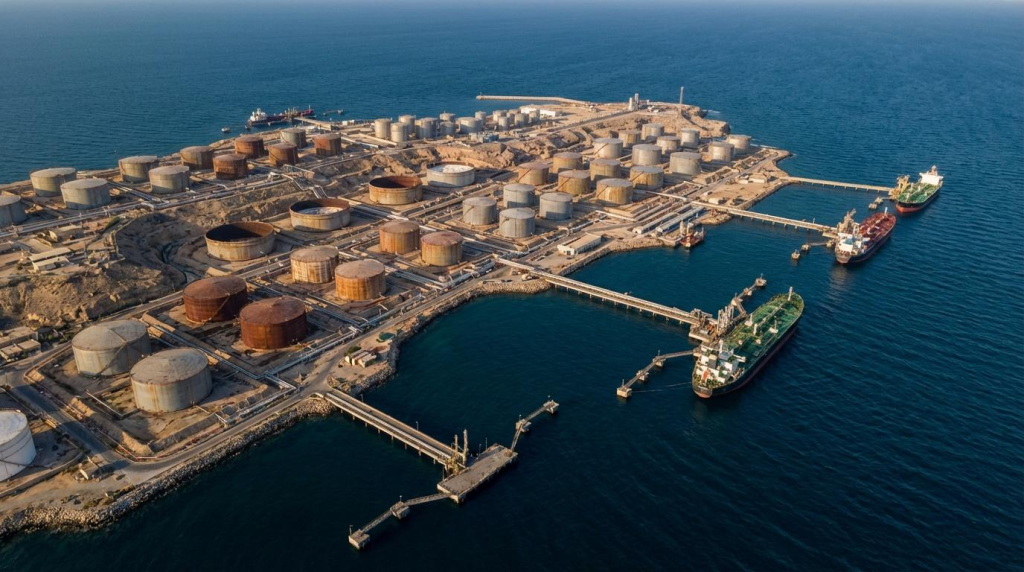
According to the analysis, no operational details have yet been released regarding how the blockade would be enforced, which vessels could be targeted, or the geographical scope of the measure. Saudi Arabia has not issued an official response. Nevertheless, any attacks on oil tankers, ports, or shipping lanes through the Bab el-Mandeb Strait could seriously disrupt Saudi crude exports.
Following the outbreak of the conflict in early 2026 and the disruption of shipping through the Strait of Hormuz, Yemen launched drone attacks on Saudi Aramco’s Ras Tanura facilities, halting exports from the terminal for nearly four months. During that period, Saudi Arabia redirected more than 70% of its daily crude exports through the East-West Pipeline (Petroline) to the Red Sea port of Yanbu. Exports from Yanbu have recently averaged around 4 million barrels per day, compared with approximately 973,000 barrels per day during the same period a year earlier.
Saudi authorities are also evaluating plans to expand Petroline’s capacity by 1–2 million barrels per day, increasing its transport capability from 7 million to between 8 and 9 million barrels per day. The proposal, first reported by Reuters, remains under review, and no final investment decision has been announced.
The strategic importance of the Bab el-Mandeb Strait has risen sharply in recent months. Oil and refined petroleum shipments passing through the waterway reached 7.4 million barrels per day in June 2026, up from 4.2 million barrels per day a year earlier, representing roughly 7% of global oil production. The route carries Saudi exports from Yanbu as well as shipments transiting the Red Sea toward the Suez Canal, the SUMED Pipeline, and Asian markets.
Analysts warn that a complete closure of Bab el-Mandeb could significantly curtail Saudi oil exports at a time when the conflict has already reduced global oil supply by an estimated 10%.
Before the conflict, around 20% of global oil supplies transited the Strait of Hormuz. Since regional tensions escalated, shipping traffic has fallen sharply. According to the report, only four vessels passed through the strait on the previous day, compared with eight the day before. Since Friday, only three product tankers and one very large crude carrier (VLCC) have entered the area for loading, while two oil tankers were reportedly damaged by explosions while transiting outside Iranian-controlled waters.
Unlike the disruptions in the Red Sea in 2023—when Gulf oil exports could still be rerouted through Hormuz—both the primary route via Hormuz and the alternative corridor through Bab el-Mandeb are now under pressure. Oil exports to China, India, South Korea, and other Asian markets depend heavily on safe passage through Bab el-Mandeb.
If the strait becomes impassable, tankers would be forced to take much longer routes via the Suez Canal, the Mediterranean Sea, the Strait of Gibraltar, and the Cape of Good Hope. Such diversions would add 4,000 to 6,000 nautical miles, extend voyage times by up to 20 days, and impose an estimated $7–9 billion in additional annual costs on the global container shipping industry.
Despite these risks, exports from Yanbu to Europe can still reach the continent through the Red Sea and the Suez Canal without transiting Bab el-Mandeb. Analysts therefore suggest that attacks on Saudi commercial vessels heading toward Suez could become the next phase of Yemen’s declared strategy of “escalation for escalation” and “port for port.”
The evolving situation has transformed the Bab el-Mandeb Strait and the Red Sea into the new focal point of the regional energy crisis. With Saudi Arabia increasingly dependent on the Yanbu export corridor and global oil markets already facing tighter supplies, any further disruption along this strategic maritime route could trigger immediate repercussions for international energy prices, shipping, and supply chains.
By Sayed Ahmad Mortazawi | DID News Agency