Kohat: From Terrorist Attack to Escalating Kabul-Islamabad Tensions
DID Press: The deadly attack on a mosque in Kohat, coupled with Pakistan’s official accusations against armed groups based in Afghanistan, has once again brought the security dispute between Kabul and Islamabad to a critical point.
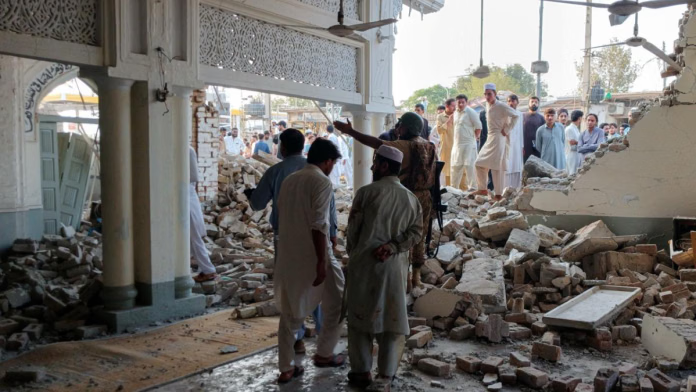
Pakistan’s Ministry of Information attributed the attack to forces it refers to as “Khawarij based in Afghanistan,” alleging that Afghanistan territory is being used for the activities and recruitment of armed groups. Islamabad’s position is part of its broader and continued policy toward the Taliban authorities.
In recent months, Pakistani officials have repeatedly alleged that attacks by the Tehrik-e-Taliban Pakistan (TTP) are being organized from Afghanistan territory and have called on the Taliban to take action against the group. Islamabad has even said in official positions that ending the use of Afghanistan territory for attacks against Pakistan is a prerequisite for regional stability.
The Taliban, however, have rejected similar allegations and maintained that attacks inside Pakistan are an internal matter for Pakistan itself. The continuation of these two conflicting narratives has increased the risk that what began as a security crisis could develop into a prolonged dispute between the two sides.
The central issue, therefore, is no longer limited to Kohat. It is the emergence of a cycle in which every attack generates new accusations, and every accusation leads to increased political and security pressure. Breaking this cycle requires more than verbal reactions; it requires verifiable mechanisms, security cooperation, and direct dialogue between Kabul and Islamabad—an objective that currently appears difficult to achieve in the short term.
At the same time, as attacks and insecurity inside Pakistan are expected to continue, the already limited opportunities for dialogue between the two sides could come under even greater pressure.
The natural consequence of this situation is that citizens of both countries may increasingly bear the costs at the security, political, and economic levels, while security threats that are difficult to contain could continue to be reproduced across the region.