From Backer to Enemy — How Pakistan Turned on the Taliban
DID Press: Relations between Pakistan and Afghanistan’s Taliban administration have shifted from decades of strategic cooperation to growing public confrontation, reflecting Islamabad’s diminishing influence over the movement it once regarded as a cornerstone of its regional security strategy.
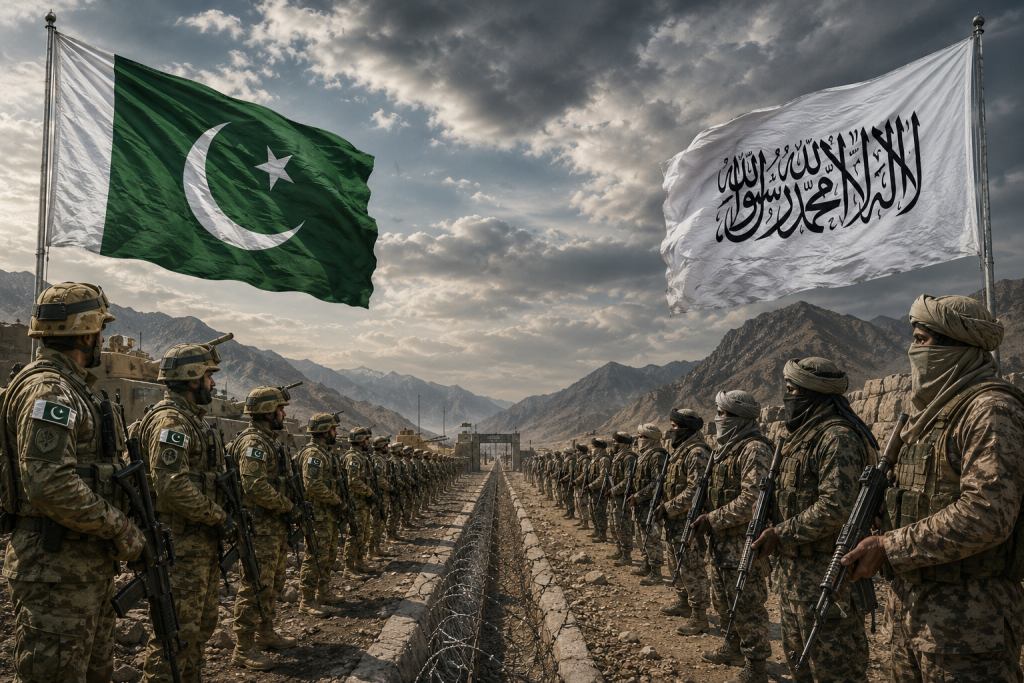
For more than four decades, Pakistan viewed the Taliban as a key component of its “strategic depth” doctrine against India, investing significant political, security, and logistical resources in the movement. That policy, rooted in the anti-Soviet war beginning in 1979, appeared to reach its peak following the Taliban’s return to power in August 2021.
However, increasingly sharp criticism and accusations from senior Pakistani military and diplomatic officials suggest that the initial optimism has given way to disappointment, mistrust, and open political friction.
Following the withdrawal of US-led forces and the collapse of Afghanistan’s previous republic, Pakistan’s security establishment largely believed that a Taliban-led government would safeguard Islamabad’s long-term influence in Afghanistan. That expectation was based on the assumption that the movement would remain aligned with Pakistan’s strategic interests.
Instead, the Taliban has increasingly prioritized political survival, domestic legitimacy, and economic interests over historical alliances. The group’s leadership appears to have concluded that overt dependence on Pakistan could undermine its credibility inside Afghanistan while limiting its regional diplomatic flexibility.
The most significant point of contention has become cross-border security, particularly the activities of the Tehrik-i-Taliban Pakistan (TTP). Islamabad expected Kabul to restrain or dismantle the militant group after the Taliban returned to power. Pakistani officials argue that the failure to do so has contributed to worsening violence in Khyber Pakhtunkhwa and Balochistan, reinforcing concerns that Afghanistan has become a safe haven for anti-Pakistan militants.
At the same time, the Taliban’s expanding diplomatic engagement with regional powers, particularly India, has further strained relations. Seeking economic recovery, humanitarian assistance, and foreign investment, Kabul has broadened its regional outreach beyond Pakistan.
From Islamabad’s perspective, growing Afghan-Indian engagement represents a strategic challenge. Pakistani military officials have responded with increasingly critical rhetoric, including accusations that the Taliban has moved closer to New Delhi—comments widely viewed as reflecting frustration over the erosion of Pakistan’s traditional influence.
Despite rising tensions, geography and shared economic interests continue to bind the two neighbors. Extensive borders, trade routes, ethnic and linguistic ties, and the presence of millions of Afghan refugees in Pakistan create structural interdependence that neither side can easily ignore.
The deterioration in relations illustrates the limits of Pakistan’s long-standing assumption that decades of political and military support would guarantee enduring influence over the Taliban. The movement now appears to calibrate its foreign relations according to its own political and economic priorities rather than historical loyalties.
Analysts argue that a more sustainable relationship will likely require Pakistan to move beyond expectations of permanent influence and instead pursue a pragmatic framework based on mutual interests, direct dialogue, and respect for each other’s sovereignty.
By Sayed Baqer Waezi | DID News Agency