SCO Leaders Gather in Bishkek to Discuss Security and Multipolar Order
DID Press: A two-day summit of the Shanghai Cooperation Organisation (SCO) has opened in Bishkek, bringing together Chinese President Xi Jinping, Russian President Vladimir Putin, Indian Prime Minister Narendra Modi and Iranian President Masoud Pezeshkian for discussions on regional security, economic cooperation and an increasingly multipolar global order.
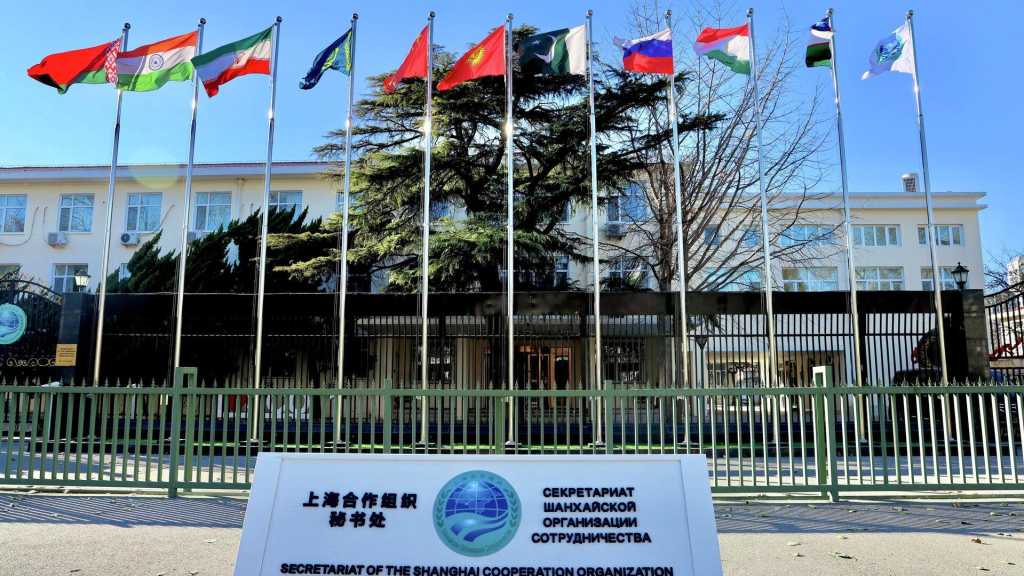
The meeting comes amid the continuing war between Russia and Ukraine and broader instability in the Middle East following the U.S.-Israeli conflict with Iran—crises that have affected global energy markets, trade and international transport routes.
Afghanistan, the Iran-Israel conflict, the war in Ukraine, India-China relations and tensions between India and Pakistan are among the key issues expected to feature in discussions. Leaders are also set to focus on expanding economic cooperation, developing new transit corridors and strengthening financial mechanisms among SCO members.
Experts say this year’s summit, held as the organization marks its 25th anniversary, offers an opportunity for Eurasian powers to deepen cooperation and advance their vision of a more multipolar international order.
William Yang, a senior analyst at the International Crisis Group, said China could use the gathering to portray itself as a power supporting the peaceful resolution of conflicts, although he suggested such efforts were likely to remain largely at the level of political positioning.
Alicia Garcia-Herrero, an Asia-Pacific economist, said the simultaneous presence of Modi, Putin and Xi—at a time when India-China relations are showing signs of improvement—could test the SCO’s ability to organize security, trade and regional connectivity across Eurasia without relying heavily on Western-led institutions.
Economic initiatives expected to receive attention include proposals for an SCO Development Bank, development and investment funds, and new trade and transit corridors.
Leaders are also expected to discuss routes such as the International North-South Transport Corridor, which connects Russia to India through Iran. The Northern Sea Route in the Arctic has also gained renewed strategic importance as countries explore alternatives to maritime routes affected by instability in the Persian Gulf and the Red Sea.
Bilateral meetings on the sidelines of the summit are expected to carry particular significance. Modi is scheduled to meet with Putin and Pezeshkian, with discussions likely to cover the Ukraine war, the Middle East crisis, trade and broader economic cooperation.
Analysts caution, however, that the SCO is not a cohesive anti-U.S. alliance. Its major members—particularly China, Russia and India—continue to have significant differences on several strategic issues.
Alejandro Reyes, an academic at the University of Hong Kong, described the organization as a platform through which member states seek to preserve their “strategic room for manoeuvre” amid pressure from major powers, particularly the United States.
China is seeking to expand its economic and institutional influence across Eurasia, while Russia aims to demonstrate that it remains engaged internationally despite Western isolation efforts. India, meanwhile, continues to pursue strategic autonomy by balancing its relationships with the United States, Russia and China.
Overall, the Bishkek summit could serve as a key test of whether the SCO can translate its calls for multipolarity, greater South-South cooperation and reduced dependence on Western financial and trade structures into concrete action—despite persistent differences among its members.