Delta Energy Deal Raises Questions Over Persian Gulf and Western Influence in Afghanistan
DID Press: The signing in Kabul of a major oil and gas exploration and production agreement between the Taliban’s Ministry of Mines and Petroleum and Saudi company Delta Energy has once again drawn political observers’ attention to the hidden layers of Afghanistan’s geopolitical chessboard.
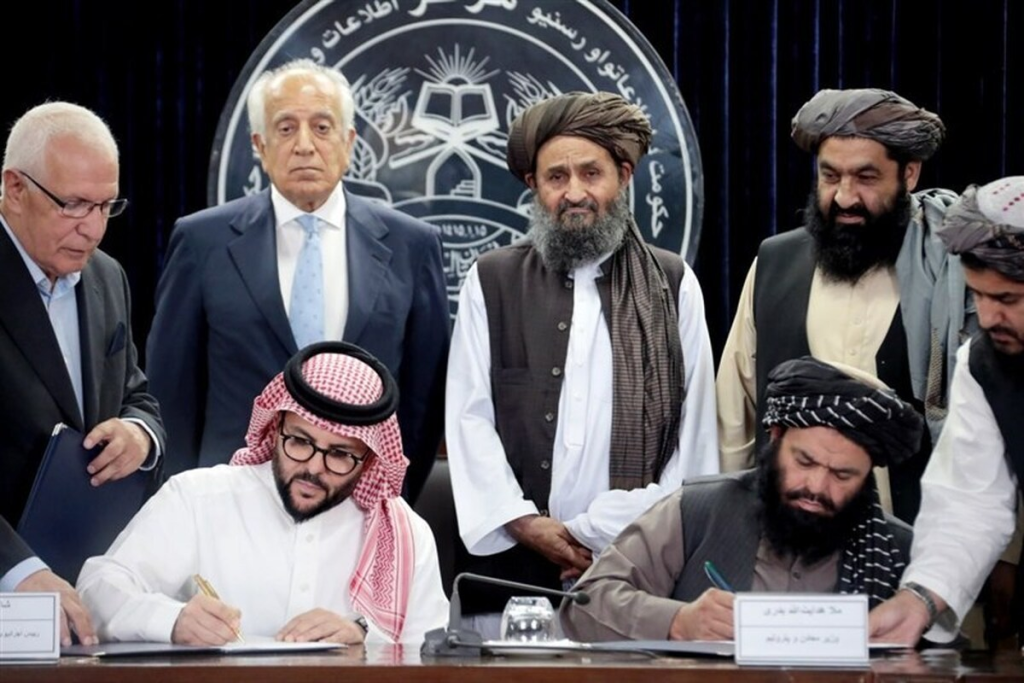
The integrated project, which includes natural gas utilization projects in Herat and an assessment of the 700-km “CentGas” pipeline from Herat to Kandahar, appears on the surface to promise $50 billion in investment over 25 years. However, the prominent and significant presence of Zalmay Khalilzad, the former U.S. special representative, at the signing ceremony sends a clear message about the return of Gulf actors and Western influence networks to the backstage of Afghanistan’s political economy under Taliban control.
Khalilzad’s presence at the event recalls Afghanistan’s long and eventful history of energy diplomacy. For many experts, the scene is reminiscent of the 1990s and the efforts of the U.S. oil company Unocal, which, under Khalilzad’s guidance, sought to bring the Taliban into a major energy pipeline deal. Three decades later, the same networks of power and intermediary figures have once again entered Kabul, this time under different titles and through the umbrella of regional Arab companies.
This continuity, the author argues, indicates that the oil and economic interests of transnational actors can find their way through hidden intelligence and commercial channels regardless of ideological rhetoric, the human rights situation or the political legitimacy of the authorities in Kabul.
From a geopolitical perspective, Saudi Arabia’s entry into infrastructure investment in Afghanistan cannot be viewed simply as a purely economic or commercial move. Afghanistan under Taliban rule, because of its lack of international legitimacy and severe financial isolation, is heavily dependent on financial inflows and the development of economic ties with regional countries.
Against this backdrop, Riyadh’s presence and channels linked to Washington could alter the balance that has shifted in favor of eastern powers such as China and Russia over the past two years. Gulf investment could provide the Taliban with an opportunity to maneuver politically and ease international pressure. At the same time, however, it could draw Afghans deeper into intelligence and regional competition between eastern and Western blocs, potentially triggering strong sensitivities among key neighbors such as Iran and Russia.
A technical and realistic assessment of the agreement, however, raises serious questions about its feasibility and operational nature. A 700-km pipeline from Herat to Spin Boldak in Kandahar would gain strategic value and regional economic justification if a transnational market such as Pakistan were to purchase its gas or allow transit toward the Indian subcontinent.
At a time when relations between Kabul and Islamabad are facing unprecedented security and border tensions, and no formal agreement has been reached with Pakistan, the claim that the domestic pipeline could be transformed into a regional transit corridor appears, in the author’s view, more like a “publicity maneuver” and an attractive package designed to draw media attention than a technically developed and implementation-ready project.
Beyond the geopolitical challenges, the anger and frustration among Afghan public opinion and elites toward such agreements should not be overlooked. Afghan civil society views this approach as a continuation of the same corrupt and predatory structures that put the country’s national wealth up for sale in the absence of a lawful, accountable government derived from the people’s vote.
When a group without domestic legitimacy and operating amid severe social crises enters into 25-year contracts involving nonrenewable hydrocarbon resources, the lack of transparency and suspicions surrounding undisclosed concessions reach their highest level, the author argues.
Ultimately, the agreement with Delta Energy should be viewed as a symbol of the dual game in Afghanistan’s political economy. According to the author, the Taliban are seeking to use Gulf-based companies and longstanding American lobbying networks to escape isolation and gain de jure legitimacy through economic dependencies.
But the direct consequence of these actors entering an environment lacking law and transparency, the author concludes, will be the transformation of Afghanistan’s economic structure into a field of destabilizing intelligence competition and deeper mistrust between Kabul and regional actors. It is a complex contest in which the profits go into the pockets of transnational companies, while the security risks remain on the shoulders of the Afghan people.
By Sayed Mohammad Baqer Waezi | DID News Agency