The Peoples of Afghanistan: A Story of Coexisting Cultures, Languages and Traditions
DID Press: Afghanistan is a country of remarkable ethnic, linguistic, religious and cultural diversity. Its geographical position between Central Asia, the Iranian Plateau and the Indian subcontinent, as well as its location along historic trade and migration routes, has played an important role in shaping this diversity.
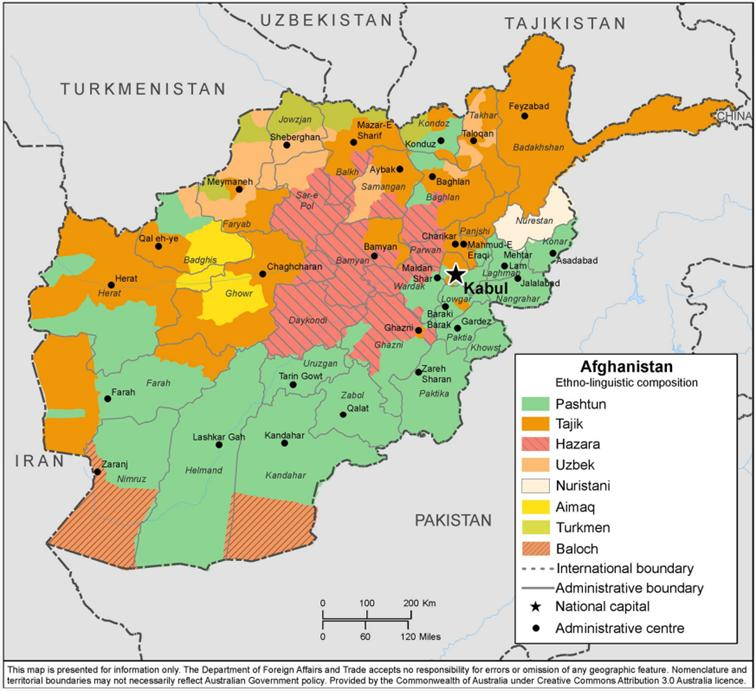
Afghanistan is home to a wide range of ethnic and linguistic communities, including Pashtuns, Tajiks, Hazaras, Uzbeks, Turkmens, Aimaqs, Baloch, Nuristanis, Pashai, Kyrgyz, Qizilbash, Sayyids, Hindus, Sikhs and other smaller communities. However, the boundaries between ethnicity, language, religion, geography and lifestyle are not always clear-cut, and these elements often overlap.
Understanding the peoples of Afghanistan therefore requires more than examining ancestry or language. History, geography, religion, migration, economic life and social traditions have all contributed to the formation of the country’s diverse identities.
A General Overview of Afghanistan’s Ethnic and Cultural Communities
| Ethnic or Social Community | Main Language(s) | Predominant Religion | Traditional Livelihoods | Examples of Cultural Heritage |
|---|---|---|---|---|
| Pashtuns | Pashto; Dari is also widely used in many areas | Predominantly Sunni Islam, Hanafi | Agriculture, livestock, trade | Pashtunwali, traditional dress, music and crafts |
| Tajiks | Dari Persian | Predominantly Sunni Islam; Ismaili communities in some areas | Agriculture, trade, urban professions and administration | Persian literature, Nowruz, handicrafts |
| Hazaras | Dari Persian, including Hazara varieties | Predominantly Shia; also Sunni and Ismaili communities | Agriculture, livestock, trade and urban professions | Carpet weaving, dambura music, traditional dress |
| Uzbeks | Uzbek and Dari | Predominantly Sunni Islam, Hanafi | Agriculture, livestock, trade and carpet weaving | Chapan, carpets and traditional music |
| Turkmens | Turkmen and Dari | Predominantly Sunni Islam, Hanafi | Livestock, agriculture and trade | Turkmen carpets and embroidery |
| Aimaqs | Varieties of Dari Persian | Predominantly Sunni Islam, Hanafi | Livestock, agriculture and semi-nomadic life | Kilims, woven goods and traditional tents |
| Baloch | Balochi; Dari and Pashto in some areas | Predominantly Sunni Islam | Livestock, agriculture and trade | Embroidery and traditional clothing |
| Nuristanis | Nuristani languages; Dari and/or Pashto | Predominantly Sunni Islam | Mountain agriculture, horticulture and livestock | Wooden architecture and carving |
| Pashai | Pashai languages; Dari and Pashto | Predominantly Sunni Islam | Agriculture, horticulture and livestock | Music and oral traditions |
| Qizilbash | Dari Persian | Predominantly Twelver Shia Islam | Administration, trade, education and urban professions | Calligraphy, architecture and urban culture |
| Kyrgyz | Kyrgyz | Sunni Islam | Pastoralism and nomadic herding | Yurts, clothing and handicrafts |
| Sadat | Dari, Pashto and local languages | Both Shia and Sunni Islam | Religious, educational, social and economic activities | Religious and family traditions |
| Hindus and Sikhs | Punjabi and other South Asian languages; Dari and Pashto | Hinduism and Sikhism | Trade and urban professions | Temples, gurdwaras and religious traditions |
This table is intended as a broad overview rather than a rigid classification. Language, religion and ethnic identity do not always correspond directly, and there are no reliable current nationwide statistics that provide a definitive ethnic breakdown of Afghanistan.
Afghanistan’s Linguistic Diversity
Afghanistan is also highly diverse linguistically. Dari and Pashto are the country’s two principal official languages, while numerous other languages and dialects are spoken across different regions.
Many languages spoken in Afghanistan belong to the Indo-Iranian branch of the Indo-European language family. Pashto and Dari Persian belong to the Iranian branch. Nuristani languages form a distinct branch within the Indo-Iranian family, while Pashai belongs to the Dardic group. Uzbek, Turkmen and Kyrgyz belong to the Turkic language family.
For this reason, linguistic families should not be confused with ethnic identities. A community may change its primary language over time, while a single language may be spoken by several different ethnic communities.
The Pashtuns
Pashtuns are one of Afghanistan’s largest ethnic communities and have historically lived across large parts of the south, east and southeast, as well as in parts of northern and western Afghanistan. Their principal language is Pashto, an Eastern Iranian language.
Tribal and kinship structures have historically played an important role in parts of Pashtun society. One of the best-known cultural concepts associated with Pashtun communities is Pashtunwali, a body of social and ethical norms that includes values such as hospitality, protection, loyalty and defense of honor.
Pashtun society, however, is not homogeneous. Significant differences exist between tribes, regions, urban and rural communities, and individual lifestyles.
Ghilzai
The Ghilzai, or Ghilji, are one of the two major historical tribal confederations among Pashtuns. They have traditionally been present in parts of eastern, southeastern and central Afghanistan.
The Ghilzai played an important role in Afghanistan’s political history, particularly during the Hotak period. Mirwais Hotak was a prominent figure of the early 18th century who led a revolt in Kandahar against Safavid rule and established the Hotak dynasty.
Durrani
The Durrani are the other major historical Pashtun tribal confederation. Before the rise of Ahmad Shah Durrani, the group was widely associated with the name Abdali. The name Durrani became prominent after Ahmad Shah came to power.
In 1747, Ahmad Shah Durrani founded the Durrani Empire, which played a major role in the emergence of Afghanistan as a political entity in the 18th century.
The Tajiks
Tajiks are one of Afghanistan’s major Persian-speaking communities and have historically lived across northern, northeastern, western and central parts of the country, including Badakhshan, Takhar, Panjshir, Parwan, Kapisa, Kabul and Herat.
Most Tajiks speak varieties of Dari Persian. Their language and cultural traditions form part of the broader Persian cultural sphere of Central Asia and Afghanistan.
Ismaili Tajik communities are also found in mountainous parts of Badakhshan.
Persian literature, poetry, music, architecture, agriculture and urban traditions have all played important roles in Tajik cultural life.
The Hazaras
Hazaras are one of Afghanistan’s major ethnic communities, with a historical concentration in the central highlands known as Hazarajat, as well as significant communities in major Afghan cities.
Many Hazaras speak Dari Persian, including varieties commonly referred to as Hazaragi. A large proportion are Twelver Shia Muslims, while Sunni and Ismaili Hazara communities also exist.
The historical origins of the Hazaras are complex and have been interpreted in different ways by historians, linguists and genetic researchers. It is therefore an oversimplification to attribute the community to a single historical origin. Academic research points to a complex demographic history involving different populations and migrations.
Carpet weaving, dambura music, agriculture, livestock herding and, increasingly, urban and educational activities are important elements of Hazara social and cultural life.
Uzbeks and Turkmens
Uzbeks and Turkmens are among Afghanistan’s major Turkic-speaking communities and are concentrated primarily in the north and northwest.
Uzbeks speak Uzbek and have longstanding communities in provinces such as Jowzjan, Faryab, Sar-e Pol and Balkh. Agriculture, livestock herding, trade and carpet production have historically been important occupations.
Turkmens are also concentrated in northern Afghanistan. Turkmen carpet weaving is one of the best-known expressions of their cultural heritage.
Buzkashi has historically been popular among many communities in northern Afghanistan, including Uzbeks, Tajiks and others, and should not be regarded as the exclusive cultural property of any single ethnic group.
Sadat of Afghanistan
In Afghanistan, Sadat are generally understood as a lineage-based or familial identity associated with claimed descent from the family of the Prophet Muhammad (PBUH).
Sadat communities live in different parts of Afghanistan and are not linguistically or religiously uniform. Some are Shia Muslims and others Sunni Muslims. Depending on their location, they may speak Dari, Pashto or local languages.
Historically, some Sadat families have played roles in religious, educational and community affairs.
They are therefore better understood through the concepts of lineage, descent and social identity rather than as a single ethnic group with one language, territory and culture.
The Aimaqs
The term Aimaq refers to a collection of Persian-speaking communities and tribal groups historically concentrated in western and northwestern Afghanistan.
Aimaq communities have traditionally lived in areas including Ghor, Badghis and parts of Herat. The term itself has Turkic origins and has historically been used for tribal and semi-nomadic or semi-sedentary communities in Khorasan and Afghanistan. Their dialects are closely related to varieties of Dari Persian spoken in eastern Khorasan and Herat.
The four groups commonly identified as the Char Aimaq are the Timuri, Firozkohi, Jamshidi and Taymani, although historical and local classifications vary.
Livestock herding, agriculture, semi-nomadic life and the production of kilims and other woven goods have been important parts of Aimaq culture.
The Pashai
Pashai communities are primarily found in parts of eastern and northeastern Afghanistan, particularly in mountainous areas of Nangarhar, Laghman, Kunar and Kapisa.
The Pashai languages belong to the Dardic branch of the Indo-Iranian family and are distinct from the Nuristani languages. This distinction is important because Pashai and Nuristani should not be treated as a single linguistic group.
Agriculture, horticulture, livestock herding and oral traditions are important elements of Pashai community life.
The Baloch of Afghanistan
The Baloch are an Iranian-speaking community found mainly in southern and southwestern Afghanistan, particularly in Nimroz and parts of Helmand and Kandahar.
The Balochi language belongs to the Iranian branch of the Indo-Iranian family. Livestock herding, agriculture, trade and adaptation to arid environments have historically been important aspects of Baloch life.
Balochi embroidery, particularly traditional women’s clothing, is among the most distinctive forms of their cultural heritage.
The Qizilbash of Afghanistan
The Qizilbash are a historical community whose presence in Afghanistan is associated with different periods of Iranian and Afghan history, particularly the Safavid era and the periods that followed.
Many Afghan Qizilbash are Dari-speaking and Twelver Shia Muslims. Their historical presence has been particularly notable in Kabul and other urban centers.
Qizilbash communities have contributed to administration, the military, trade, medicine, education and cultural life during different periods of Afghan history.
The Nuristanis
Nuristanis live primarily in the mountainous areas of Nuristan and neighboring regions.
Nuristani languages constitute a distinct branch within the Indo-Iranian language family and are not varieties of Pashto or Persian.
Until the late 19th century, the region was predominantly non-Muslim and was historically known as Kafiristan. During the reign of Amir Abdur Rahman Khan, the region was incorporated into the Afghan state and underwent a process of Islamization, after which it became known as Nuristan.
Wooden architecture, carving, mountain agriculture and livestock herding are among the distinctive elements of Nuristani cultural heritage.
Arabs of Afghanistan
Afghanistan is home to communities historically identified in some sources and local traditions as Arabs. Their origins and migration histories are not uniform, and different accounts describe their settlement in different ways.
Many families identified as Afghan Arabs have adopted local languages, particularly Dari or Pashto, over time. Consequently, they cannot all be defined by Arabic language or by a single shared culture.
Claims concerning the continued use of distinct local Arabic varieties in Afghanistan also vary among sources and should be presented cautiously unless supported by specific linguistic research.
The Kyrgyz of Afghanistan
The Kyrgyz of Afghanistan are a small, historically pastoral community living primarily in the Wakhan Corridor of Badakhshan, in the high-altitude Pamir region.
They speak Kyrgyz and are predominantly Sunni Muslims. Livestock herding, particularly the raising of yaks and sheep, has traditionally been central to their way of life.
The extremely high altitude and harsh climate of the Wakhan have shaped their traditional clothing, housing and pastoral practices.
Hindus and Sikhs of Afghanistan
Hindus and Sikhs are better described as historic religious communities of Afghanistan rather than as a single ethnic group.
They have longstanding connections to cities including Kabul, Kandahar, Ghazni and Jalalabad. Trade, money-changing and other urban professions were historically important among members of these communities.
They once formed a visible part of the religious and commercial diversity of Afghan cities, although their numbers have declined sharply over recent decades.
Mongol and Other Smaller Communities
Some historical and ethnographic sources also refer to smaller communities with identities associated with Mongol, Gujjar, Brahui, Pamiri, Wakhi and other backgrounds.
In some cases, these communities have adopted regional languages, particularly Dari, over generations. Consequently, historical ancestry, present-day language and ethnic identity do not necessarily correspond directly.
This is an important consideration when studying ethnicity in Afghanistan. Historical sources have also used different classifications and lists of Afghanistan’s ethnic communities.
Traditional Dress and Handicrafts
Afghanistan’s ethnic and regional diversity is strongly reflected in traditional clothing and handicrafts.
Pakol and Chapan
The pakol, particularly associated with parts of northern and northeastern Afghanistan, and the chapan, widely associated with communities in northern Afghanistan, are among the country’s best-known traditional garments.
Turbans and Headwear
Turbans and other forms of traditional headwear are used by many Afghan communities, including Pashtuns, Tajiks and others. Styles and methods of wearing them vary from region to region.
Carpets and Kilims
Carpet and kilim weaving are practiced in different parts of Afghanistan and have long traditions among Turkmen, Hazara, Aimaq and other communities.
Embroidery
Balochi embroidery and other forms of traditional textile and clothing craftsmanship represent important elements of Afghanistan’s material heritage.
Shared Cultural Elements
Despite Afghanistan’s linguistic, ethnic and religious diversity, numerous cultural practices are shared across communities.
Hospitality
Hospitality is an important social value in many Afghan communities, although customs and practices differ from one region to another.
Councils and Jirgas
Local councils and gatherings of elders have historically played roles in resolving disputes and making community decisions in parts of Afghanistan. The jirga, however, is particularly associated with Pashtun social traditions and should not be presented as an identical institution across all Afghan communities.
Religion
Islam is the religion of the overwhelming majority of Afghanistan’s population and has influenced many aspects of social and cultural life. Small Hindu, Sikh and other religious communities have also formed part of the country’s historical diversity.
Music and Traditional Sports
The rubab, dambura, tabla, daira and other traditional instruments are used in different parts of Afghanistan. Buzkashi is another major traditional sport and is popular among communities across the country.
Afghanistan as a Multiethnic and Multilingual Society
Afghanistan’s ethnic diversity cannot be adequately explained through a simple list of ethnic groups. Social identity in the country reflects the interaction of ethnicity, language, religion, geography, tribal affiliation, urbanization, migration and political history.
Afghanistan has also lacked a comprehensive, modern nationwide census capable of providing a definitive picture of the country’s current ethnic composition. As a result, percentages cited in different sources should be treated cautiously. Historical surveys and government studies have produced estimates, but they should not automatically be presented as precise figures for Afghanistan’s present-day population.
Likewise, ethnic maps provide historical snapshots rather than definitive descriptions of present-day Afghanistan. For example, a CIA ethnic map from 1979, now preserved by the Library of Congress, is a historical source and cannot by itself establish the country’s current ethnic distribution.
Conclusion
The peoples and communities of Afghanistan form part of a shared but highly diverse history. Pashtuns, Tajiks, Hazaras, Uzbeks, Turkmens, Aimaqs, Baloch, Nuristanis, Pashai, Qizilbash, Kyrgyz, Sayyids, Hindus, Sikhs and many other communities have each contributed to the country’s social and cultural heritage.
This diversity cannot be explained solely through ancestry. Language, religion, geography, migration, historical experience and interaction among communities have all played a role in shaping Afghan identities.
A more accurate understanding of Afghanistan requires maintaining the distinction between ethnicity, language, religion and historical ancestry, while avoiding broad generalizations about all members of any particular community.
Afghanistan’s history has been shaped not only by differences among its peoples, but also by centuries of interaction and exchange between cultures, languages and communities. Preserving and studying this diverse heritage can contribute to a deeper understanding of the country’s social and cultural history.