Pakistan’s Balancing Act: From Mecca Defense Pact to Yemen Crisis
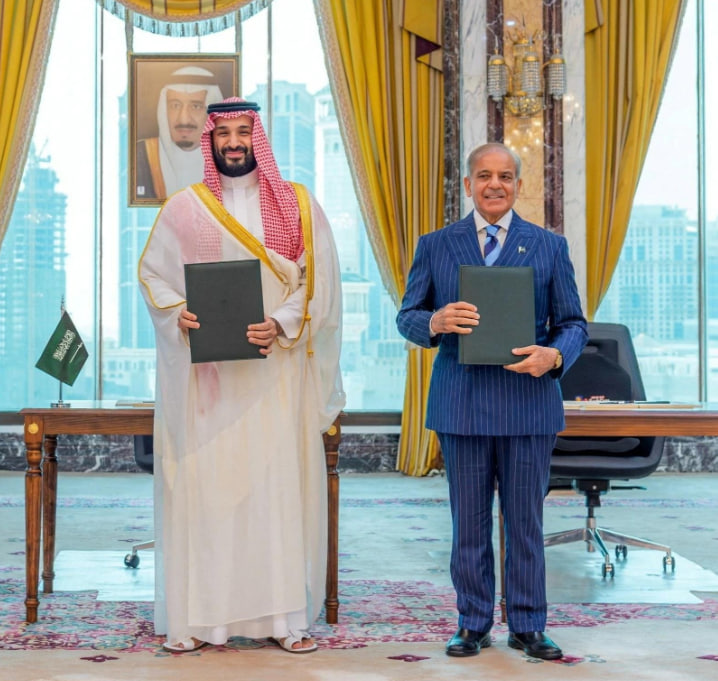
DID Press: The signing of the Mecca Agreement for Joint Defense by Saudi Arabia, Pakistan and Turkey, including a collective-defense provision under which an armed attack against one member is treated as an attack against all, has placed Islamabad’s military relationship with Riyadh at a sensitive juncture. The three countries have since agreed to further institutionalize cooperation under the pact while emphasizing de-escalation and restraint.
At the same time, renewed missile and drone attacks by Yemen’s Ansar Allah against Saudi infrastructure and vital facilities have intensified speculation over whether Pakistan could eventually abandon its longstanding neutrality and become directly involved in military operations against the Houthis.
However, an examination of Pakistan’s historical conduct, geopolitical constraints and decision-making structure suggests that Islamabad is more likely to avoid direct offensive operations in Yemen.
This restraint is rooted in a longstanding approach to foreign and security policy rather than being merely a short-term tactical decision. In April 2015, Pakistan’s parliament unanimously called for neutrality in the Yemen conflict while reaffirming support for Saudi Arabia and stating that Pakistan would stand alongside the kingdom in the event of a violation of its territorial integrity or a threat to the holy sites in Mecca and Medina.
The 2015 parliamentary resolution established an important distinction between supporting Saudi Arabia’s territorial security and entering an external war. Whether and how that framework applies to the new Mecca defense agreement remains a matter of interpretation.
From the perspective of international law, the presence of a collective-defense clause in a defense treaty does not necessarily mean that military forces must automatically participate in every offensive theater. Pakistan’s government has also recently indicated that no military response under the Mecca pact had been discussed following Houthi attacks on Saudi Arabia.
According to the author’s analysis, Pakistan’s role could therefore focus primarily on defensive capabilities, including air-defense assistance, interception of incoming projectiles over Saudi territory and military advice, rather than the deployment of combat forces for offensive operations against Houthi positions.
Beyond the legal dimension, several geopolitical and security considerations could constrain Pakistan’s involvement.
First, a direct confrontation with Ansar Allah could complicate Pakistan’s already sensitive relationship with neighboring Iran. Islamabad shares a border of roughly 900 km with Iran and has sought to avoid a confrontation that could generate additional security and diplomatic pressures along its western frontier.
Second, Pakistan’s socially and religiously diverse population remains sensitive to sectarian tensions linked to conflicts in the Middle East. Direct Pakistani military involvement in Yemen could, according to this analysis, increase domestic political and sectarian polarization.
Third, Pakistan’s military is simultaneously dealing with security challenges along its borders with India and Afghanistan, including militant activity associated with the Tehrik-i-Taliban Pakistan (TTP). Expanding military commitments to another theater could therefore impose additional operational and economic costs on Islamabad.
Against this backdrop, Pakistan’s role under the Mecca agreement may be understood less as an offensive military alignment and more as a framework for deterrence and defensive cooperation. The deployment of Pakistani air-defense personnel or trainers in Saudi Arabia, if undertaken, would primarily serve to protect critical infrastructure and Saudi airspace.
Such cooperation could strengthen Riyadh’s deterrence posture while allowing Islamabad to maintain its defense and economic relationship with Saudi Arabia without committing itself to a broader regional war.
The broader three-way relationship between Islamabad, Riyadh and the actors involved in the Yemen conflict is therefore likely to remain shaped by strategic restraint. Saudi Arabia may seek greater practical support from Pakistan, while Islamabad has strong incentives to preserve its defensive commitments without becoming directly involved in offensive operations inside Yemen.
For Ansar Allah, Pakistan’s posture could similarly depend on whether Pakistani forces conduct direct offensive operations against Houthi positions. If Islamabad limits its involvement to the defense of Saudi territory, its role would remain distinct from that of states directly participating in offensive military operations in Yemen.
The central feature of Pakistan’s approach, according to the author, is therefore strategic balancing: remaining within major Middle Eastern security arrangements and maintaining the benefits of close ties with Saudi Arabia, while avoiding direct involvement in the region’s wars.
By Sayed Baqer Waezi – DID News Agency