DID Press: Tensions between Pakistan’s federal government and the Pakistan Tehreek-e-Insaf (PTI) party have escalated over security in Khyber Pakhtunkhwa province. According to reports cited in the supplied account, President Asif Ali Zardari, acting on Prime Minister Shehbaz Sharif’s proposal, declared an emergency and transferred control of the provincial administration to the federal government. The move has drawn strong opposition from PTI, which has accused the central government of undermining provincial autonomy.
Following the decision, shipping containers were reportedly placed on major roads and streets in Peshawar, the provincial capital, restricting movement. Police and security personnel established checkpoints at various locations across the city. Operations of the city’s Bus Rapid Transit (BRT) system were also suspended.
At an extraordinary cabinet meeting, Sharif accused the PTI-led provincial government of failing to contain terrorist attacks. He claimed the federal government had allocated more than 800 billion Pakistani rupees to counterterrorism efforts in the province, but alleged that local authorities had focused on political activities rather than public security. Sharif also said the use of Afghan territory for attacks against Pakistan was unacceptable.
In response, PTI chairman Gohar Ali Khan described the federal government’s decision as undemocratic and contrary to the constitutional rights of the people of Khyber Pakhtunkhwa. He warned that weakening provincial autonomy and escalating the confrontation between federal and provincial authorities would not necessarily improve security and could further intensify political tensions.
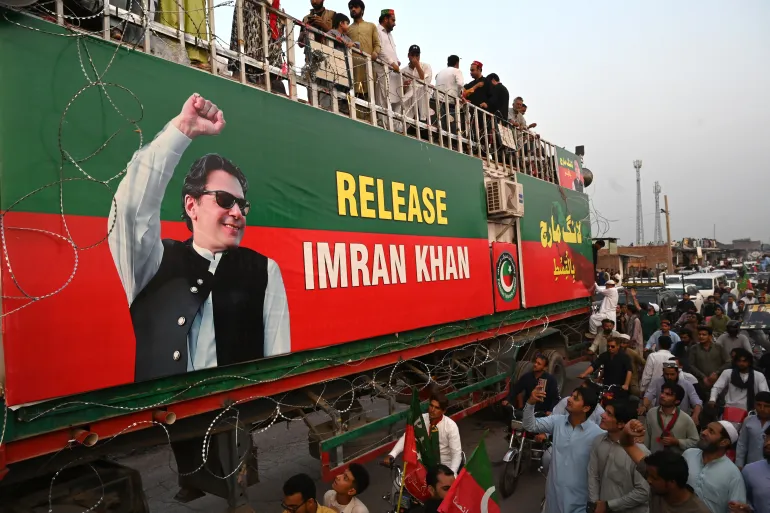
The emergency was declared on October 11, 2026, under Articles 232 and 234 of Pakistan’s Constitution, placing the province under governor’s rule and suspending the PTI-led provincial government. The move comes as PTI has been organizing a protest march towards Islamabad to demand the release of its jailed founder, former Prime Minister Imran Khan.
Khyber Pakhtunkhwa has faced years of militant violence and deteriorating security. The federal government says stronger intervention is needed to address terrorism, while PTI argues that the move undermines the democratic mandate of the province’s elected government. The dispute has intensified the wider debate over counterterrorism policy, provincial autonomy and the authority of elected administrations.