Afghanistan’s Gemstones: The Glittering Treasures of the Hindu Kush
DID Press: Afghanistan sits atop one of the world’s most geologically diverse regions, with complex metamorphic formations and extensive pegmatite deposits. The collision of the Indian and Eurasian tectonic plates, which helped shape the towering Hindu Kush and Pamir mountain ranges, has contributed to the country’s rich mineral resources.
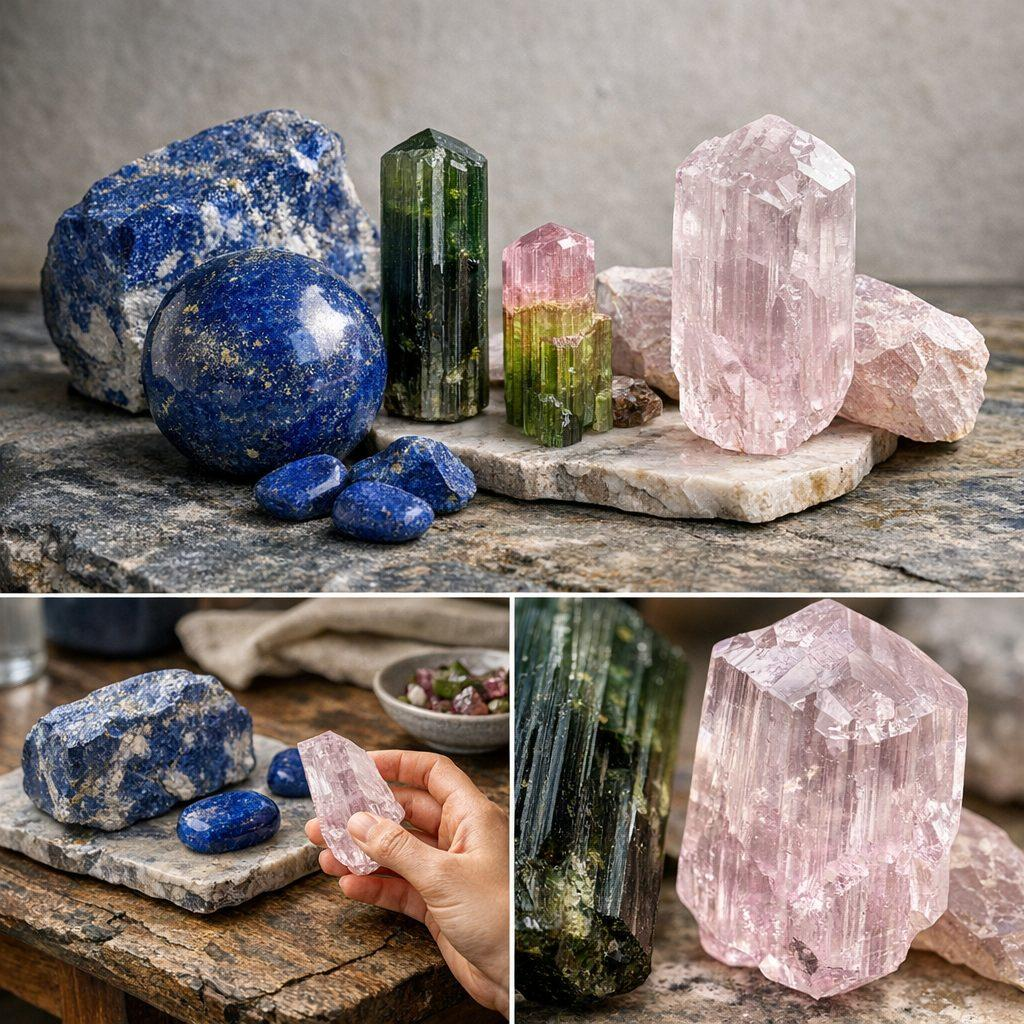
Among Afghanistan’s natural resources, its precious and semi-precious gemstones have earned international recognition. From the celebrated lapis lazuli of Badakhshan to the emeralds of Panjshir, rubies from Jegdalek and colourful tourmalines from Nuristan, these stones represent not only economic potential but also an important part of the region’s cultural heritage and history. Geological surveys have documented a wide variety of gemstone deposits across the country.
What Gemstones Are Found in Afghanistan?
Afghanistan is home to a diverse range of precious and semi-precious stones. Its geological formations, particularly the metamorphic rocks and pegmatite fields in the east and northeast, have produced deposits of emerald, lapis lazuli, ruby, sapphire, spinel, tourmaline, kunzite, aquamarine and other minerals.
1. Panjshir Emeralds
Emeralds from Panjshir are among Afghanistan’s best-known gemstones and are traded internationally. The deposits occur in the mountainous Panjshir Valley, where emerald-bearing veins are associated with metamorphic rocks.
Their appeal comes from their rich green colour, crystal structure and individual characteristics. The Gemological Institute of America has documented the geological properties of Panjshir emeralds and noted similarities between their chemical characteristics and those of emeralds from Colombia’s Muzo mining area.
Panjshir emeralds are valued by gemstone collectors and jewellery makers, although their market prices depend on factors such as colour, clarity, size, treatment and quality of cutting.
2. Badakhshan Lapis Lazuli
Lapis lazuli is one of Afghanistan’s most historically significant mineral resources. The Sar-e-Sang deposit in Badakhshan, located in the Kokcha River region, is internationally recognised as a major source of this deep-blue stone.
Afghan lapis lazuli is prized for its intense blue colour, sometimes accompanied by golden flecks of pyrite. It has long been used in jewellery, decorative objects, carvings and ornamental artwork.
The stone’s history is closely connected with ancient trade routes linking Central Asia with other early civilisations. Geological and mineral-resource studies identify Badakhshan as one of the world’s historically important sources of lapis lazuli.
3. Rubies and Sapphires
The Jegdalek area near Kabul is known for occurrences of ruby, sapphire and spinel. These minerals belong to a group of gemstones valued for their hardness, colour and suitability for jewellery.
Rubies are generally red, while sapphires occur in a range of colours, most famously blue. Their commercial value varies according to colour saturation, transparency, inclusions, size and whether they have undergone treatment.
Afghanistan’s ruby and sapphire deposits are documented in geological surveys of the country’s gemstone resources.
4. Tourmaline and Kunzite
The eastern provinces of Nuristan, Kunar and neighbouring areas are known for pegmatite deposits containing a wide range of minerals and gemstones.
Tourmaline occurs in several colours, including green, pink and blue, and some crystals display more than one colour. Kunzite, a variety of the mineral spodumene, is known for its pink to lilac hues and is used in jewellery.
Studies of Afghanistan’s mineral resources identify Nuristan as an important source of tourmaline, kunzite and other pegmatite-associated gemstones.
5. Badakhshan Spinel
Spinel is another historically important Afghan gemstone. It occurs in colours including red, pink and purple and was sometimes mistaken for ruby before modern gemological techniques made it possible to distinguish between the two minerals.
Some famous historical jewels long described as rubies were later identified as spinels. However, the origins of individual stones must be established through reliable gemological and historical records rather than assumed from their appearance alone.
Spinel deposits and occurrences in Afghanistan are documented in geological surveys covering Badakhshan and other parts of the country.
6. Aquamarine, Topaz and Morganite
Afghanistan also has deposits of aquamarine, topaz, morganite and other beryl-group or pegmatite-associated gemstones.
Aquamarine is known for its blue to blue-green colour, while morganite typically ranges from pink to peach. Topaz occurs in several colours, including colourless, yellow and blue.
These stones are valued for their appearance and suitability for faceted jewellery, with prices depending on quality, size, colour and treatment history. Mineralogical research has documented aquamarine, morganite and related gemstones in Afghanistan’s pegmatite regions.
7. Onyx Marble and Other Decorative Stones
Afghanistan also possesses deposits of decorative and construction stones, including marble and onyx. These materials are used in architectural decoration, interior design, carving and other applications.
Unlike precious gemstones such as emeralds and rubies, decorative stones are generally valued according to factors such as colour, pattern, durability, size and suitability for construction or ornamental use.
The US Geological Survey includes marble and onyx among the mineral commodities produced in Afghanistan.
The History of Afghan Gemstones: From Ancient Civilisations to Renaissance Art
The history of gemstone extraction and trade in Afghanistan stretches back thousands of years. Archaeological and geological research has documented the movement of lapis lazuli from Badakhshan through ancient trade networks to markets in Mesopotamia and other parts of the ancient world.
Ancient Egypt
Lapis lazuli was highly prized in ancient Egypt and was used in jewellery, ornaments and ceremonial objects. The stone’s deep-blue colour made it a symbol of prestige and a sought-after material among ancient elites.
Although Afghan lapis lazuli has a long history of international trade, the provenance of a particular archaeological object must be established through specialist analysis; the presence of blue stones alone does not prove that every example originated in Badakhshan.
Mesopotamia and Babylon
Lapis lazuli was also valued in ancient Mesopotamia, where it appeared in jewellery, decorative objects and royal artefacts.
Its movement across long-distance trade networks illustrates how mineral resources from the region now known as Afghanistan became connected with the economies and cultural practices of ancient societies.
Lapis Lazuli and Renaissance Art
Natural ultramarine, a vivid blue pigment historically produced from lapis lazuli, became one of the most valued pigments in European painting.
Artists used it in important works, including religious paintings in which rich blue was employed for garments and other prominent details. The pigment was expensive because producing it required the careful processing of lapis lazuli, and its cost could be comparable to that of other luxury materials.
Afghanistan’s historical lapis lazuli trade therefore connects its mineral heritage with the development of art and craftsmanship across different regions and centuries.
Why Are Afghan Gemstones Valued in International Markets?
Afghan gemstones attract interest from collectors, gem dealers and jewellery makers for several reasons.
1. Distinctive natural characteristics
Colour, clarity, crystal formation and mineral composition can make individual Afghan gemstones desirable. However, not all stones are untreated, and the claim that Afghan gemstones are universally sold without artificial enhancement is not supported by the available evidence.
2. Colour and appearance
Panjshir emeralds, Badakhshan lapis lazuli and Nuristan tourmalines each have distinctive visual characteristics. Their quality varies from one deposit and specimen to another.
3. Geological diversity
Afghanistan’s varied geological formations have produced several different types of gemstones. Pegmatite deposits in particular are associated with tourmaline, kunzite, aquamarine and other minerals.
4. Rarity and collectability
High-quality specimens can command significant prices, particularly when they have exceptional colour, size, clarity or documented provenance. Nevertheless, gemstone values do not necessarily rise every year; prices depend on supply, demand, quality and market conditions.
Traditional Beliefs About the Healing Properties of Afghan Gemstones
In various traditional healing systems and spiritual practices, gemstones have been associated with emotional balance, energy and physical well-being.
Lapis lazuli, for example, is sometimes associated with wisdom and tranquillity; emerald with love and renewal; and ruby with vitality and courage. Tourmaline and kunzite are also linked to protective or calming properties in some spiritual traditions.
These associations are cultural or spiritual beliefs, not established medical effects. There is no reliable scientific evidence that gemstones can lower blood pressure, strengthen the immune system, improve eyesight, increase blood circulation or treat psychological or physical illnesses. They should not be used as substitutes for evidence-based medical care.
The cultural significance of these beliefs can be discussed separately from the scientifically established mineralogical properties of gemstones.
Afghanistan’s Main Gemstone-Producing Regions
Afghanistan’s gemstone resources are distributed across several provinces.
- Badakhshan — Sar-e-Sang: Historically important for lapis lazuli, with additional gemstone occurrences in the wider region.
- Panjshir Valley: Known internationally for emerald deposits and small-scale mining operations.
- Jegdalek, Kabul region: Associated with ruby, sapphire and spinel occurrences.
- Nuristan and neighbouring eastern provinces: Known for pegmatites containing tourmaline, kunzite, aquamarine and other minerals.
- Other regions: Afghanistan also has deposits of decorative stones and a variety of industrial minerals.
The US Geological Survey and other geological research organisations have mapped and documented many of these mineral occurrences, although the scale of individual deposits and the amount that can be economically extracted vary considerably.
The Economic Importance of Gemstones: Challenges and Opportunities
Afghanistan’s gemstones could contribute to export earnings, employment and local economic development. However, turning mineral resources into sustainable economic benefits requires investment in responsible extraction, processing, certification and transparent trade.
The US Geological Survey records the production of precious and semi-precious gemstones in Afghanistan, but the country’s wider mineral sector remains constrained by limited data, informal operations and difficulties in accurately measuring production.
Structural Challenges in the Value Chain
1. Traditional and small-scale mining
Many gemstone operations rely on artisanal or small-scale methods. The use of explosives and other extraction techniques can damage crystals, reduce recovery rates and expose miners to safety risks. US Geological Survey research has documented the importance of informal and small-scale mining in Afghanistan.
2. Smuggling and the export of rough stones
The movement of rough gemstones across borders can limit the amount of value retained inside Afghanistan. When stones are cut, polished, certified and marketed elsewhere, a substantial portion of the processing and commercial value may be generated outside the country.
However, the scale of smuggling and the proportion of stones involved require reliable, current data and should not be assumed from older estimates alone.
3. Limited processing and certification capacity
Developing domestic gemstone-cutting businesses, modern laboratories and recognised certification systems could help Afghan producers demonstrate the quality and provenance of their products.
A stronger local processing industry could also create employment beyond mining, including in jewellery design, cutting, polishing, grading and export services.
Steps That Could Support the Industry
Several measures could help Afghanistan capture more value from its gemstone resources:
- Establishing transparent and well-regulated gemstone trading centres.
- Expanding technical training in gemstone cutting, polishing and grading.
- Developing reliable certification and traceability systems.
- Improving mine safety and environmentally responsible extraction.
- Strengthening controls against smuggling and illicit trade.
- Encouraging investment in domestic jewellery manufacturing and export marketing.
Such measures could help increase the economic contribution of the gemstone sector, although the results would depend on implementation, market access, infrastructure and wider economic conditions.
Technical Characteristics of Major Afghan Gemstones
| Gemstone | Main Afghan source or region | Mohs hardness | Typical colour |
|---|---|---|---|
| Emerald | Panjshir Valley | 7.5–8 | Green |
| Lapis lazuli | Sar-e-Sang, Badakhshan | 5–5.5 | Deep blue, sometimes with pyrite |
| Ruby | Jegdalek and other documented occurrences | 9 | Red to purplish red |
| Spinel | Badakhshan and other occurrences | 8 | Red, pink, purple and other colours |
| Tourmaline | Nuristan and eastern Afghanistan | 7–7.5 | Green, pink, blue and multicoloured |
| Kunzite | Pegmatite regions, including Nuristan | 6.5–7 | Pink to lilac |
| Aquamarine | Pegmatite regions, including Nuristan | 7.5–8 | Pale blue to blue-green |
Note: Hardness values are standard mineralogical ranges. The table identifies documented source regions, but the quality and commercial value of individual stones vary.
Conclusion
Afghanistan’s gemstones represent a remarkable combination of geological diversity, cultural heritage and economic potential. From the historic lapis lazuli deposits of Badakhshan to the emerald mines of Panjshir and the pegmatite gemstones of Nuristan, the country possesses a wide range of mineral resources that have attracted attention for centuries.
Yet natural wealth alone does not guarantee economic prosperity. Safer mining practices, transparent trade, effective certification, domestic processing and stronger access to international markets would be important steps towards ensuring that more of the value generated by these resources benefits Afghan communities.
With responsible management and investment, Afghanistan’s gemstone industry could support employment, preserve traditional skills and contribute to the development of a more diversified economy.
Prepared by: Zahra Hosseini — DID News Agency