DID Press: The spread of protests across European countries, including France, Italy, Belgium and Portugal, should be examined beyond the framework of domestic issues, according to this analysis. It argues that the unrest, particularly in France, is part of the wider internationalization of the socioeconomic consequences of the war between Iran and the United States, as the conflict takes on an increasingly transregional dimension.
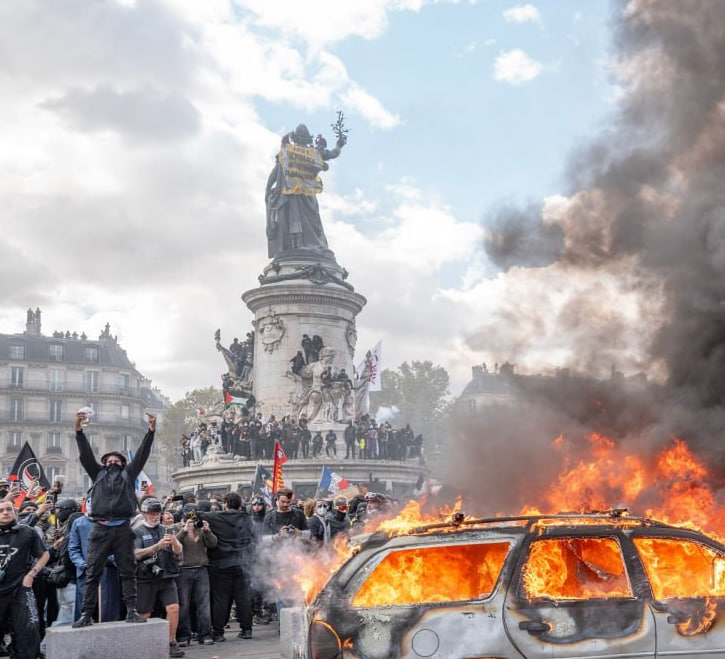
From this perspective, the ongoing demonstrations in parts of Europe reflect not only local grievances but also broader concerns about war, justice and the international order.
One significant indication of this shift, the analysis argues, is the prominent presence of Palestinian flags at demonstrations, particularly in France. The symbol is presented as evidence that the protests have moved beyond domestic social and economic demands to incorporate broader calls for justice and opposition to war.
For many demonstrators, the Palestinian issue, conflicts in the Middle East and the policies of major powers are interconnected. These concerns are expressed through a shared demand to end the cycle of violence and military intervention.
Meanwhile, the continued confrontation between Iran and the United States is creating consequences that may increasingly escape the control of the main parties involved. Any further escalation of the crisis in the Strait of Hormuz could intensify the global energy crisis.
The Strait of Hormuz is one of the world’s most important energy transit routes. Prolonged disruption could trigger a chain of consequences, including higher energy prices, rising inflation, interruptions to global trade and increased economic pressure on European societies. The analysis argues that these pressures could, in turn, fuel wider social unrest and potentially destabilise political systems across Europe.
From this standpoint, one dimension of Iran’s influence in the crisis lies in its ability to affect calculations well beyond the Middle East. The argument is that, unlike many previous regional conflicts, any confrontation with Iran could impose significant costs on the international system as a whole.
When a conflict affects the global economy, energy markets, European public opinion and the political stability of multiple countries, it becomes clear that the consequences extend beyond a bilateral confrontation between Iran and the United States. Instead, the analysis portrays the conflict as a global crisis whose repercussions could affect nearly all international actors.
By Mohsen Mowahed | DID News Agency