Moscow Format Faces Test as Afghanistan-Pakistan Rift Blocks Joint Statement
DID Press: The eighth meeting of the Moscow Format was held in Moscow on 13 Mizan 1405 (October 5, 2026), with representatives from 12 countries, including the Taliban authorities in Afghanistan, taking part.
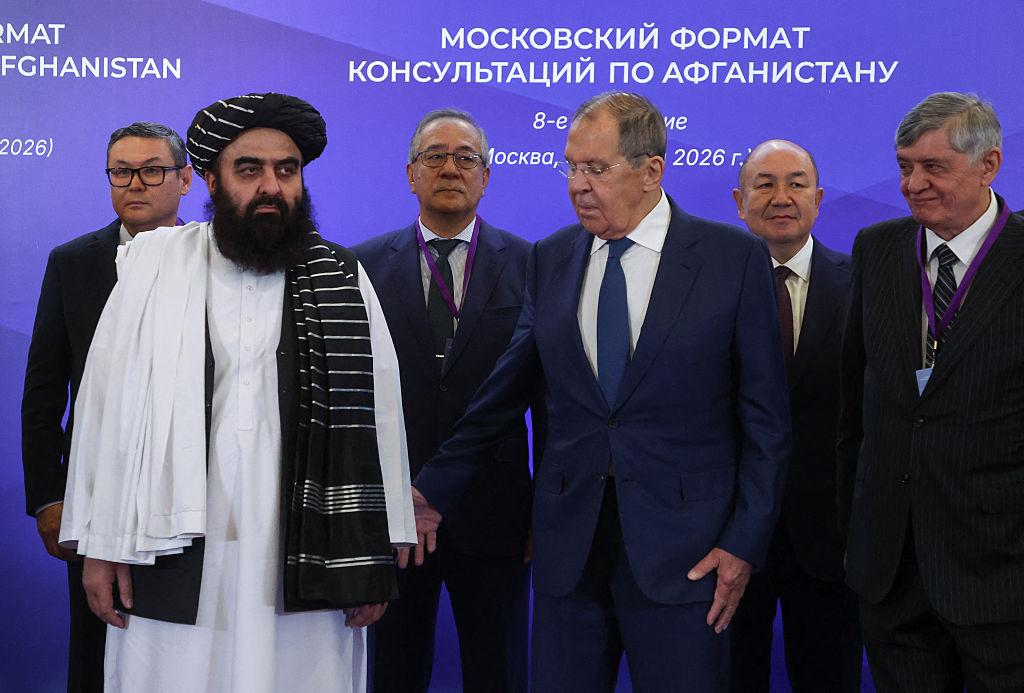
The meeting came five years after the Taliban returned to power and US forces withdrew from Afghanistan. During this period, the Moscow Format has emerged as the region’s main political mechanism for coordinating the positions of Afghanistan’s neighbours and other regional countries.
Through the format, Russia and regional states have sought to manage the Afghanistan crisis, prevent insecurity from spilling across borders and build a common regional approach to developments in the country. However, tensions and disagreements between Afghanistan and Pakistan were also reflected in the eighth meeting, preventing participants from reaching agreement on a final statement after the two sides exchanged accusations over alleged support for terrorist groups.
An assessment of the meeting highlights several key developments and structural challenges.
1. The Moscow Format’s Changing Role and the Significance of the Missing Final Statement
Before examining the format’s changing role, it is important to recall that the regional political mechanism was established in 2017, when the United States was moving towards direct negotiations with the Taliban.
The second round of the format was held in 2018, coinciding with the start of direct US-Taliban talks in Doha. Taliban representatives attended the meeting for the first time.
The signing of the Doha Agreement in February 2020 and the withdrawal of US forces in August 2021 fundamentally changed the political circumstances in which the Moscow Format had been established.
With its original mission of facilitating national reconciliation between the Afghan government and the Taliban no longer applicable, the format shifted towards regional coordination with the authorities in Kabul. From the sixth round onwards, opponents of the Taliban were excluded from the meetings.
Zamir Kabulov, Russia’s special representative, also stressed on the sidelines of the eighth meeting that the format was not a platform or mechanism for resolving bilateral disputes, but rather a framework for coordinating regional cooperation.
Its current stated functions include:
- Advancing regional coordination on Afghanistan.
- Strengthening counterterrorism cooperation and efforts to combat narcotics.
- Reinforcing opposition to the establishment of NATO military infrastructure in Afghanistan and neighbouring countries.
- Supporting economic connectivity and infrastructure projects.
- Maintaining the format as a channel for continued dialogue with Afghanistan’s current authorities.
Against this backdrop, the absence of a final statement for the first time at the eighth meeting should not necessarily be regarded as a failure of the Moscow Format. Rather, it reflects the transformation of the format’s role, while also exposing the structural limitations of a consultative mechanism in building collective consensus.
Nevertheless, if the absence of joint statements continues in future meetings, it could weaken the format’s coordinating role.
Another important consideration is the exclusion of Taliban opponents since the sixth round. Although this may be explained by the format’s changing function, it also represents a departure from its original objective of involving all domestic stakeholders. This should be considered in any long-term assessment of the mechanism, rather than being treated solely as a criterion for evaluating the eighth round.
2. Progress in Bilateral Relations, Deadlock at the Collective Level
The Moscow Format has produced some results in bilateral security cooperation between Russia and Afghanistan’s current authorities, but has encountered a deadlock at the collective level.
During the opening session, Russian Foreign Minister Sergey Lavrov congratulated Taliban Foreign Minister Amir Khan Muttaqi on the fifth anniversary of what he described as Afghanistan’s liberation from US and NATO forces. Lavrov praised the Taliban authorities’ achievements and said their successes in combating narcotics and terrorism were largely linked to ongoing military-technical cooperation between the two countries.
Lavrov also described the establishment of any NATO military infrastructure in Afghanistan or neighbouring countries as “completely unacceptable”.
Russia and the Taliban had previously signed a military-technical cooperation agreement in May 2026, although the full scope of the agreement has not been disclosed.
These developments indicate that the eighth meeting partly fulfilled its role in aligning positions at the bilateral level and in political discourse. However, participants failed to produce a joint statement at the collective level.
3. Economic Cooperation: Shared Rhetoric Without Implementation Commitments
In the economic sphere, participants developed a degree of common understanding, but their discussions did not result in a binding document.
Talks focused on regional security, counterterrorism, combating narcotics, economic cooperation and expanding Afghanistan’s relations with neighbouring countries.
Lavrov referred to the participants’ commitment to “developing equal cooperation with Kabul and integrating Afghanistan into international economic relations”.
However, these commitments remained at the level of political statements. With no final declaration issued, participants adopted no binding document to establish a framework for following up on the proposed commitments.
Thus, the meeting produced a degree of rhetorical alignment on economic issues, but no concrete implementation commitments.
4. Political Disagreements: Bilateral Tensions Obstruct Collective Consensus
The bilateral dispute between Afghanistan and Pakistan had a significant impact on the eighth Moscow Format meeting.
According to Zamir Kabulov, participants encountered a problem while drafting the final joint statement because the Afghan and Pakistani delegations held different positions.
Kabulov said the Afghan delegation believed that Afghanistan had been mentioned excessively in connection with terrorism. He described this objection as “surprising”, noting that the same wording had also appeared in the statement issued after the seventh round.
Pakistan, meanwhile, insisted that the final document explicitly address Kabul’s responsibility for the activities of Tehreek-e-Taliban Pakistan (TTP).
Although all participants called on the two sides to end military clashes along their shared border, mutual accusations prevented them from reaching even a minimum consensus on ending the tensions.
5. The Eighth Meeting as a Contest of Narratives and Pakistan’s Failure to Secure Its Position
The eighth meeting demonstrated that the Moscow Format has increasingly become an arena for competing political narratives and initiatives by different actors.
One clear example was Pakistan’s attempt to have its position reflected in the final statement.
Islamabad had hoped that the Moscow meeting would condemn the Taliban authorities or, at minimum, identify them as the source of insecurity in Pakistan.
However, Russia’s position was closer to Afghanistan’s narrative than to Pakistan’s.
This reflected the different priorities of Moscow and Islamabad. Russia has sought to reinforce its opposition to NATO and Western military presence, expand security cooperation with the Taliban and prevent Kabul from moving closer to Washington.
For this reason, Moscow was unwilling to describe the Taliban authorities as a “source of insecurity”, as doing so would have conflicted with its policy of engagement with Kabul.
Consequently, Pakistan’s position was not reflected in an official meeting document. The outcome also demonstrated that Moscow, during this round of the format, neither had the leverage to direct Kabul’s conduct nor managed to shape the meeting’s political narrative in favour of either side in the dispute.
6. Structural Limitations of the Moscow Format as a Consultative Mechanism
The Moscow Format was designed from the outset as a consultative mechanism rather than a binding decision-making institution.
This structural nature has three main implications.
First, it has the capacity to coordinate political positions, establish common positions through joint statements and keep channels of dialogue open.
Second, it lacks binding instruments to resolve bilateral disputes or direct the behaviour of participating actors. Kabulov also emphasised that the format was “not a platform for resolving bilateral disputes” and that its objective was to achieve regional consensus.
Third, the format’s continued existence does not depend on the issuance of a final joint statement. Kabulov said the Moscow Format could “continue to function and remain active without this joint statement”.
Therefore, expecting a consultative mechanism to resolve deep-rooted bilateral disputes or fundamentally change the conduct of an individual actor goes beyond its institutional design and capabilities.
Nevertheless, repeated failures to issue joint statements could gradually turn the format into a largely ceremonial platform and undermine its coordinating role. This is a key challenge facing its future.
Conclusion
The eighth Moscow Format meeting should be assessed by examining both its achievements and challenges across the political, economic and security spheres.
The format’s original mission of facilitating national reconciliation has now shifted towards regional coordination with the authorities in Kabul.
At the bilateral level, security and military-technical cooperation between Russia and the Taliban authorities has continued. Russia remains the only country to have formally recognised the Taliban government.
At the level of political discourse, Moscow reiterated its opposition to the establishment of NATO military infrastructure in the region and called for alignment with the Taliban authorities in combating narcotics and terrorism.
Although the Moscow Format was preserved as a channel for dialogue and participants reached a minimum understanding on the need to end tensions between Afghanistan and Pakistan, the meeting faced significant challenges.
For the first time, no final statement was issued. The main reason was the disagreement between the two neighbouring countries over mutual accusations of supporting terrorism.
The meeting also exposed the inherent limitations of the Moscow Format as a consultative mechanism. While it can coordinate political positions and maintain communication, it has no binding tools to resolve bilateral disputes or control the conduct of participating actors.
The eighth round also highlighted the issue-specific nature of Russia’s influence over the Taliban authorities. Moscow’s influence is relative in security cooperation and political discourse, but limited when it comes to resolving regional disputes.
The continued exclusion of Taliban opponents since the sixth round also reflects a departure from the format’s original objective of involving all domestic stakeholders.
Ultimately, the future of the Moscow Format will depend on two conditions:
- Russia’s ability to balance its support for the Taliban authorities with pressure on them to accept a minimum level of collective commitments.
- The willingness of regional actors to continue investing political capital in the mechanism.
The experience of the eighth round increases the possibility that the format could gradually become a ceremonial platform unless Moscow shifts its measure of success from producing a joint document to managing disagreements and preserving channels of dialogue.
Otherwise, repeated failures to issue final statements could call into question the format’s ability to consolidate regional positions, push participants towards alternative channels and turn it into an arena for displaying disagreements rather than building coordination.
By Ismail Baqeri, Afghanistan affairs analyst
Original source: Eastern Studies