Taliban Prioritise Mosques and Madrasas as Millions Face Hunger and Unemployment
DID Press: As Afghanistan faces a deepening economic crisis, widespread unemployment, poverty and hunger, Taliban leader Hibatullah Akhundzada has prioritised religious projects during his provincial visits instead of inaugurating job-creating industrial and economic initiatives. These projects include laying the foundation stones for large mosques and religious schools.
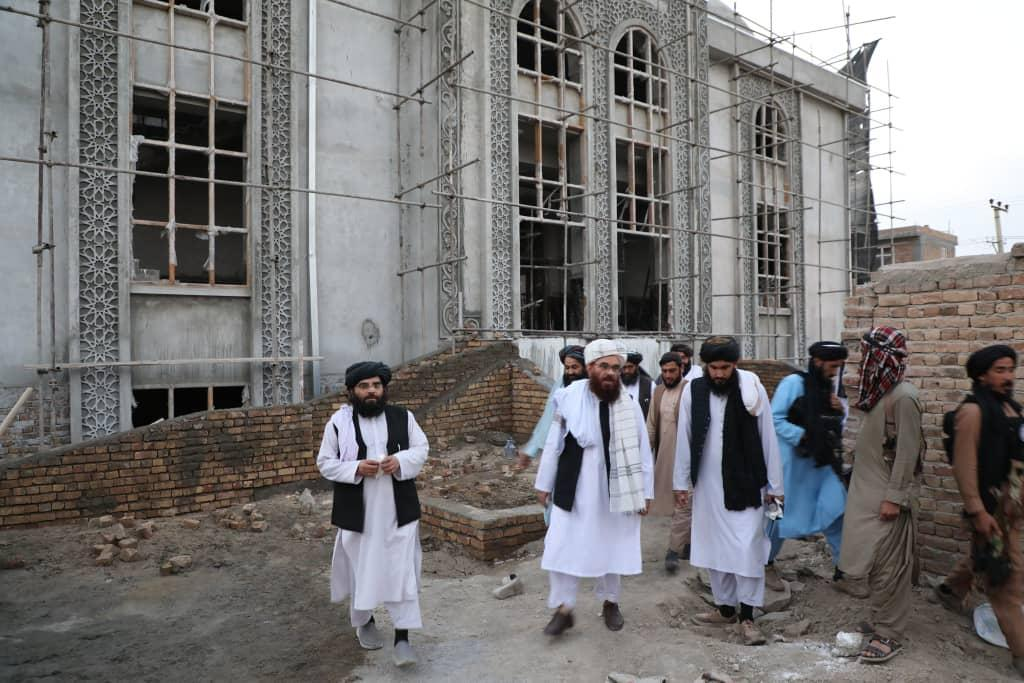
This approach, the article argues, shows that the Taliban leader’s priorities are out of step with the urgent needs of the country’s population and that people’s livelihoods and living conditions appear to have little place in his agenda.
According to published reports, during his visit to Ghazni province, Akhundzada laid the foundation stone for what is described as the province’s largest Eidgah mosque, on a plot covering 180 jeribs, as well as a jihadi madrasa on 100 jeribs of land.
In Zabul province, he laid the foundation stone for an Eidgah mosque on 70 jeribs of land in the eastern part of Qalat city, and another congregational mosque on 10 jeribs in the Madad Chowk area.
His visit to Kabul also included the foundation-laying ceremonies for two large mosques and a religious school. According to Hamdullah Fitrat, the Taliban deputy spokesperson, a congregational mosque named after Hibatullah Akhundzada will be built in the Chaman-e Hozori area, with a capacity of 5,000 worshippers. The foundation stones were also laid for a large mosque at Mirwais Maidan, also known as Kot-e Sangi, and a jihadi madrasa on Maranjan Hill.
During his visit to Maidan Wardak province, Akhundzada laid the foundation stone for a new congregational mosque intended to replace one destroyed during the previous government.
These projects indicate that the construction of mosques and religious schools has featured prominently in the Taliban leader’s recent provincial visits. Although building mosques is not inherently a negative undertaking, and such institutions can serve important religious, social and cultural functions, the central questions concern the balance of priorities, the resources allocated and the educational content of institutions being developed under the label of jihadi madrasas.
Last week, the Taliban also inaugurated a large mosque named after Jalaluddin Haqqani, the father of Sirajuddin Haqqani, the group’s interior minister, on Nader Khan Hill in Kabul. According to Taliban officials, the mosque can accommodate 2,000 worshippers at a time and cost $2 million to build.
Meanwhile, the Taliban’s Ministry of Hajj and Religious Affairs has claimed that 60 mosques were built in Kabul city this year, with more than 50 additional mosques also constructed.
Expansion of Jihadi Madrasas and Concerns Over Extremism
What stands out in these projects is not simply the growing number of mosques, but also the emphasis on building jihadi madrasas alongside large religious institutions.
At a time when the Taliban have imposed extensive restrictions on Afghanistan’s education system, particularly on girls, the expansion of religious schools with a jihadi orientation reinforces concerns that the group places greater importance on directing young Afghanistanian people towards extremist tendencies and producing large numbers of radicalised individuals loyal to an ideology of violent extremism than on providing them with knowledge, awareness and professional skills.
When religious education is framed by an extremist ideology, unquestioning obedience and the promotion of a violent jihadi interpretation of politics and society, the risk that these institutions could become breeding grounds for the reproduction of extremist ideas increases significantly.
The main concern is that, instead of educating a generation equipped with knowledge, professional expertise, critical thinking and the skills society needs, a substantial part of the country’s educational capacity could be devoted to producing a generation that views the world and its surroundings through the lens of ideology and extremist confrontation.
These concerns become more serious given Afghanistan’s urgent need to expand general education, universities, technical and vocational training centres, and the development of a skilled workforce. Yet, the country’s economic and educational resources are being directed towards mosque and madrasa construction.
A country facing shortages of doctors, engineers, teachers, agricultural specialists and skilled workers cannot achieve educational development simply by increasing the number of religious schools and institutions.
Afghanistan Needs Food, Jobs and Production
On the other side of this equation is the economic and livelihood situation of millions of people across the country.
According to the latest joint estimates by the United Nations World Food Programme (WFP) and the Food and Agriculture Organization (FAO), approximately 19.2 million people, equivalent to 38 per cent of Afghanistan’s population, are expected to face acute food insecurity during the lean season from November 2026 to April 2027. Of these, around five million people are expected to experience emergency levels of hunger.
The United Nations humanitarian plan also estimates that approximately 21.9 million people in Afghanistan will need humanitarian assistance in 2026. Unemployment, declining income-generating opportunities, rising food prices, increased transportation costs and reductions in humanitarian aid are among the factors worsening the crisis.
Under these circumstances, Afghanistan needs investment more than ever in productive industries, agriculture, energy, economic infrastructure and job creation.
In today’s world, provincial visits by leaders of different countries are generally accompanied by the inauguration of factories, power plants, major production projects, irrigation networks, industrial centres and employment programmes. This is because governments are ultimately judged by how much they improve people’s living standards, increase household incomes and promote economic development.
However, Akhundzada’s recent visits to Kabul, Maidan Wardak, Ghazni and Zabul have been marked more by the laying of foundation stones for large mosques and jihadi religious schools than by the inauguration of major economic and industrial projects.
This difference in priorities raises a fundamental question: in a country where millions of people struggle desperately to put food on their tables, should the expansion of religious projects on this scale be at the top of the development agenda?
Government Priorities: National Development or Expansion of an Ideological Structure?
The construction of mosques, schools and other religious institutions can contribute to social development when accompanied by responsible education, a focus on knowledge, tolerance and social accountability. Otherwise, the physical expansion of these institutions alone cannot be regarded as a sign of progress and development.
Afghanistan today needs factories, farms, power plants, hospitals, schools, universities and employment opportunities. People struggling with hunger, poverty and unemployment need, above all, policies that put food on their tables and create the conditions for every citizen to live with dignity.
The fundamental question is not why mosques are being built. It is why, alongside this large number of religious projects, there are no equally extensive programmes for production, employment, specialised education and lifting millions of people out of poverty and hunger.
The success of a government is not measured by the number of domes and minarets built during its rule, but by the level of prosperity, awareness, security and opportunities it provides for its citizens.
To overcome its current crisis, Afghanistan needs economic and human development more than anything else.