Afghanistan’s Centuries-Old Kangina Tradition Keeps Grapes Fresh Until Spring
DID Press: As the lack of standard cold-storage facilities and difficulties with exports continue to pose challenges for Afghanistan’s fruit growers, a centuries-old traditional method is still being used to preserve the freshness of grapes.
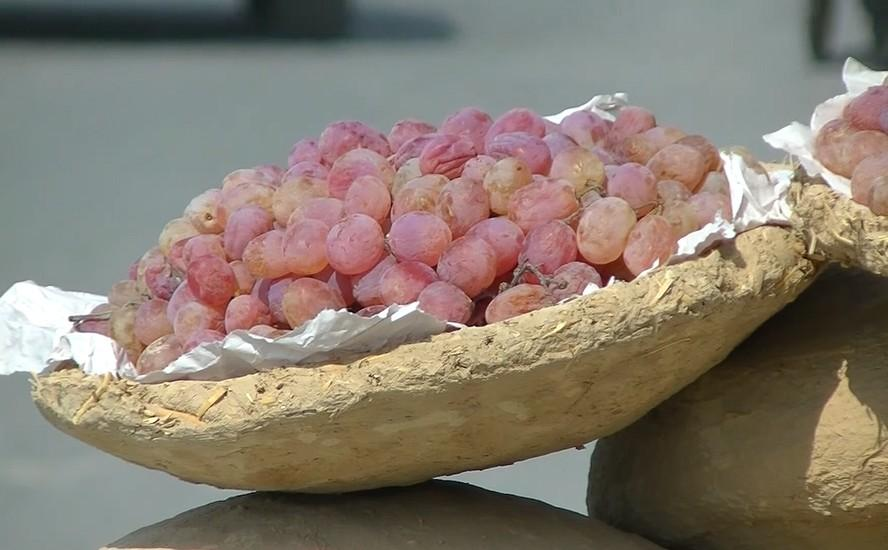
Known as Kangina, the technique involves containers made from a mixture of soil and straw, allowing farmers to store grapes harvested in autumn for consumption during the winter and early spring.
Some farmers on the outskirts of Kabul, particularly in Kalakan district, continue to use this traditional method to preserve their autumn grape harvest for the colder months.
A Kangina is a traditional container made from a mixture of soil and straw. It usually consists of two bowl-shaped clay sections.
To make one, farmers mix soil with straw, add water and shape the mixture into the desired form. The two sections are then left under direct sunlight to dry and harden.
Once the container is ready, healthy bunches of grapes are placed inside one of the sections, and the second section is positioned over it.
The joint between the two halves is then covered with mud and completely sealed, minimising the grapes’ exposure to outside air.
The prepared Kanginas are stored in cool, dark places away from direct sunlight.
Some farmers also keep the containers underground to provide more suitable conditions for maintaining the fruit’s freshness.