World Bank: Afghanistan Ranks Last in Regional Water Management Assessment
DID Press: Afghanistan has received a score of just 12 out of 100 on the Integrated Water Resources Management (IWRM) index, placing it at the bottom of the countries assessed in the World Bank’s latest evaluation. The country’s declining freshwater reserves, combined with weaknesses in water management, have raised concerns about the future of shared water resources in the region.
According to the World Bank’s Afghanistan Development Update, published in November 2026, Turkmenistan scored 68, Tajikistan 54 and Uzbekistan 51 in the water-management assessment, outperforming Afghanistan.
The assessment examined four key areas: laws and policies, institutional coordination, monitoring systems and financing.
The report also shows that renewable surface water availability in Afghanistan’s section of the Panj and Amu Darya basin ranges from 2,590 to 3,030 cubic metres per person annually. However, Afghanistan has lost an average of 4.9 billion cubic metres of freshwater reserves each year since 2003, bringing cumulative losses to approximately 119 billion cubic metres.
According to World Bank data, agriculture provides employment for around 46% of Afghanistan’s workforce and accounts for more than 95% of the country’s water withdrawals. This highlights the need to improve irrigation methods and rehabilitate ageing water infrastructure.
The World Bank has identified the restoration of karezes, rehabilitation of irrigation networks, participation of rural communities and integrated river-basin management as key measures to address Afghanistan’s water crisis.
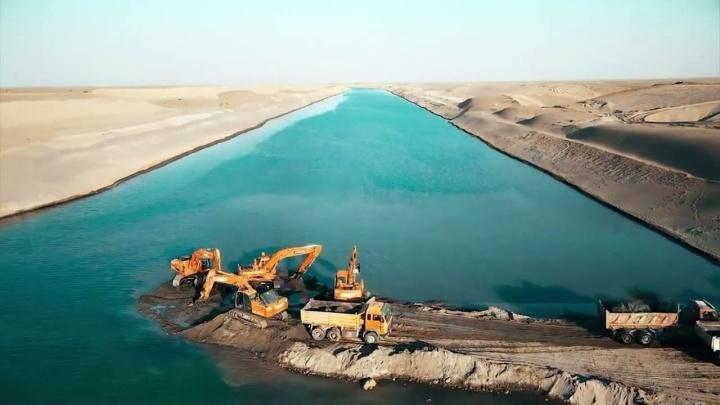
Afghanistan’s structural weaknesses in water management come as Kabul pursues major water infrastructure projects, including the Qosh Tepa Canal and dam construction in shared river basins. Such developments could have implications beyond the country’s borders. Expanding water infrastructure without transparent information, environmental assessments and coordination with downstream countries could increase the risk of water-related tensions with neighbouring states.