Taliban Religious Policy Raises Questions Over Jafari Rights in Afghanistan
DID Press | Opinion: The speech delivered on Friday, Nov 27, by Mohammad Akbari, deputy head of the Afghanistan Shiite Scholars Council in western Kabul, offered a revealing yet thought-provoking picture of the difficult conditions facing religious and legal advocacy in present-day Afghanistan.
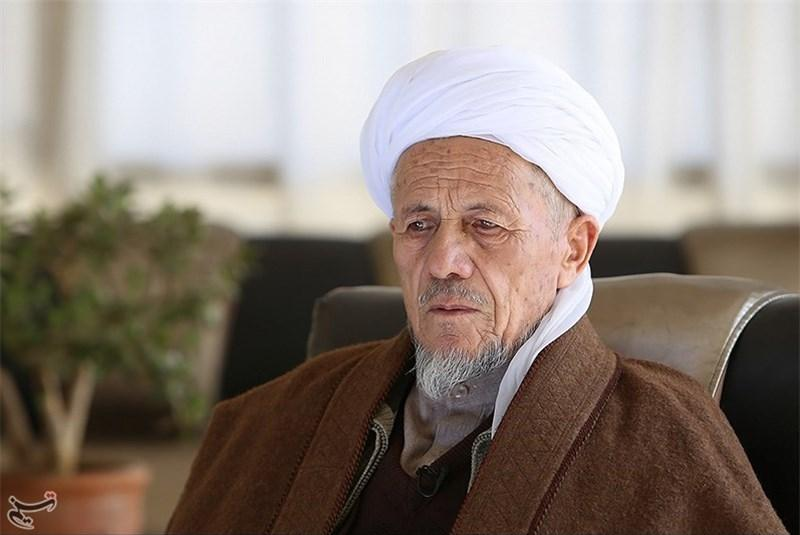
The remarks, made in response to controversial comments by Taliban leader Hibatullah Akhundzada at Kabul University on Nov 17, have once again raised a fundamental question among citizens. At the time, the Taliban leader reportedly said that all people in Afghanistan should follow the Hanafi school of Islamic jurisprudence and described even adherence to the Shafi’i school as impermissible. In the absence of a constitution and amid Kandahar’s policy of religious uniformity, what will become of the legal status of the Jafari school and the civil rights of Afghanistan’s Shiite population?
A closer examination of Professor Akbari’s language and tone reveals a degree of nuance and duality that largely reflects the harsh realities on the ground and the severe constraints of the political environment inside the country.
Unlike political figures outside Afghanistan, who can adopt a more forceful and outspoken position from the relative safety of exile, Professor Akbari speaks from inside Kabul, at the heart of Taliban rule, where every word can carry direct security and social consequences for the population.
This explains why, on the one hand, he explicitly reminds the Taliban that part of the country’s population follows the Shiite school of Islam. Referring to the friendly and respectful relationship between Imam Abu Hanifa and Imam Ja’far al-Sadiq, he calls on the Taliban to uphold justice and bridge divisions among ethnic and religious communities.
At the same time, however, he urges the public, particularly Hazaras and Shiites, not to adopt an oppositional stance toward the Taliban administration. This approach—combining demands for rights with tolerance and caution—is, in effect, a pragmatic effort to protect the vulnerable Shiite community from tension and direct confrontation.
The central issue, however, goes beyond the caution exercised by religious scholars in Kabul. The fundamental problem lies in the legal vacuum and structural exclusivism at the highest levels of Taliban power.
Over the past two decades, despite its shortcomings in implementation, Afghanistan’s Constitution represented a historic and lasting achievement for Shiites: it recognized the Jafari school alongside the Hanafi school and guaranteed the personal-status rights of Shiites in courts and government institutions. That recognition was not a political favor but a legal and civil right secured after years of dialogue and national consensus aimed at acknowledging Afghanistan’s diverse social fabric.
Today, however, with the Constitution suspended, extensive changes to school and university curricula, restrictions on religious ceremonies and, most recently, the Taliban leader’s explicit remarks in Kabul effectively rejecting jurisprudential diversity, the legal status of the Jafari school has become increasingly uncertain.
When a system places a leader’s verbal decrees above all laws and regulations, and that leader openly calls on the entire population to follow a particular school of Islamic jurisprudence, the issue can no longer be easily dismissed or treated as a mere “slip of the tongue.” Such a position clearly reflects Kandahar’s approach to imposing religious uniformity on society.
Under these circumstances, a crucial question arises: can a long-term policy of “patience and tolerance,” combined with respectful appeals to Taliban officials, fill the gap left by the absence of legal guarantees?
The efforts of religious scholars inside the country to preserve calm and prevent the population from bearing the costs of confrontation are entirely understandable. Experience, however, has shown that when civil rights and religious freedoms are not grounded in written law and accountable institutions, they can be called into question at any moment by a new decree or another speech.
Without a clearly defined legal framework, there can be no guarantee that citizens’ religious identities and rights will be protected against arbitrary decisions.
Afghanistan is a shared home for diverse ethnic and religious communities. Lasting peace and stability cannot be achieved by ignoring social realities or expecting one side alone to bear the burden of pressure.
The country’s history has repeatedly shown that attempts to deny religious diversity and impose a single interpretation on the entire population lead only to disillusionment and a widening divide between the people and those in power.
Unless the rights of followers of all religious schools—and particularly those adhering to the Jafari school—are once again recognized through clear and inclusive legislation, the divide between Kandahar’s religious exclusivism and Kabul’s caution will continue to undermine civil rights and national cohesion in Afghanistan.
By Sayed Baqer Waezi – DID News Agency