DID Press: Iranian delegation’s arrival at recent negotiations aboard the sanctioned Meraj airline and the prominent display of the “Minab 168” symbol transformed the trip into more than a routine diplomatic mission, adding political, media and symbolic dimensions aimed at both international audiences and domestic public opinion.
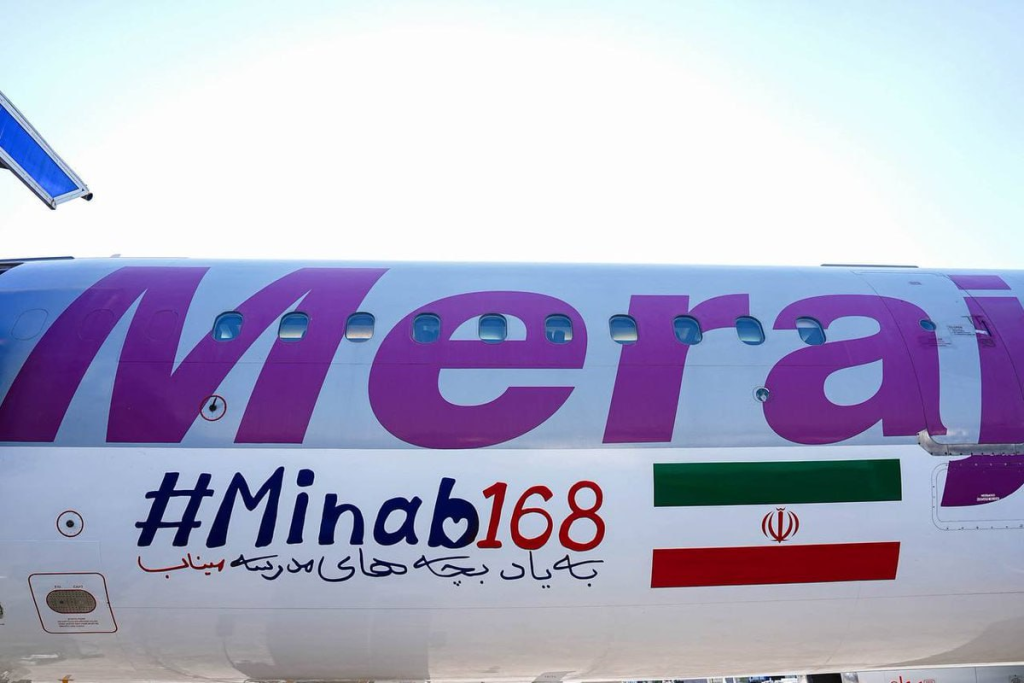
Iran’s delegation traveled to the Geneva talks on an aircraft operated by the sanctioned Meraj Airlines, a carrier that has long been subject to U.S. restrictions. Observers noted that the choice appeared to carry symbolic significance beyond logistical considerations.
Displayed on the aircraft was the inscription “Minab 168” alongside the slogan “In Memory of the Children of Minab School,” a reference intended to highlight Iran’s official narrative regarding victims of recent attacks and to place that narrative within the broader context of the negotiations.
Emphasizing Resistance to Sanctions
From Tehran’s perspective, the use of a sanctioned aircraft can be interpreted as a message that external pressure has not prevented Iran from conducting diplomacy on its own terms. The move underscored a longstanding effort by Iranian officials to portray sanctions as manageable and to demonstrate continuity in state functions despite restrictions.
Linking Diplomacy to Victim Narratives
The “Minab 168” branding represented an attempt to connect the negotiations with Iran’s account of the human consequences of recent conflicts. In this framing, the talks were presented not only as a technical diplomatic process but also as part of a broader narrative that includes remembrance, accountability and national memory.
Domestic Political Messaging
For audiences inside Iran, the symbolism appeared designed to convey that engagement in negotiations does not imply abandoning claims related to victims or setting aside broader national concerns. Officials sought to project the idea that diplomacy and the pursuit of justice can proceed simultaneously.
Message to Negotiating Counterparts
The symbolism also carried a message for foreign participants: that Iran intends to keep political and humanitarian issues associated with recent events visible throughout the negotiating process. The display suggested that Tehran views the talks as taking place within a wider political context rather than in isolation from recent developments.
Conclusion
The combination of the sanctioned Meraj aircraft and the “Minab 168” symbol illustrates Iran’s use of symbolic diplomacy to reinforce political messaging alongside formal negotiations. The imagery sought to communicate, both domestically and internationally, that Tehran intends to pursue diplomacy while maintaining its own narrative regarding recent events and their human impact.