Taliban Expands Smartphone Ban to Universities Across Afghanistan
DID Press: Taliban has expanded restrictions on smartphone use from government offices to higher education institutions, with multiple sources confirming that students, lecturers and administrative staff in several Afghan universities are now prohibited from carrying or using smartphones on campus.
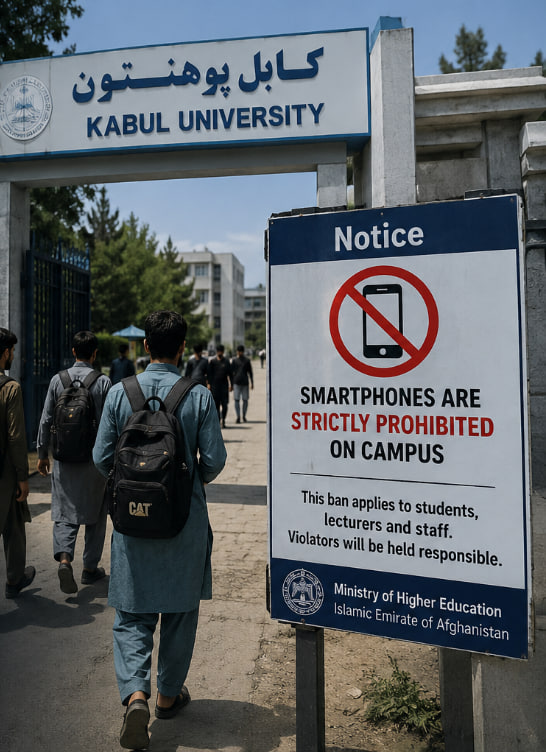
According to local sources, the leadership council of Kabul University has ordered a complete ban on smartphones for professors, employees and students, effective from June 21. Sources inside the university said the decision was presented during an academic council meeting and members were not allowed to question the directive, which must be implemented without exception.
Reports indicate similar orders have been issued at other universities. A notice circulated among students in the Department of Arabic Language and Literature at Kabul University warned that bringing smartphones onto campus is strictly prohibited, with students bearing responsibility for any violations.
A separate directive bearing the logo of the Taliban’s Ministry of Higher Education states that smartphone use has been banned across affiliated institutions for lecturers, staff and students. Authorities said the measure aims to create a “healthy educational environment,” improve concentration and enhance learning outcomes.
Restrictions Spread Beyond Kabul
Sources in Baghlan province reported that students carrying smartphones were denied entry to Baghlan University. Similar instructions have also been issued to private health institutes in Pul-e-Khumri.
In Herat, notices posted at the university entrance warn that no individual is permitted to enter with a smartphone. University sources said Taliban personnel are conducting physical inspections of students at entry points, while the restriction also applies to dormitory residents. According to one lecturer, Wi-Fi services in student dormitories have also been suspended.
Concerns Over Academic Impact
The move comes as smartphones and digital tools have become integral to modern higher education, research and access to academic resources worldwide.
Educational experts note that smartphones provide access to digital libraries, online journals, academic communication platforms and course materials. International organizations, including the UNESCO, have highlighted the role of mobile technologies in expanding learning opportunities, while digital education frameworks increasingly emphasize the value of technology-assisted learning.
University sources warn that the restrictions could significantly limit students’ access to digital textbooks, online research databases, academic discussion groups and communication with instructors, potentially affecting the quality and accessibility of higher education.