DID Press: The Quincy Institute for Responsible Statecraft says structural weaknesses in the US Navy—including an aging fleet, declining ship numbers, maintenance backlogs, and personnel fatigue—have significantly constrained Washington’s ability to sustain a prolonged naval conflict near Iran, highlighting what it describes as a long-term decline in American maritime power.
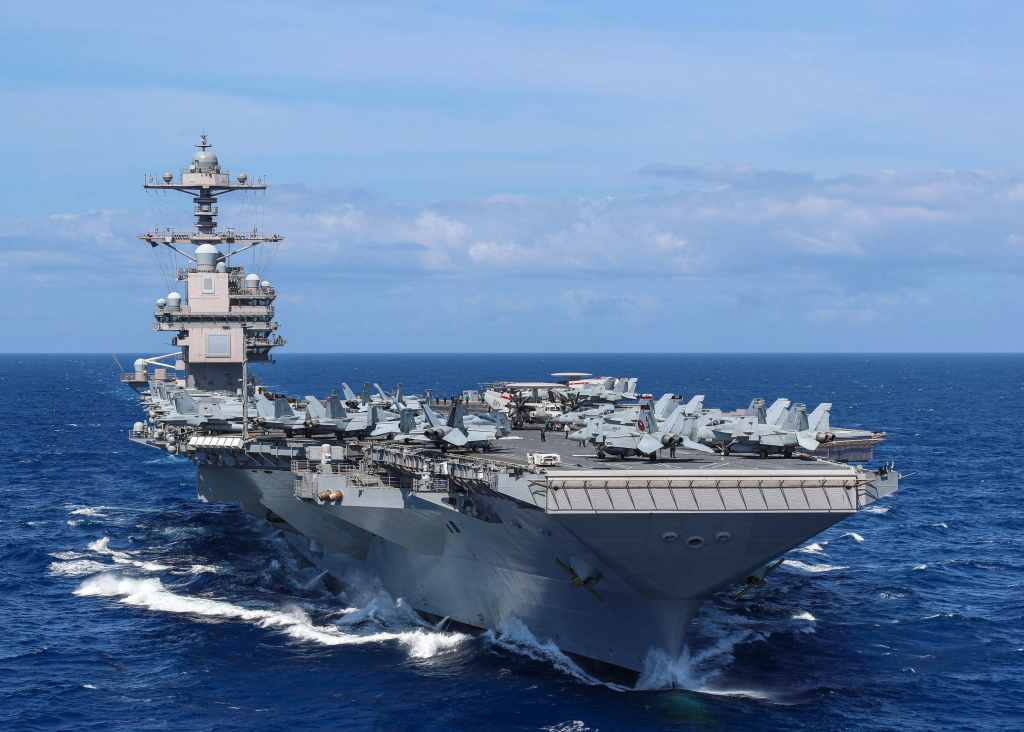
In a new analysis, the Washington-based think tank argues that while the United States remains capable of maintaining a substantial naval presence near Iran, that capability is operating close to its practical limits. According to the report, aging vessels, a shrinking fleet, maintenance challenges, and declining morale have reduced the Navy’s capacity to support an extended and high-intensity maritime campaign.
The report states that a significant portion of the US fleet—from the Mediterranean to the Indian Ocean—has been deployed to support military operations related to Iran. The force reportedly includes two aircraft carriers, six amphibious assault ships, and 19 cruisers and destroyers. It notes that the key question is not whether the United States can deploy such a force, but how long it can sustain it.
According to the Quincy Institute, the US Navy has declined from more than 6,000 vessels in 1945 to roughly 180 operational ships today, leaving it increasingly difficult to maintain simultaneous global commitments.
The analysis also notes that China now operates a larger fleet by number of battle-force ships, while the United States faces shortages of support vessels, patrol ships, escorts, and mine countermeasure assets. It adds that the Littoral Combat Ship program has failed to deliver the expected operational capability, with many vessels already being retired.
The report further warns that several US warships have remained continuously deployed since February, with some spending more than 10 months at sea, accelerating wear and delaying maintenance because of limited shipyard capacity. It also claims that maintenance delays have left around 40 percent of the US submarine fleet unavailable for operational deployment.
The Quincy Institute identifies personnel fatigue as another growing challenge. It says repeated deployments and extended missions have strained both service members and their families. Retired Admiral Phil Wisecup is quoted as saying that while six-month deployments were once considered the standard, that benchmark largely disappeared after the September 11 attacks, leaving the Navy in what he described as a near-continuous wartime operational tempo for more than two decades.
As an example, the report cites the aircraft carrier USS Gerald R. Ford, which reportedly returned from an 11-month deployment in the Middle East with multiple technical issues and an exhausted crew. The report says the carrier experienced equipment failures—including problems with wastewater systems and a fire in a laundry facility—while simultaneously operating several newly introduced technologies.
The think tank concludes that even substantial increases in defense spending would not quickly resolve these structural issues. It estimates that the proposed “Golden Fleet” plan to expand the US Navy to 450 ships would require at least $267 billion merely to begin implementation and would take decades to complete. Despite a significant increase in US shipbuilding spending over the past two decades, the number of operational warships has changed only marginally.
The report concludes that the current US naval deployment near Iran represents close to Washington’s maximum sustainable capacity, arguing that the United States lacks both sufficient reserve vessels to replace combat losses and adequate repair capacity to restore damaged ships rapidly in the event of a prolonged conflict.