DID Press: More than just a sport, cricket has become a powerful symbol of national unity, resilience and hope in Afghanistan. In little more than two decades, the country has transformed from a newcomer to one of the fastest-rising teams in international cricket, earning global recognition through talent, determination and remarkable achievements.
How Cricket Arrived in Afghanistan
Cricket is a bat-and-ball team sport played between two teams of 11 players. While it originated in England, it is most popular across South Asia.
The game found its way into Afghanistan through millions of Afghan refugees who lived in Pakistan during the 1980s and 1990s. Young Afghans learned cricket in refugee camps before bringing the sport home after returning in the early 2000s.
The Afghanistan Cricket Board (ACB) was established in 1995, and Afghanistan became an affiliate member of the International Cricket Council in 2001. Despite limited facilities and financial constraints, cricket rapidly expanded across the country.
Why Cricket Became Afghanistan’s Most Popular Sport
Several factors contributed to cricket’s extraordinary rise:
- A symbol of national unity: Cricket is one of the few activities that unites Afghans across ethnic and regional lines.
- Accessibility: The game requires relatively simple equipment and can be played on open fields, dirt grounds and neighborhood streets.
- A source of inspiration: The success of Afghan players has demonstrated that international excellence is possible despite adversity.
- Media exposure: Broadcasts of major international competitions, particularly the Indian Premier League (IPL), significantly increased the sport’s popularity among younger generations.
Afghanistan’s Rise in International Cricket
Afghanistan’s journey through world cricket has been one of the sport’s most remarkable success stories.
- 2009: Gained One-Day International (ODI) status.
- 2010: Qualified for its first ICC Men’s T20 World Cup and has appeared in every edition since.
- 2015: Made its debut at the ICC Cricket World Cup, recording its first World Cup victory against Scotland.
- 2017: Became the 12th Full Member of the International Cricket Council, earning the right to play Test cricket.
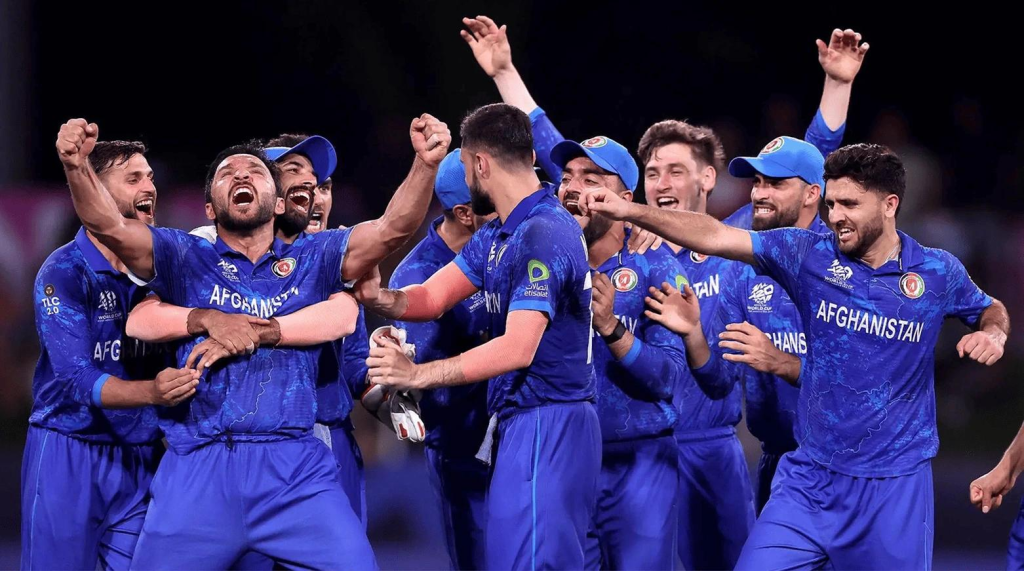
- 2024: Reached the semi-finals of the ICC Men’s T20 World Cup after defeating cricket powerhouses Australia and New Zealand, marking the greatest achievement in Afghan cricket history.
Afghanistan’s Leading Cricket Stars
Afghanistan’s success has been built on the performances of world-class players.
| Player | Role | Major Achievement |
|---|---|---|
| Rashid Khan | Leg-spin bowler | One of the world’s leading T20 bowlers; star of major franchise leagues |
| Mohammad Nabi | All-rounder | Former captain and one of Afghanistan’s most experienced players |
| Mujeeb Ur Rahman | Spin bowler | Renowned for his mystery spin and effectiveness in powerplay overs |
| Rahmanullah Gurbaz | Wicketkeeper-batter | Explosive opening batter with match-winning performances |
Rashid Khan: Afghanistan’s Global Cricket Icon
Rashid Khan has become the face of Afghan cricket. The leg-spinner reached numerous international milestones at a young age, including becoming one of the fastest bowlers to claim 100 ODI wickets. He has consistently ranked among the world’s top T20 bowlers and has represented elite franchise teams in competitions such as the IPL, Australia’s Big Bash League (BBL) and Pakistan’s Pakistan Super League (PSL).
Mohammad Nabi: The Veteran Leader
Mohammad Nabi has been one of the pillars of Afghan cricket since its early days. As a dependable all-rounder, his leadership, experience and consistency have played a vital role in many of Afghanistan’s landmark victories.
The Next Generation
Young talents such as Rahmanullah Gurbaz and Mujeeb Ur Rahman demonstrate that Afghanistan continues to produce elite cricketers capable of competing against the world’s strongest teams.
Domestic Cricket and Infrastructure
Domestic competitions have played a crucial role in strengthening Afghan cricket. The Shpageeza Cricket League and the former Afghanistan Premier League (APL) have provided emerging players with valuable competitive experience.
The country has also invested in cricket infrastructure, with venues including Kabul Cricket Stadium, Ghazi Amanullah Khan International Cricket Stadium in Nangarhar, and Kandahar Cricket Stadium serving as important centers for player development.
Social and Economic Impact
Cricket has generated benefits well beyond the playing field.
- It has inspired young Afghans by creating professional sporting opportunities.
- International success has helped project a more positive image of Afghanistan abroad.
- Growth in the sport has stimulated demand for sporting equipment, team merchandise, sponsorships and media coverage.
Challenges Ahead
Despite its achievements, Afghan cricket continues to face significant obstacles.
- No regular home internationals: Security and logistical concerns mean Afghanistan still hosts most international matches in neutral venues such as the United Arab Emirates.
- Youth development: Continued investment in academies, coaching and under-19 programs remains essential.
- Infrastructure: Advanced training facilities, sports science and performance analysis are needed to compete consistently with the world’s top cricket nations.
Conclusion
Afghanistan’s cricket story is one of resilience, determination and extraordinary progress. From refugee camps in Pakistan to the semi-finals of a World Cup, cricket has become one of Afghanistan’s greatest sporting achievements and a powerful source of national pride. With continued investment in grassroots development and infrastructure, the country has the potential to establish itself permanently among the world’s leading cricket nations.