Taliban Expand Diplomatic Ties as Civil Rights Crackdown Remains a Major Barrier
DID Press: Nearly five years after returning to power, the Taliban have expanded working and diplomatic relations with a growing number of countries in the region and Europe. However, Russia remains the only country to have formally recognized the Taliban government, while restrictions on women and girls continue to pose a major obstacle to broader international recognition.
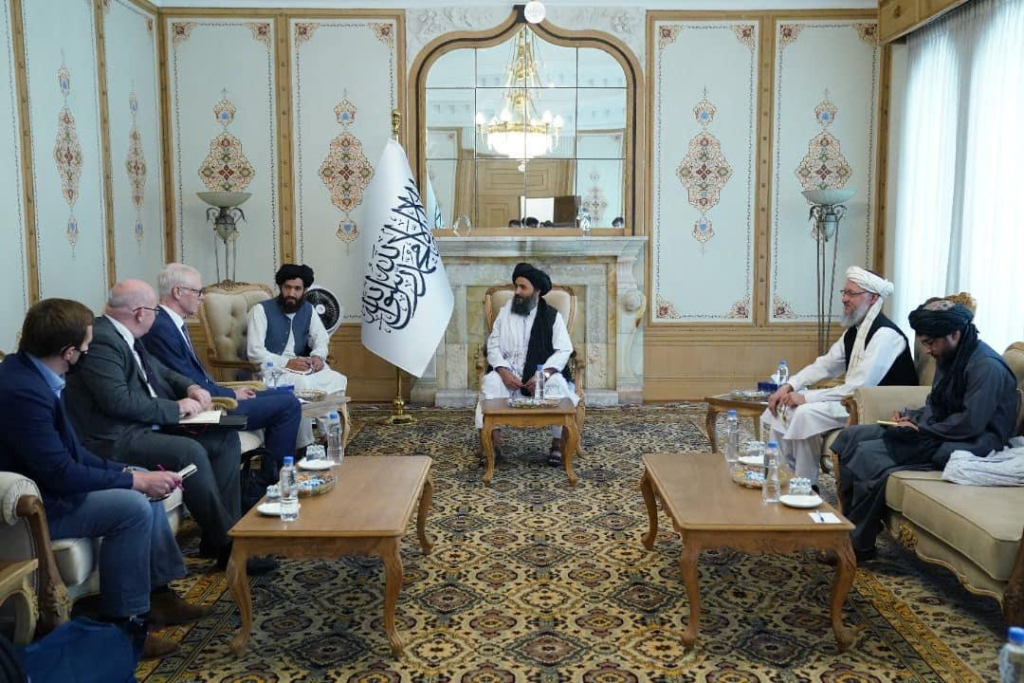
Concerns over women’s and girls’ rights remain among the most significant barriers to deeper relations with the Taliban. At the same time, trade, security, migration and infrastructure projects have encouraged more countries to maintain direct engagement with Kabul.
Taliban spokesman Zabihullah Mujahid said the government seeks relations with all countries, with neighboring states given priority because Afghanistan’s economic interests are closely linked to the region.
In recent months, Kabul has hosted representatives from China, Japan, Turkey, Saudi Arabia and the United Kingdom. Officials from Kazakhstan, Kyrgyzstan, Tajikistan, Turkmenistan and Uzbekistan also visited Kabul in April. Central Asian countries are seeking to expand trade routes through Afghanistan toward ports in South Asia.
Erica Gaston of the United Nations University’s policy research center said regional countries have adopted a more pragmatic approach toward the Taliban and increasingly view engagement with the group as unavoidable.
The Taliban have also emphasized infrastructure development, mining and cross-border economic cooperation. Chinese and other foreign companies have expressed interest in Afghanistan’s natural resources, although sanctions and the lack of broad international recognition remain major obstacles to foreign investment.
Contacts between the Taliban and European countries have also increased. In June, a Taliban delegation held talks in Brussels with European Union officials and representatives of 15 EU member states on a range of issues, including the return of Afghan migrants without legal residency.
Germany deported 31 Afghan men in July, including one person with no criminal record. The move was described as the first deportation of its kind since the Taliban returned to power in August 2021.
Despite expanding political contacts, the Taliban’s restrictions on women and girls remain a major impediment to deeper engagement with the international community. Girls remain barred from secondary and higher education, while since September 2025 Afghan female employees have also been prevented from entering United Nations premises in Afghanistan.
Last year, the International Criminal Court issued arrest warrants for Taliban leader Hibatullah Akhundzada and Abdul Hakim Haqqani, head of the group’s Supreme Court, over alleged crimes against humanity in the form of gender persecution.
India has also increased its engagement with Kabul in recent months. Parvathaneni Harish, India’s representative to the United Nations, called in June for a review of international sanctions against Taliban officials, arguing that Afghanistan’s political reality has changed over the past five years and that the UN sanctions regime should take those developments into account.
The expanding diplomatic engagement illustrates a growing gap between pragmatic international dealings with the Taliban and formal political recognition. While regional powers increasingly prioritize security, trade and economic interests, the Taliban’s treatment of women and girls continues to remain at the center of international criticism and a key test for deeper normalization.