Afghanistan’s Gas Resources Considered for New Saudi-Backed Pipeline Plan
DID Press: Saudi energy company Delta Energy Saudi has signed an agreement with Pakistan’s state-owned Inter State Gas Systems (ISGS) to assess energy infrastructure projects involving a proposed investment of approximately $30 billion, including possible pipelines that could transport natural gas from Afghanistan to Pakistan.
The agreement, signed on November 17, provides a framework for evaluating several proposed projects. These include a gas pipeline entering Pakistan through its western border and extending to the port of Gwadar, as well as a possible route from Chaman, near the Afghanistan-Pakistan border, towards Fazilka near the Indian border.
The proposed network would also include liquefied natural gas (LNG) facilities, gas processing and storage infrastructure, and export terminals. The route towards India would require formal agreements with Pakistani and Indian authorities.
Delta Energy has identified Afghanistan’s Kashk gas concession in Herat province and other Afghan natural gas resources as potential sources of supply for the proposed network.
The company has stressed that the initiative is separate from the Turkmenistan-Afghanistan-Pakistan-India (TAPI) pipeline project and would not depend on Turkmenistan’s gas supplies. It has also clarified that the agreement does not constitute a final investment decision or a commitment to finance or construct the proposed infrastructure.
The development comes after the Taliban signed an agreement with Saudi Arabia’s Delta International on September 7 to explore and extract oil and gas in the Kushk-Tirpul basin in western Afghanistan.
The Taliban’s Ministry of Mines and Petroleum said the company would initially invest $200 million to explore seven gas blocks in the area, which lies between Herat and Badghis provinces and covers approximately 22,000 square km. The wider investment potential has been discussed in much larger figures, but the initial investment announced for the exploration contract was $200 million.
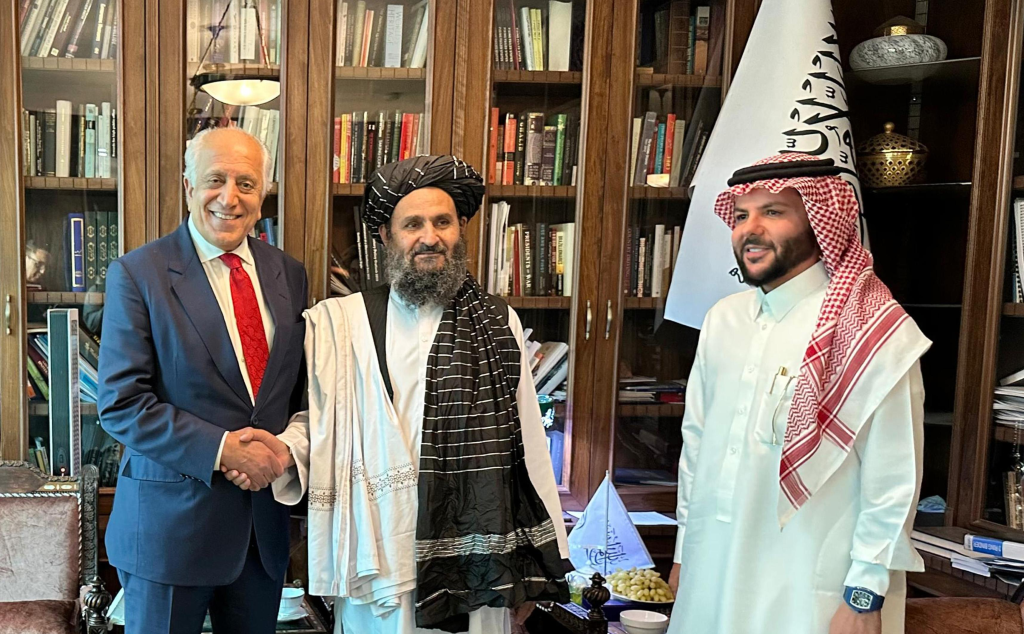
Zalmay Khalilzad, the former US special representative for Afghanistan, attended the September signing ceremony alongside Taliban officials. His presence has raised questions among some observers about the role of influential political figures and possible intermediaries in major energy agreements involving Afghanistan’s natural resources.
Khalilzad’s involvement in Afghanistan’s energy sector dates back to the 1990s, when he worked as an adviser to US oil company Unocal on efforts to secure Taliban support for a proposed gas pipeline carrying Turkmenistan’s gas through Afghanistan to Pakistan.
The latest proposal also comes amid delays in other regional energy projects. The Iran-Pakistan gas pipeline, known as the Peace Pipeline, has remained stalled amid US pressure and delays by Islamabad, while TAPI has yet to reach the stage of commercial gas exports.
The proposed use of Afghanistan’s gas resources for regional energy infrastructure raises questions about the transparency of major contracts and the distribution of potential economic benefits. With independent oversight and public accountability over large-scale agreements remaining key concerns, the involvement of influential political figures has further highlighted the need for scrutiny of the interests of intermediaries and contracting parties.