DID Press: New analyses on the potential closure of the Strait of Hormuz indicate that the crisis is not just an energy issue—it could simultaneously threaten four vital pillars of the global economy: oil, food, water, and agricultural fertilizers.
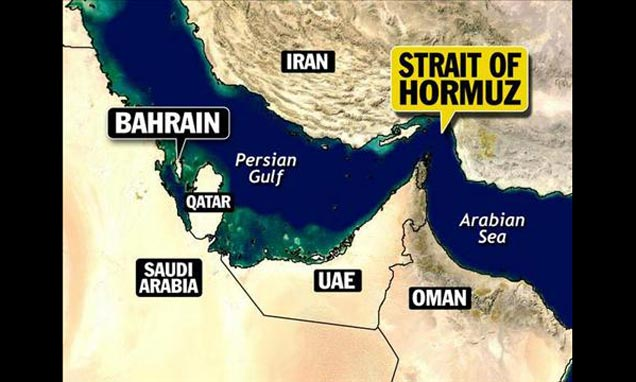
According to assessments by U.S. policymakers and economists Michael Froman (energy policy) and Michael Werz (food security and critical resources), closing this strategic waterway could trigger the largest multi-sector economic shock in decades.
The Strait of Hormuz transports roughly 20 million barrels of oil daily, nearly one-fifth of global consumption—five times the scale of the 1970s oil disruptions. Even releasing 400 million barrels from strategic reserves of IEA member countries, including 172 million from the U.S., the world could still face a daily shortfall exceeding 10 million barrels. Alternative pipelines, such as Saudi Arabia’s East-West line or Abu Dhabi pipelines, have limited capacity and remain vulnerable to attacks. Tankers moving slowly along predictable routes are exposed to missile, drone, or naval mine threats.
While global oil markets have yet to fully react, traders expect the crisis to be short-term. Iran continues partial exports via the Strait, benefiting from higher prices, while Russia reportedly earns an additional $150 million daily from oil price increases.
The crisis extends beyond energy. The Persian Gulf is a key route for food and fertilizers, meaning disruptions could shock global food chains. Middle East and North African countries heavily depend on imports: over 77% of rice, 89% of maize, 95% of soy, and 91% of vegetable oils are imported. Any disruption could sharply raise prices, as seen in Iran where annual food inflation reached 40%, and rice prices multiplied sevenfold. If maritime routes close, trade may divert to overland corridors controlled by countries like Russia, Turkey, and Syria.
Water infrastructure is also at risk. Recent attacks on desalination plants in Bahrain and near Saudi facilities highlight vulnerabilities. Gulf states rely heavily on desalination: 90% of Kuwait’s, 86% of Oman’s, and 70% of Saudi Arabia’s drinking water comes from these plants, serving roughly 100 million people. The Gulf Cooperation Council operates 400 desalination plants, producing about 40% of the world’s desalinated water.
Agricultural fertilizer trade is equally fragile. The Gulf is a key exporter of urea, diammonium phosphate, and ammonia; one-third of global fertilizer trade passes through the Strait. Prices are rising—urea prices jumped 19% in one week—directly increasing farming costs and potentially reducing global food supply.
Together, these factors make the Strait of Hormuz crisis a multi-layered threat capable of simultaneously disrupting energy, food, water, and fertilizer markets, with consequences comparable to or exceeding the global food crisis triggered by the Ukraine war.
Rising global military spending also diverts funds from development and food security aid, amplifying the risk of a regional conflict evolving into a worldwide economic and humanitarian crisis.