DID Press: The year 2025 marked a decisive phase in Afghanistan’s political trajectory, characterized by the consolidation of authority by the Taliban, a tightening of political space, and the persistence of international isolation. While the group strengthened administrative control nationwide, this consolidation was not accompanied by political opening, ethnic inclusion, or structural reforms. As a result, Afghanistan entered a dual political reality: relative internal stability alongside continued diplomatic isolation.
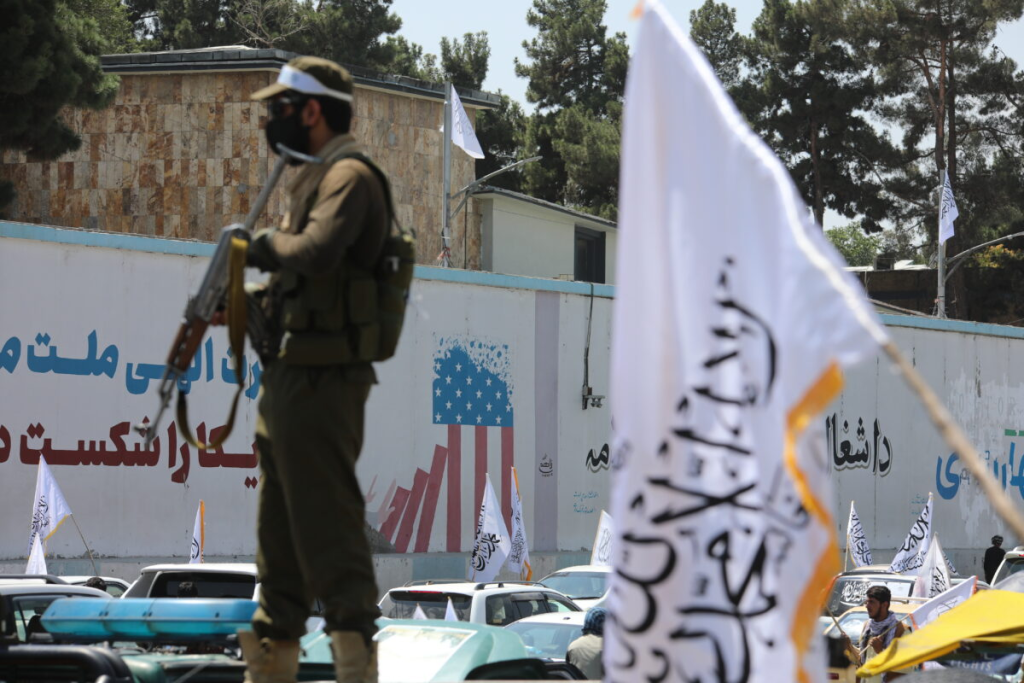
At the center of power, decision-making became increasingly concentrated within the leadership circle in Kandahar. Supreme leader Hibatullah Akhundzada remained the ultimate authority on major strategic issues, while the Council of Religious Scholars assumed a more prominent role in governance. This shift marginalized technocratic figures, field commanders, and younger administrators who had played more active roles in the early post-republic period, strengthening instead the influence of more traditional and ideologically aligned leaders. Analysts view this transition as evidence of the Taliban’s movement toward a more centralized and doctrinal governance structure.
Domestically, the Taliban repeatedly declared elections to be “un-Islamic,” asserting that political legitimacy derives from religious allegiance and Islamic law rather than popular vote. Consequently, no electoral process was proposed or implemented, leaving Afghanistan effectively the only country without an active electoral mechanism. This stance contributed significantly to the international community’s refusal to formally recognize the Taliban government, keeping diplomatic engagement at a minimal level.
Throughout the year, the government carried out extensive personnel reshuffles among provincial governors, military commanders, and senior administrators. These changes were largely intended to reinforce internal loyalty, prevent factional fragmentation, and strengthen centralized oversight of provincial governance. In several cases, military commanders were reassigned to civilian administrative roles, reflecting an effort to embed security influence more deeply within the state apparatus.
Despite the outward appearance of cohesion, signs of internal friction became increasingly visible. Tensions between the Kandahar-based leadership and Kabul-based officials, rivalry between the Haqqani Network and the Kandahar circle, and dissatisfaction among some commanders regarding strict social policies were among the emerging fault lines. While these divisions did not escalate into open crisis, analysts warn that external pressure, economic stress, or leadership succession disputes could magnify these fractures in the coming year.
On the international front, Afghanistan remained politically isolated throughout 2025. No country formally recognized the Taliban government, although limited working relationships continued with regional states including China, Russia, Iran, Qatar, and Pakistan. Efforts by Taliban authorities to secure international legitimacy largely stalled due to continued restrictions on women’s education and employment, issues repeatedly cited by global actors as key barriers to normalization.
Regionally, relations with neighboring states remained complex. Ties with Pakistan were strained by cross-border tensions, the mass deportation of Afghan migrants, and Islamabad’s allegations regarding the presence of Tehrik-i-Taliban Pakistan (TTP) inside Afghanistan. Relations with Iran were influenced by disputes over water resources and border management, though both sides sought to avoid escalation. Meanwhile, engagement with China and Russia advanced cautiously in the areas of economic cooperation and security coordination but stopped short of evolving into full strategic partnerships.
Inside the country, the absence of political participation, the elimination of political parties, the suspension of electoral institutions, and broad restrictions on civil society activities contributed to one of the most constrained political environments in Afghanistan’s modern history. At the same time, Taliban authorities emphasized administrative order, anti-corruption measures, and strict security enforcement as pillars of governance. Observers note that this stability remains fragile—sustained primarily through centralized control rather than broad-based social consensus.
Overall, Afghanistan’s political developments in 2025 reflected the consolidation of Taliban authority, the continuation of diplomatic isolation, the narrowing of political space, and the emergence of internal divisions—trends that are expected to shape more complex political scenarios in 2026.