DID Press: The year 2025 proved to be a complex period for Afghanistan’s security landscape, where relative internal stability coexisted with hidden threats, border tensions, armed group activity, and regional challenges. The Taliban government managed to maintain nationwide security control, but this control came with significant restrictions, crackdowns, and structural pressure. As a result, Afghanistan’s security situation in 2025 can be described as “hard stability”—a stability built on heavy security presence, strict surveillance, and suppression of opposition rather than political consensus or social participation.
At the domestic level, the Taliban largely minimized armed clashes and scattered insurgent activity. Opposition groups such as the National Resistance Front, the Freedom Front, and several smaller factions maintained limited operations and failed to pose a major threat to the Taliban’s security structure. Their sporadic attacks were mostly concentrated in mountainous areas of Panjshir, Badakhshan, and Takhar. Through the deployment of special forces, targeted operations, and tight control of transportation routes, the Taliban contained these activities. However, the continued presence of such groups—even at a low level—reflects underlying local grievances and political divisions that could reemerge under changing conditions.
The most significant security threat in 2025 remained ISIS-Khorasan. Despite sustained pressure from Taliban forces, the group carried out intermittent but impactful attacks. Most incidents occurred in Kabul, Nangarhar, Balkh, and Badakhshan, targeting Shiite communities, government employees, Taliban members, and public spaces. ISIS adopted new tactics during the year, including small-scale assaults, magnetic bomb attacks, limited suicide operations, and strikes on religious gatherings. Although the Taliban repeatedly claimed to have “eliminated” ISIS, available evidence indicates the group has preserved small, agile operational cells. Analysts assess that while ISIS weakened compared to previous years, it still retains the capacity to generate instability.
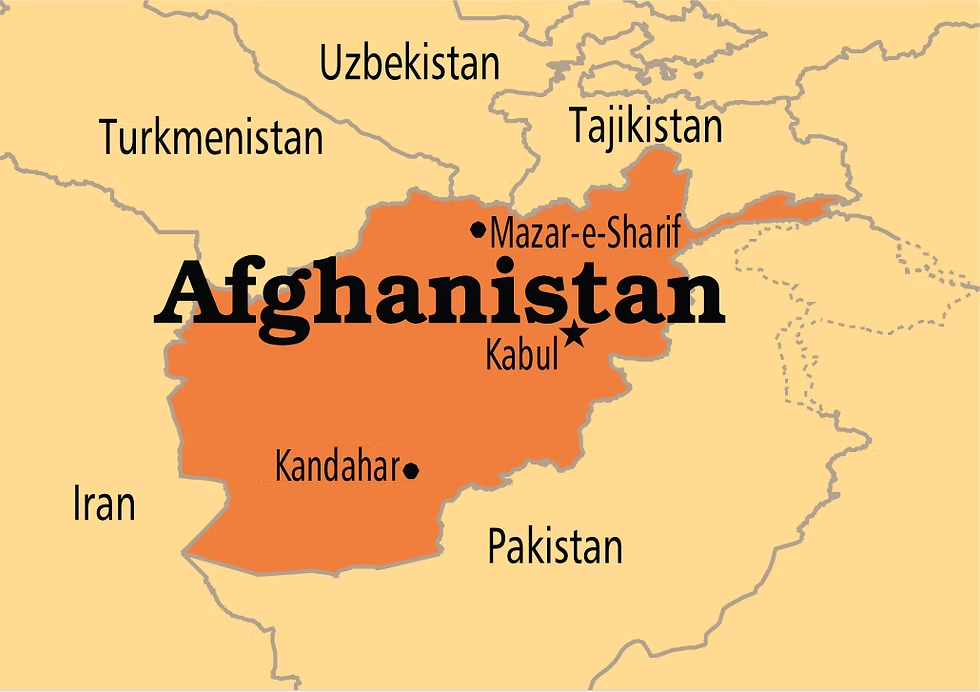
Alongside internal threats, 2025 saw an increase in border tensions between Afghanistan and neighboring countries. Relations with Pakistan remained particularly strained. Border clashes in Spin Boldak, Torkham, and sections of the Durand Line led to repeated exchanges of fire, temporary closures of crossings, and disruptions to cross-border trade. Pakistan frequently accused the Taliban of allowing Tehrik-i-Taliban Pakistan (TTP) to operate from Afghan territory, an allegation the Taliban consistently denied. The large-scale deportation of Afghan migrants from Pakistan further intensified humanitarian and security tensions, leaving bilateral relations in a fragile state.
Relations with Iran also faced challenges during the year. Disputes over Helmand River water rights, border management in Nimroz and Herat, and issues related to Afghan migrants triggered several limited border incidents. While these tensions did not escalate into major conflict, they underscored the sensitivity of bilateral ties and the fragility of border stability. Both sides attempted to prevent escalation, but structural disagreements remained unresolved.
In the northern regions, Afghanistan’s relations with Tajikistan and Uzbekistan remained relatively calm, though security concerns persisted regarding extremist group activity near border areas. Central Asian states expanded security cooperation with the Taliban in 2025 but remained cautious about the presence of militant networks in northern Afghanistan.
Domestically, the Taliban relied on strict enforcement measures to maintain order. The establishment of widespread checkpoints, close monitoring of movement, tight control over social activities, and restrictions on public gatherings formed key components of this approach. These measures contributed to a decline in organized crime, kidnapping, and armed robbery, but also resulted in significant limitations on civil liberties. Many citizens reported improved physical safety, yet described the social environment as increasingly restrictive.
In the fight against narcotics, the Taliban continued enforcing its ban on poppy cultivation. The policy achieved partial success in some regions, reducing cultivation levels, but reports of covert farming and drug trafficking persisted—particularly in southern and western provinces. The decline in income from narcotics placed additional economic pressure on local farmers, in some cases driving migration or recruitment into armed groups.
Overall, Afghanistan’s security environment in 2025 reflected a combination of enforced stability, scattered threats, border pressures, and regional challenges. The Taliban maintained control, but that control remained fragile and heavily dependent on coercive measures. The continued threat from ISIS, unresolved border disputes, migration pressures, and the absence of political inclusion are factors that could pose new security challenges for Afghanistan in 2026.