DID Press: Pakistan has increasingly sought to transform from a peripheral actor to a more active player in Middle Eastern affairs. Hosting summits—especially with countries like Saudi Arabia, Turkey, and Egypt, each carrying weight in the Islamic world—allows Islamabad to present itself as a “potential mediator” and even a “hub for Islamic dialogue.”
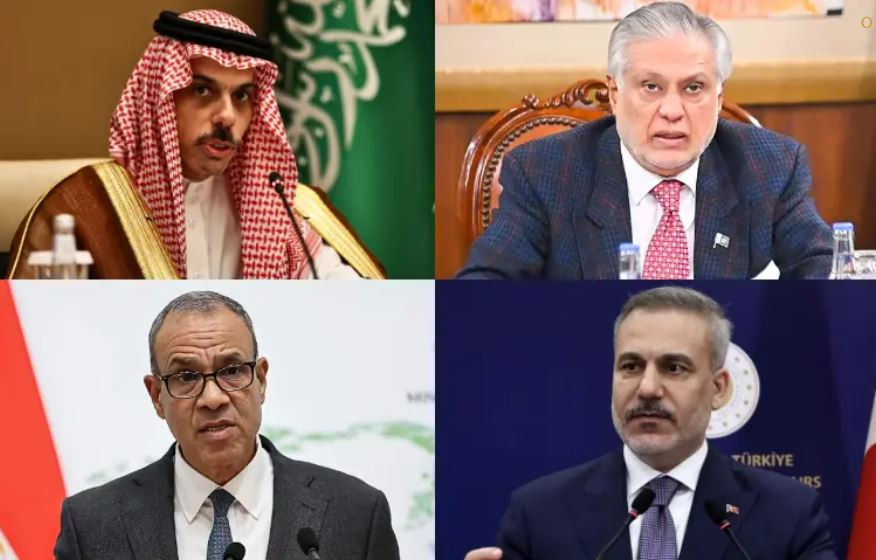
The recent meeting of foreign ministers from Saudi Arabia, Turkey, and Egypt in Islamabad can be seen as part of these new diplomatic efforts. While the summit ostensibly aimed to reduce tensions and manage regional crises—particularly regarding the Iran-U.S. war and the Israeli regime—it also reflects deeper geopolitical rivalries and countries’ attempts to redefine their regional and international positions. In this context, Pakistan’s role is especially notable, as the summit appears more geared toward enhancing Islamabad’s diplomatic prestige than producing substantive changes in ongoing developments.
Over recent years, Pakistan has sought to shift from a peripheral to a more proactive role in Middle Eastern affairs. Hosting summits with key Islamic nations enables Islamabad to project itself as a “potential mediator” and even a “center for Islamic dialogue.” Remarks by Pakistani officials about hosting potential U.S.-Iran negotiations fit this framework, signaling prestige-building rather than concrete operational initiatives.
However, the critical question remains: can such summits actually influence ongoing regional developments? Evidence suggests a largely negative answer. Regional crises—particularly tensions involving Iran, the U.S., or Gulf disputes—are deeply rooted and cannot be resolved merely through joint statements or appeals for “Islamic unity.” Past experience shows such meetings at best generate positive media coverage, lacking mechanisms for implementing their declared objectives.
The composition of participating countries also underscores the summit’s limitations. Saudi Arabia, Turkey, and Egypt each maintain significant disagreements on regional issues. Ideological and geopolitical rivalries between Ankara and Cairo, or differing perspectives between Riyadh and Ankara on certain crises, make forming a unified operational stance extremely difficult. Calls for “ceasefires” or “starting talks” remain largely symbolic, offering no real strategy.
Pakistan seeks to capitalize on these minimal commonalities. Positioned geographically and maintaining relatively balanced relations with different countries, Islamabad aims to act as a bridge between conflicting actors. Yet its ability to influence key crisis players—particularly global powers—is limited. Without serious commitment from major actors like the U.S. and Iran, third-party mediation efforts are unlikely to succeed.
Domestic considerations also play a role. Facing significant economic and political challenges, Pakistan benefits from showcasing active diplomacy, bolstering government legitimacy, and improving its international image. Hosting multilateral meetings and proposing diplomatic initiatives serve as tools for demonstrating competence both at home and abroad.
In conclusion, the Islamabad summit is better understood as Pakistan’s attempt to redefine its role within the Islamic world rather than as a turning point for resolving regional crises. While symbolically important and potentially helpful in maintaining dialogue channels, it is unlikely to significantly impact ongoing regional dynamics. The primary beneficiary remains Pakistan, using the event to reinforce its image as an active regional player and mediator, even if the role is currently more performative than practical.
By Sayed Baqer Waezi – DID News Agency