DID Press: Washington Post, citing Chinese officials, has reported that peace negotiations between delegations of the Taliban government and Pakistan in the city of Ürümqi are making progress. The talks have continued for three days, although Beijing has not yet disclosed specific details regarding the areas of advancement.
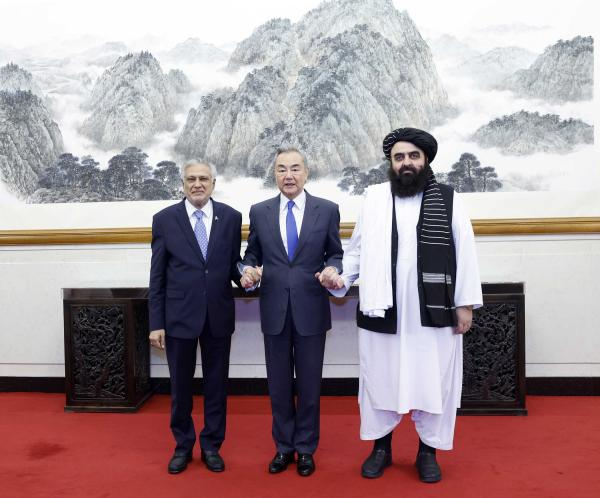
Earlier, Mao Ning, spokesperson for the Ministry of Foreign Affairs of the People’s Republic of China, stated that following the escalation of tensions between the Taliban and Pakistan, Beijing maintained communication with both sides through multiple diplomatic channels and helped create the necessary conditions to initiate dialogue. She emphasized that consultations are moving forward in a “steady and gradual manner,” and that the three parties have reached understandings on certain defined issues.
According to reports from major international media outlets, including the Associated Press and the Reuters, the negotiations in Ürümqi were launched with the objective of reducing border tensions, managing cross-border attacks, and establishing a sustainable framework for security cooperation.
Pakistan has confirmed that it dispatched a delegation to participate in the talks and stressed that the success of the negotiations depends on “visible and verifiable” actions by the Taliban authorities against armed groups operating from Afghan territory against Pakistan.
Meanwhile, the Taliban Ministry of Foreign Affairs has also confirmed the participation of a “mid-level” delegation, stating that Kabul entered the process at China’s request and is pursuing the dialogue based on the principles of mutual respect, non-interference, and good neighborly relations.
China, which shares borders with both countries, has taken on a more active mediation role in recent months between Islamabad and Kabul. According to news agencies, Beijing is seeking to facilitate a durable ceasefire and the reopening of trade and border routes—an issue of significant economic and security importance for both sides.
While details of the negotiations’ progress remain undisclosed, analysts view the process as a positive step toward easing the unprecedented tensions of recent months between the two countries—tensions that international sources say have resulted in hundreds of casualties and disrupted cross-border trade and movement.