DID Press: The targeted killing of clerics and religious leaders in Pakistan can no longer be understood solely through the traditional lens of sectarian violence. Analysts increasingly argue that the wave of assassinations unfolding across Khyber Pakhtunkhwa, Balochistan, and parts of Punjab reflects a broader multi-layered campaign of information warfare aimed at weakening Pakistan’s political and religious structures.
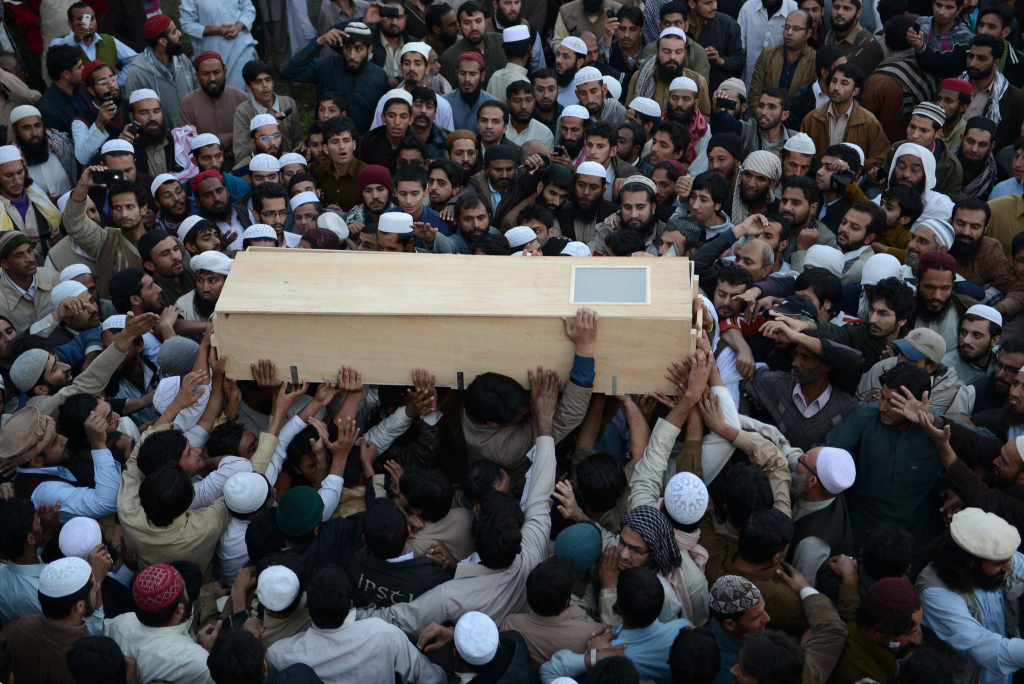
In recent years, the pattern of attacks against religious figures has evolved significantly. Previously, such violence was largely associated with overt Sunni-Shia tensions or rivalry among extremist factions. Today, however, the scope of targets has expanded to include clerics linked to mainstream religious parties and traditional religious institutions.
The 2025 attack on Darul Uloom Haqqania that killed Hamid-ul-Haq Haqqani, along with the assassination of Maulana Mohammad Idris of Jamiat Ulema-e-Islam (Fazl faction), are viewed by analysts as signs of a changing security landscape. These attacks appear designed not merely to eliminate individuals, but to disrupt broader networks of religious authority and influence.
Mainstream Religious Networks Under Pressure
The assassination of Maulana Idris carried particular significance because of his affiliation with Jamiat Ulema-e-Islam, one of Pakistan’s oldest and most influential religious-political movements with deep roots in tribal and Pashtun-majority regions.
Targeting figures associated with such established networks suggests that the violence is no longer confined to fringe sectarian disputes. Instead, influential religious structures themselves are increasingly becoming strategic targets.
The Expanding Role of Information Warfare
In modern information warfare, the objective extends beyond physical elimination. The broader aim is to generate psychological instability, social distrust, and erosion of institutional legitimacy.
Groups such as ISIS-Khorasan appear to recognize that assassinating a prominent cleric can produce greater media and societal impact than conventional military operations. As a result, attacks are often accompanied by coordinated propaganda campaigns across social media and extremist communication channels.
Following each assassination, competing narratives rapidly emerge. Some extremist-linked outlets portray victims as agents of the state or intelligence services, while rival factions accuse security institutions or opposing religious groups. This narrative battle deepens suspicion within Pakistan’s religious communities and aligns closely with the objectives of cognitive warfare.
From Territorial Warfare to Cognitive Conflict
Analysts note that ISIS-Khorasan has gradually shifted its strategy away from territorial control toward psychological and societal disruption. Rather than focusing primarily on seizing geography, the group increasingly emphasizes targeted assassinations, ideological propaganda, and social destabilization.
Pakistan’s sectarian diversity, ethnic fragmentation, and long history of militant networks make it particularly vulnerable to such tactics.
Blowback from Historical Security Policies
Observers also point to the historical role of Pakistan’s security establishment and its long-standing use of militant proxies in regional conflicts, particularly in Afghanistan and Kashmir.
According to many analysts, parts of these militant ecosystems—or splinter factions emerging from them—have now evolved into internal threats that are no longer easily controllable. The current wave of violence is increasingly viewed as a form of strategic blowback, where former proxy networks are now undermining Pakistan’s own religious and political order.
Engineering Instability Through Fear
The assassination of figures like Maulana Mohammad Idris illustrates that the goal may extend beyond eliminating ideological opponents. Analysts warn that these attacks form part of a broader strategy aimed at engineering social chaos, inflaming sectarian divisions, and destabilizing sensitive regions through fear and mistrust.
Conclusion
The ongoing assassinations of clerics in Pakistan should therefore be understood as part of a wider attritional campaign—one designed not only to kill individuals, but to gradually erode religious cohesion, public trust, and political authority.
Experts caution that if Pakistan continues to address the crisis solely through military measures while neglecting its informational, psychological, and cognitive dimensions, the country could face an even more complex form of insecurity in the future—one unfolding not only on the streets, but within the perceptions and collective consciousness of society itself.
By Sayed Baqer Waezi – DID News Agency