DID Press: The anticipated signing of a peace memorandum between the Islamic Republic of Iran and United States is being interpreted by some analysts as a managed pathway for Washington’s strategic withdrawal and repositioning within a reshaped Middle Eastern order.
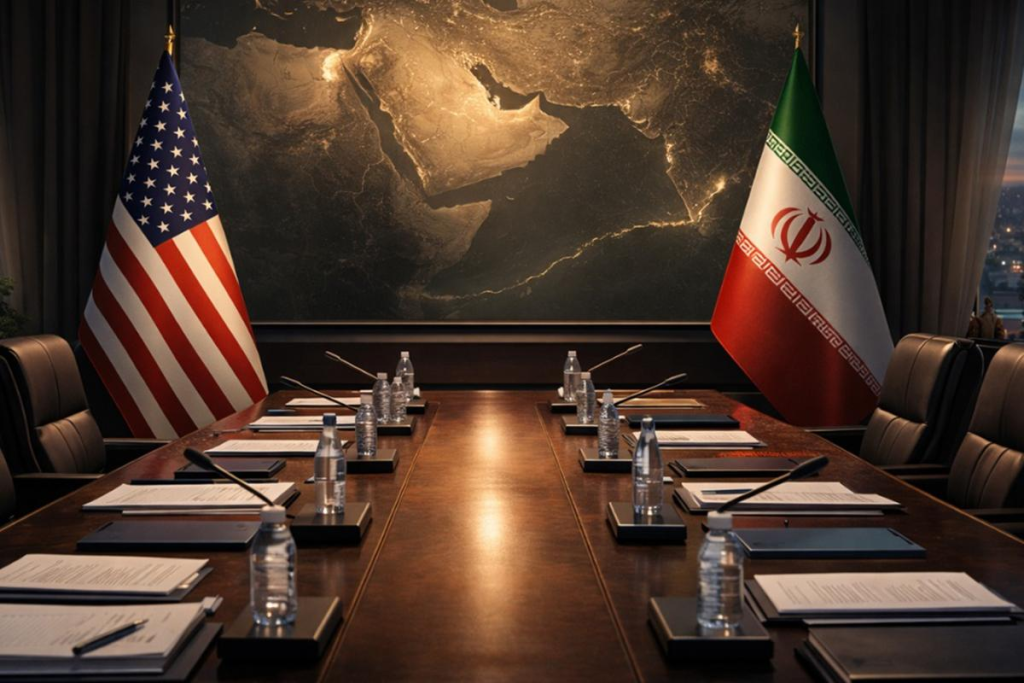
According to this perspective, the agreement would signal the beginning of a new regional architecture in which Iran’s geopolitical standing is significantly elevated. The confrontation involving the United States and Israel against Iran is described as having accelerated asymmetric power dynamics, contributing to a broader rebalancing of influence across the region.
Analysts argue that Iran’s military capabilities—particularly in missiles, drones, naval operations, and ground-based asymmetric warfare—have challenged conventional expectations of U.S. military dominance. The perceived effectiveness of high-cost Western military systems has been questioned in this context, prompting discussions about doctrinal reassessments in global security strategy.
In this framing, the expected agreement between Tehran and Washington is viewed as a potential consolidation of battlefield and political outcomes, with implications for the future structure of regional power. Some interpretations within international relations discourse suggest that Iran’s position could evolve into a more central role in shaping regional equations, particularly under conditions of sustained strategic endurance and diplomatic maneuvering.
The narrative also highlights the symbolic dimension of U.S. military power, historically anchored in carrier strike groups and long-range force projection. Critics of this model argue that such capabilities have been overstated in terms of political deterrence, particularly when confronted with asymmetric and decentralized forms of resistance.
Within this analytical framework, the Iran–U.S. confrontation is presented as a case study in which asymmetric strategy, geographic leverage, and sustained operational pressure have challenged established assumptions about uncontested naval and aerial superiority. References are made to regional maritime dynamics, including the strategic significance of the Strait of Hormuz, as a factor influencing broader defense calculations.
The discussion further situates recent developments within a historical continuum, referencing previous U.S. military engagements in the region and beyond as contributing factors to evolving perceptions of American strategic reach and resilience.
Ultimately, the proposed agreement is interpreted as a potential marker of transition toward a post-hegemonic regional order, in which power is increasingly distributed among multiple regional actors rather than concentrated within a single external pole.
By Abdul Latif Nazari | DID News Agency