DID Press: The Torkham Border Crossing on the Afghanistan-Pakistan border has emerged as a critical gateway for the future of regional trade and transit projects, particularly the development of the China-Pakistan Economic Corridor (CPEC).
Pakistan’s The Nation reported that in May 2025, the foreign ministers of China, Pakistan and Afghanistan agreed in Beijing to formally include Afghanistan in the CPEC framework. Four months later, the 14th meeting of the Joint Cooperation Committee approved an action plan through 2029 covering industrial zones, upgrades to the ML-1 railway and expanded road links from Torkham to Kabul and from Chaman to Spin Boldak.
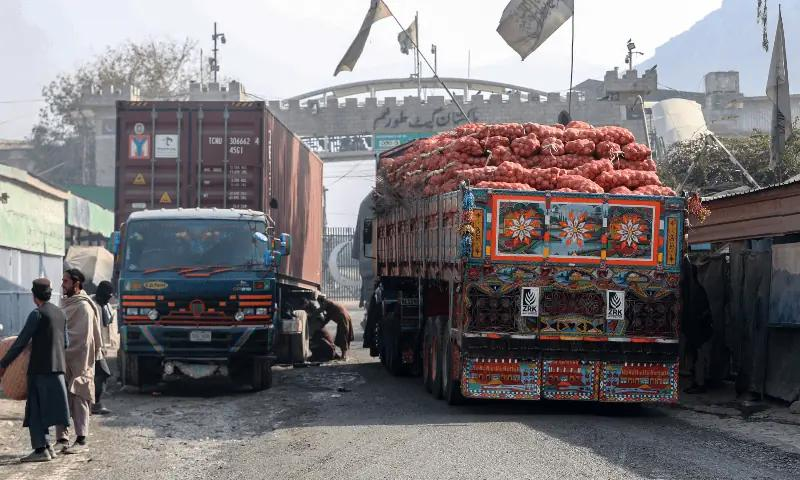
However, clashes between Pakistani and Afghan forces in October 2025 led to the closure of Torkham. The crossing remained shut for more than three months, severely disrupting bilateral trade, with thousands of containers stranded on both sides of the border at the height of the crisis.
According to experts cited by The Nation, Pakistan has no effective alternative to Torkham for transporting goods to Central Asia if the crossing remains closed. Traders could therefore increasingly turn to routes through Iran, Chabahar Port, and regional rail networks as more reliable alternatives.
Regional data shows that Afghanistan’s exports to Central Asia increased from about $122 million in 2024 to $216 million in 2025, indicating a gradual shift in regional trade routes.
At the same time, weak performance at Pakistan’s border crossings has raised additional concerns. Regional reports indicate that the average cargo-clearance time at Pakistan’s borders has reached 38 hours, with Torkham among the slower major crossings in the region.
Experts now argue that investment in CPEC 2.0 should be accompanied by customs digitalization, alternative transport routes and agreements guaranteeing the continued movement of goods during periods of political tension.
The future of the corridor, they say, increasingly depends on the stability and uninterrupted operation of Torkham.