Past Legacy, Present Deadlock: A Critical Look at Aisha Wahab’s Views on Afghanistan
DID Press: Recent remarks by Aisha Wahab on Afghanistan go beyond conventional expressions of sympathy or diplomatic courtesy. As the first Afghan-born woman elected to the U.S. Congress, Wahab has moved away from neutral and passive positions, offering a candid and critical assessment of Afghanistan’s 25-year crisis. Her analysis examines the country’s political deadlock, ideological exclusivity and deep-rooted historical mistrust.
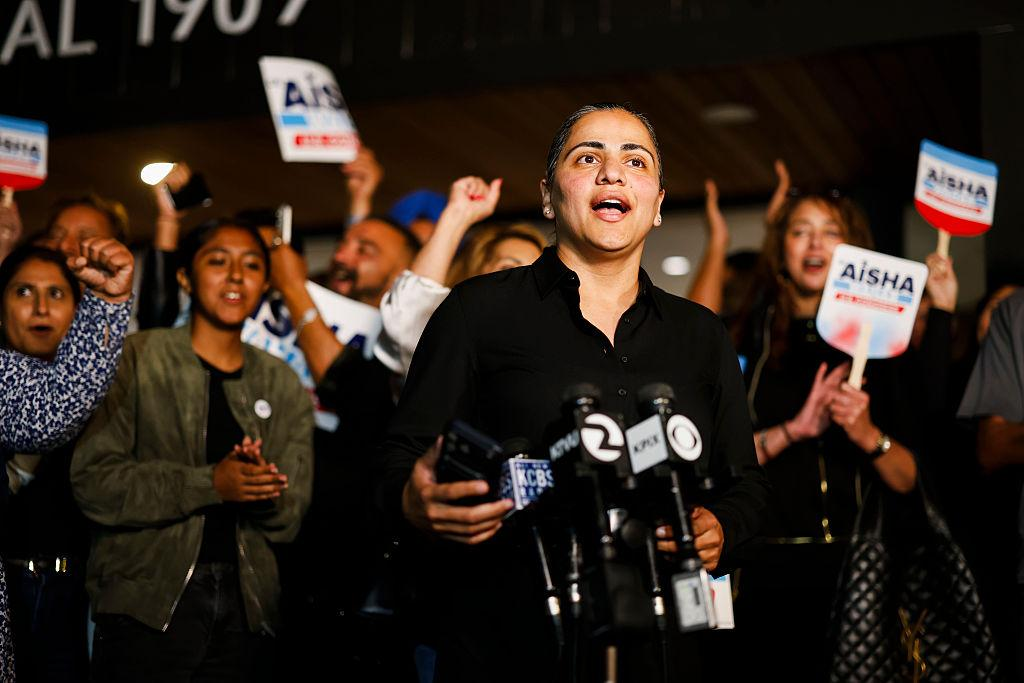
Wahab’s assessment of Afghanistan rests on several key themes. First, she views the exclusion of girls and women from education and public life not merely as a violation of individual rights or a human-rights issue, but as a structural catastrophe for the country’s future. From her perspective, excluding half of the population represents a silent threat that will gradually erode Afghanistan’s human, scientific and economic foundations, leaving the country facing a profound development crisis in the medium and long term.
A second major theme in Wahab’s remarks is her direct criticism of political leaders and officials of the previous Afghan government. She argues that, despite extensive U.S. support, many of those figures prioritized personal wealth and factional survival over national interests and state-building, ultimately undermining public trust. Her assessment suggests that the roots of today’s crisis should not be sought solely in recent developments, but also in the conduct of those who viewed political power as an opportunity for personal enrichment and factional preservation.
Alongside these criticisms, Wahab advocates a pragmatic diplomatic approach. She argues that United States should not completely isolate landlocked Afghanistan. In her view, Washington should maintain channels of engagement and negotiation with the Taliban both to explore Afghanistan’s substantial natural resources and to maintain leverage over civil and human rights issues. Complete isolation, she argues, would ultimately benefit regional rivals while harming the Afghan population.
Wahab’s remarks suggest that Afghanistan is now caught between two failed experiences: ideological exclusion and restrictions on rights under the current system on one side, and the legacy of corruption and political irresponsibility under the previous government on the other.
This dual criticism highlights the weakness of the traditional opposition and the deeper crisis surrounding the absence of a legitimate political alternative in Afghanistan. Many Afghans, the analysis argues, have little appetite for a return to the corruption of the past, while also being unable to accept the restrictions and political closure of the present.
A Critical Assessment of Aisha Wahab’s Approach
Wahab’s approach, however, is not without contradictions and political simplifications.
The first criticism concerns her proposal of economic engagement alongside human-rights pressure. Wahab calls for Washington to consider economic agreements involving Afghanistan’s natural resources, yet diplomatic history has repeatedly shown that financial engagement with highly centralized and exclusionary governments can strengthen the very structures that control power.
The assumption that the Taliban can be persuaded to respect women’s rights and civil liberties through economic deals over natural resources—without strong, enforceable mechanisms of pressure—may therefore reflect political optimism more than an effective foreign-policy strategy.
Second, Wahab speaks from the position of a U.S. lawmaker, but her approach draws a delicate line between U.S. national interests and the rights and interests of the Afghan people. Her emphasis on U.S. engagement to develop Afghanistan’s economic resources could also be interpreted by parts of Afghan society not as a solution to the country’s crisis, but as a continuation of a transactional Western approach toward Afghanistan’s natural wealth.
Finally, while Wahab’s criticism of former Afghan political leaders has substantial basis, she offers no clear alternative political model. Criticizing both the past and the present without outlining a concrete roadmap for the emergence of a credible third political force leaves her analysis at the level of a radical lament for Afghanistan—a point where political calculations and slogans on paper struggle to confront the country’s complex realities on the ground.
By Sayed Baqer Waezi | DID News Agency