DID Press: A geopolitical analysis by Moth argues that the latest coalition airstrikes against positions held by Sana’a forces in Yemen have failed to achieve their intended military objectives, while missile and drone attacks by Yemeni forces have created a new equation on the battlefield.
The analysis, drawing on statements attributed to U.S. President Donald Trump, coalition spokesman Turki al-Maliki, Israel’s Maariv newspaper and Moroccan journalist and analyst Abdelhamid Al-Aouni, examines the military outcome of the latest escalation.
According to the analysis, Trump said before the operation that “this attack will go very well.” The analyst interprets the use of the future tense as an indication that the outcome of the operation had not yet been considered certain.
Why is Washington acting cautiously?
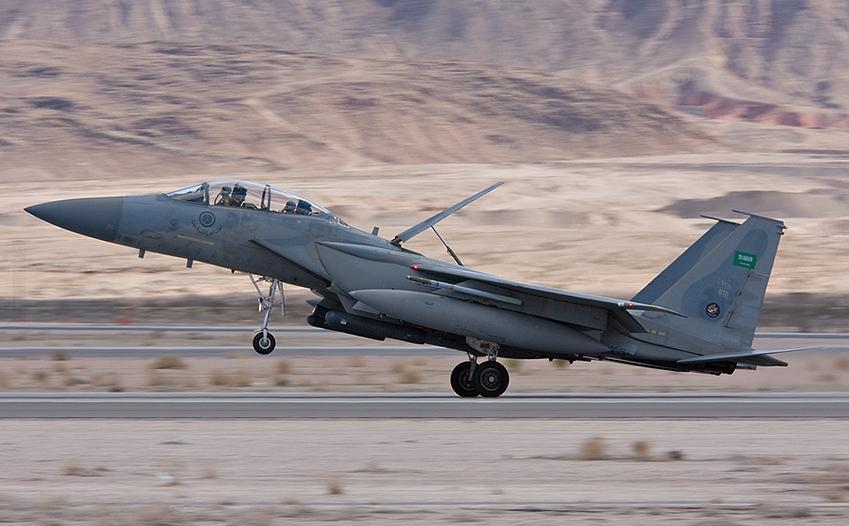
The analysis says the first wave of airstrikes, involving about 100 fighter jets, did not meet the stated military standards for success. Saudi Arabia has also officially acknowledged its participation in the air campaign.
It says Trump had called for direct and public Saudi participation in the operation up to 24 hours before the attacks, rather than merely behind-the-scenes support.
Expansion of the target bank
According to the analysis, F-15 fighter jets took off from Khamis Mushait, Taif and King Faisal Air Base in Tabuk.
The Tabuk base is described as strategically important because of its position near the front line of Saudi Arabia’s defenses close to the borders with Jordan and Israel. Its involvement in the operation, the analysis argues, effectively adds another Saudi air base to the potential target bank of Sana’a forces.
Limited ground penetration
Coalition spokesman Turki al-Maliki reportedly said that only limited ground penetration, covered by about 100 fighter jets, had taken place in the areas of Al-Hariqah and Dhubab Airport near the Bab al-Mandab Strait.
In response, Sana’a forces used missiles and drones to target military vehicles and equipment. The analysis claims that about 60% of Yemeni firepower reached its intended targets, while the effectiveness of coalition airstrikes was about 35%. It also claims that about 32% of the targets identified in advance by U.S. forces were subsequently altered.
These figures are presented as part of the analysis and have not been independently verified.
Missile attack on Abha sends message to coalition
Abha International Airport was also targeted by a ballistic missile. The analysis argues that the purpose of the attack was not to destroy the airport, but to disrupt civilian flights, send a political message and test the capabilities of air-defense systems.
While the coalition claims that the missile was intercepted, Yemeni forces have maintained that it struck its intended target.
The analysis also says that a concentration of forces at the Al-Dhaghareer camp in Jizan was targeted with several ballistic missiles.
Taiz emerges as a key battlefield
The analysis identifies Taiz as a central battleground, arguing that the outcome there could alter the balance of power on the ground.
At the same time, it says a red line has been drawn in southern Yemen to avoid direct confrontation with the Southern Transitional Council. Turkey has also sent its foreign minister to stress the need for a political solution.
The analysis describes the Bab al-Mandab Strait as a vital and decisive issue for Saudi Crown Prince Mohammed bin Salman.
“Depth for depth”
Abdelhamid Al-Aouni argues that one of the most dangerous equations emerging from the conflict is captured by the phrase “depth for depth,” attributed to a commander of Ansar Allah.
According to the analysis, missile attacks against King Faisal Air Base in Tabuk and other targets were intended to push back coalition forces and demonstrate that attacks on Yemeni territory could trigger strikes deep inside the coalition’s territory.
Al-Aouni also estimates the cost of the war to the coalition at hundreds of billions of dollars. He argues that around 100 fighter jets were used to move several military columns, while, from his perspective, a single missile was enough to disrupt an airport’s operations.