DID Press: New official data highlights that the United States’ heavy reliance on private vehicles, car-centric urban planning, and underdeveloped public transport system have contributed to a deepening road safety and economic crisis, resulting in tens of thousands of deaths and hundreds of billions of dollars in annual losses.
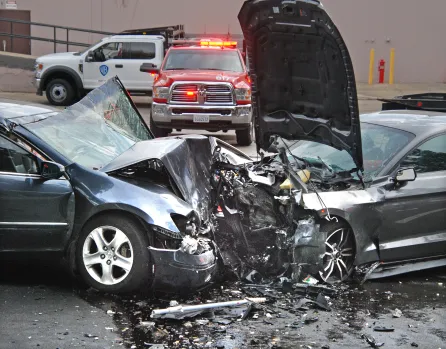
According to reported statistics, road traffic accidents in the United States remain among the deadliest in high-income countries. In 2024 alone, approximately 39,345 people were killed in road crashes, while more than 2.2 million were injured in 2023. Analysts attribute this persistent toll to structural dependence on cars, long commuting distances, high-speed highway design, and risky driving behavior.
Pedestrian fatalities are also a growing concern, with more than 7,000 deaths annually. Safety experts point to excessive vehicle speeds, distracted driving involving mobile phones, and alcohol use as key contributing factors. Urban design is frequently cited as a major factor, with many American cities built primarily around vehicle traffic rather than pedestrian mobility.
Traffic congestion imposes a significant economic burden. Drivers reportedly lose over 60 hours per year in traffic, with national productivity and fuel-related losses estimated at more than $85 billion annually. In some major cities, the annual economic cost per driver can reach up to $2,000 in wasted time.
Beyond time loss, the financial strain on households is substantial. Annual car insurance expenditures exceed $350 billion nationwide, while fuel costs per driver range between $2,000 and $3,000, with total national fuel spending surpassing $500 billion. Toll collection systems such as E-ZPass and EZ TAG generate an estimated $23 billion annually, automatically deducting fees from drivers as they enter highway systems.
Additional revenue is generated through traffic fines, with law enforcement collecting between $7 billion and $8 billion each year from violations.
Experts argue that these indicators reflect a systemic issue rather than a purely transportation-related challenge, rooted in long-standing urban development models and structural dependence on private automobiles, which continue to shape mobility, safety, and economic outcomes across the country.