“Parmakhtag” Showcase on the Ruins of Press Freedom in Afghanistan
DID Press: The reality of Afghanistan is not found in programming code of the ‘Parmakhtag’ website, but in the enforced silence of media outlets in Kabul and Herat, in the broken pens of exiled journalists, and in the eyes of girls deprived of their right to education behind closed school doors.
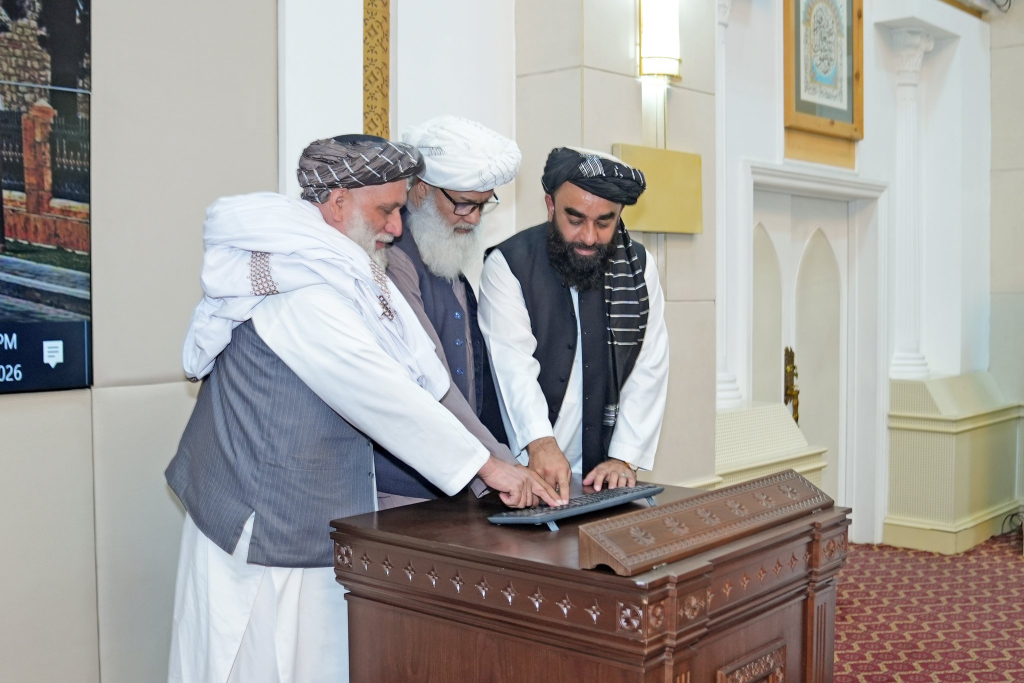
In today’s political geography of Afghanistan, concepts such as transparency and information access have become tools wrapped in state propaganda rather than expressions of democratic necessity. The Taliban’s recent launch of the “Parmakhtag” (Progress) website fits precisely within this framework. While Taliban spokesperson Zabihullah Mujahid presents the platform as a reliable source for media access to accurate information, the reality of Afghanistan’s media environment remains a systemically devastated landscape. This new website is not a step toward openness but a digital showcase for concealing ongoing repression beneath its surface layers.
To understand the depth of this contradiction, one must examine the state of press freedom under Taliban rule. While officials claim to facilitate access to information, Afghanistan has become one of the most dangerous countries in the world for journalists. Media outlets that once symbolized a vibrant civil society are either shut down, operate under strict intelligence censorship, or have been reduced to channels that only reproduce official statements. In such an environment, the launch of “Parmakhtag” effectively signals the end of investigative journalism and the beginning of an era of controlled, state-sanctioned reporting. Through this platform, the Taliban aim to declare that the only legitimate narrative about Afghanistan is the one filtered through their system.
The greatest paradox of this initiative lies in its claim to fight misinformation. In the Taliban’s logic, any report mentioning arbitrary arrests, torture of dissenters, or systematic exclusion of women from public life is labeled “enemy propaganda.” In reality, Parmakhtag functions as a mechanism designed to neutralize uncomfortable truths from the field. When local journalists are detained or silenced for reporting protests or widespread poverty, imposing a single mandatory information source amounts to monopolizing the narrative and suppressing independent voices.
The platform is intended to project an imagined Afghanistan where everything is progressing, while in reality half the population—women—remain deprived of education and employment and are erased from public visibility.
Moreover, the website reflects a tactical shift in the Taliban’s approach to information warfare. Recognizing that physical repression alone is insufficient, they are now attempting to engineer public perception in the digital space. However, what is overlooked is that public trust cannot be manufactured through digital platforms. As long as journalists live in fear of arrest, women are excluded from media participation, and censorship replaces inquiry, “Parmakhtag” will remain merely a symbolic label for Afghanistan’s historical regression, not a marker of progress.
By Sulaiman Saber | DID News Agency