How Taliban Exclusivism Is Reviving Afghanistan’s Secessionist Fault Lines
DID Press: Afghanistan after 2021 has once again entered a turbulent phase of redefining national identity and preserving its fragile ethnic mosaic. Following the Taliban’s return to power, many expected the group to adopt at least a symbolic framework for inclusive governance in order to gain domestic legitimacy. Yet the Taliban’s four-year record has demonstrated a strategy rooted in absolute monopolization of power, systematic exclusion of ethnic diversity, and political de-integration.
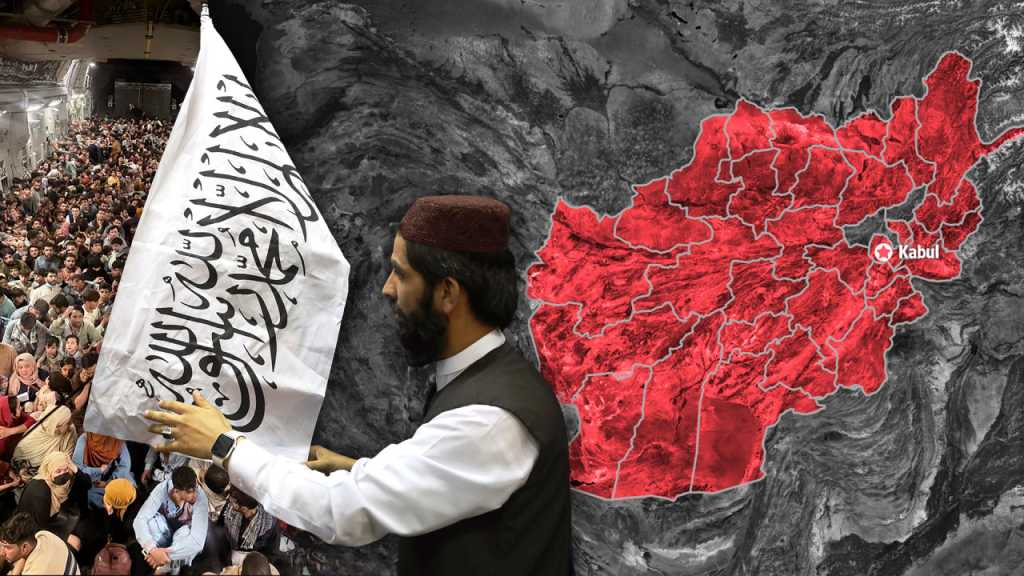
The natural consequence of this political closure has been the reactivation of long-dormant fault lines that are now emerging through unprecedented separatist rhetoric and calls for identity-based autonomous geographies such as “South Turkestan” or a “Hazaristan Republic.”
Death of the “Reform From Within” Concept
The first driver behind this development is the collapse of the idea that Afghanistan’s political system can be reformed from within.
Before the Taliban’s return, most non-Pashtun political movements focused on three core demands: fair participation in central government, administrative decentralization, and ultimately a transition toward federalism. Until recently, federalism represented the most radical proposal for resolving Afghanistan’s ethnic crisis.
However, the Taliban’s extreme concentration of power and categorical rejection of any participatory political formula have convinced many elites and ordinary citizens alike that political bargaining in Kabul has reached a dead end.
When no meaningful space remains for criticism or political inclusion, social frustration tends to gravitate toward the most radical alternative possible: territorial separation and independence.
Recent remarks by senior figures associated with the National Islamic Movement of Afghanistan suggest that parts of the opposition are no longer seeking a share of power in Kabul, but are instead discussing new political and geographic boundaries.
Identity Erosion and the Return to Ethnic Boundaries
A second factor is the perception of identity erasure and a retreat toward linguistic and ethnic lines.
Relying on a rigid ideological framework, the Taliban have pursued broad cultural homogenization policies. The marginalization of local languages such as Uzbek in northern administrative institutions, restrictive policies toward the Shiite community, and sweeping changes in the administrative structure of non-Pashtun provinces have intensified feelings of “occupation” among many ethnic groups.
In such an atmosphere, non-Pashtun communities increasingly feel not only excluded from political power, but also threatened in terms of their cultural and ethnic existence.
This sense of existential insecurity has transformed dormant ethnic grievances from cultural demands into what many now perceive as a struggle for survival.
The shift from broader narratives such as “Khorasanism” — which still envisioned a unified Afghanistan — toward concepts like an “independent Turkestan” reflects this growing radicalization.
Traditional Leaders and the Politics of Reinvention
Another important dimension is the effort by traditional political leaders to rebuild their influence.
Many of these leaders lost legitimacy and political leverage following the collapse of Kabul. Now, amid widespread public frustration, they are attempting to reconstruct their social bases.
They appear to understand that older political slogans no longer resonate with a society living under repression and economic hardship. In response, some ethnic leaders are increasingly invoking the concept of “self-determination” both to mobilize domestic support and to send signals to neighboring states.
A Growing Threat to the Afghan State
Ultimately, Taliban exclusivism has become a major catalyst for the erosion of the very concept of the Afghan nation-state.
By shutting down nearly all channels for political participation and dissent, the Taliban have unintentionally opened space for separatist narratives to gain intellectual and political traction.
While these radical responses are largely reactions to authoritarian centralization in Kabul, the broader implications are deeply alarming for the region.
Analysts warn that continued movement in this direction could push Afghanistan not toward stability, but toward a prolonged and destructive cycle of ethnic fragmentation, border conflicts, and competing enclaves of power.
By Sayed Baqer Waezi | DID News Agency