DID Press: Trump administration is facing mounting criticism over what analysts describe as a “diplomatic paralysis,” with more than 100 U.S. ambassador posts reportedly left unfilled worldwide, weakening Washington’s formal foreign policy apparatus.
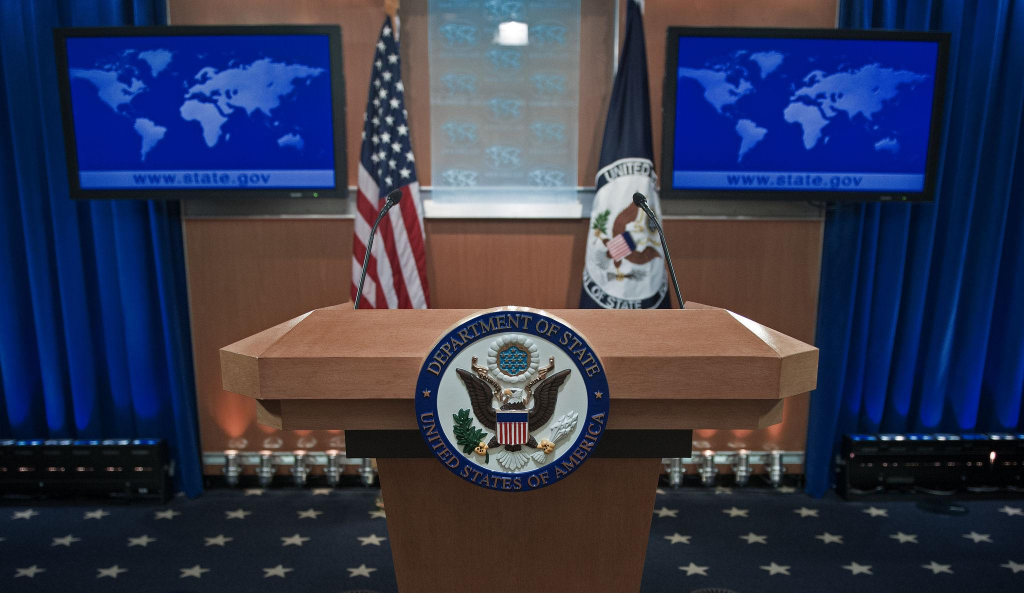
Recent assessments indicate that out of 195 U.S. ambassadorial positions, 115 remain vacant—an unprecedented gap that spans regions from the Middle East and Europe to Africa. According to analysts, the scale of vacancies reflects a structural shift away from professional diplomacy toward a reliance on personal envoys close to the president.
The administration has been accused of sidelining institutional diplomatic channels and replacing career diplomats with politically aligned figures and informal representatives. Critics argue this approach has contributed to what they describe as an operational breakdown in U.S. foreign policy coordination.
Despite Washington’s active involvement in global crises—from Iran–United States tensions to Lebanon and Ukraine—the report notes that the U.S. currently has no appointed ambassadors in key regional partners, including Saudi Arabia, the UAE, Qatar, Iraq, and Kuwait.
In Africa, the situation is similarly severe, with 37 out of 51 U.S. embassies reportedly operating without an ambassador. In Ukraine, a country at the center of ongoing geopolitical conflict, the U.S. has been without a full ambassador since spring 2025, relying instead on interim diplomatic staff.
Former diplomats cited in international media warn that chargé d’affaires cannot replace the authority and access of a confirmed ambassador, limiting Washington’s ability to respond effectively during crises and engage with senior foreign officials.
Analysts attribute part of the vacuum to internal political decisions, including the recall of several ambassadors, but say the broader cause lies in the administration’s distrust of traditional diplomatic institutions.
Instead, the White House has increasingly relied on a small circle of presidential envoys handling multiple portfolios simultaneously, a structure critics say concentrates foreign policy decision-making within the executive branch while marginalizing the State Department.
Foreign policy experts argue this model risks undermining long-term diplomatic stability, replacing structured negotiation frameworks with ad hoc, personality-driven engagement.