DID Press: New statistical analyses show that alcohol consumption remains widespread in the United States, although recent years have seen a gradual decline alongside significant public health, social, and economic consequences.
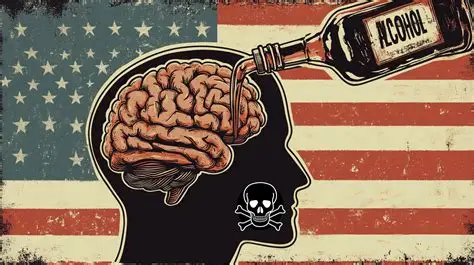
Overall consumption trends
According to data referenced from U.S. sources, about 62% of people aged 12 and older reported consuming alcohol in the past year, while around 46.6% reported drinking within the past month. More recent figures suggest that approximately 54% of adults consumed alcohol in 2025, indicating a modest downward trend.
Gender differences
Men show slightly higher annual consumption rates at 67.6%, compared to 65.4% for women. However, the most significant gap appears in heavy drinking patterns, where 24.9% of men and 18.7% of women reported binge drinking behavior.
Alcohol use among students
Among high school students, about 22% of 12th graders reported alcohol use, compared to roughly 10% in 10th grade and around 4% in 8th grade. In universities, consumption levels are significantly higher, with campus culture and social gatherings cited as contributing factors.
Economic costs and impact
Underage drinking alone is estimated to account for approximately $17.5 billion annually in alcohol purchases. Broader societal costs—including healthcare, accidents, and crime—are estimated to reach hundreds of billions of dollars each year. At the same time, the alcohol industry remains a major contributor to the U.S. economy.
Industry advertising and revenue
The alcohol sector in the U.S. generates substantial revenue, with billions spent on advertising across media platforms, social networks, and sports events. These campaigns are seen as a key factor in maintaining consumption levels and attracting younger consumers.
Health and social consequences
Alcohol consumption is linked to serious health issues such as liver disease, cancer, mental health disorders, and addiction. It is also associated with increased traffic accidents, domestic violence, and broader criminal activity. According to the Centers for Disease Control and Prevention (CDC), tens of thousands of deaths annually in the U.S. are linked to alcohol use.
Emerging trends
Despite its prevalence, overall consumption trends indicate a gradual decline in alcohol use in the U.S., attributed to increased health awareness, changing youth attitudes, and greater recognition of the risks associated with even moderate drinking.