DID Press: John Mearsheimer, a University of Chicago professor and prominent international relations theorist, has repeatedly criticised US policy towards the Islamic Republic of Iran, including economic sanctions, the maximum-pressure campaign and military threats. He argues that Washington has miscalculated Iran’s deterrent capabilities and strategic capacity, as well as the consequences of economic pressure and military action against the country.

Mearsheimer maintains that President Donald Trump’s policies towards Iran have failed to achieve Washington’s strategic objectives, instead escalating tensions and complicating the region’s security environment. His analysis focuses on the roots of the dispute between Tehran and Washington, Israel’s role in US Middle East policy, the limits of American military power and the consequences of maintaining a confrontational approach.
Iran Through the Lens of Realism: Security and Independence at the Centre of Foreign Policy
Mearsheimer analyses the behaviour of the Islamic Republic of Iran through the theoretical framework of realism. Under this theory, the international system lacks a central authority capable of guaranteeing the security of all countries. States must therefore rely on their domestic capabilities, defensive strength and the establishment of a balance of power against external threats to protect their survival and independence.
Within this framework, Iran’s foreign policy should be examined in the context of its regional security environment and historical experience with foreign powers. Mearsheimer argues that Tehran seeks to prevent the emergence of a regional security order dominated by the United States and Israel, in which Iran would be deprived of the ability to independently influence developments in its neighbourhood.
From this perspective, Iran’s development of missile capabilities, preservation of its nuclear capacity, expansion of ties with Russia and China, and strengthening of regional relationships form part of its strategic calculations to enhance deterrence and reduce vulnerability to external pressure.
Mearsheimer has also argued that Iran has not initiated a war in more than two centuries. In his view, this assessment points to the need to reconsider prevailing Western political narratives about the nature of Iran’s foreign policy.
The Islamic Revolution: A Turning Point in Iran’s Strategic Independence
In examining relations between Iran and the United States, Mearsheimer also points to the historical roots of mutual distrust. The 1953 coup against the government of Mohammad Mosaddegh and US support for Iraq during the eight-year Iran-Iraq War are among the factors that have shaped the Islamic Republic’s security perceptions of Washington’s policies.
Maximum Pressure: The Limits of US Strategy Against Iran
One of Mearsheimer’s central criticisms of US foreign policy is that the maximum-pressure strategy has failed to achieve Washington’s stated objectives.
He argues that the United States and Israel have been unable, over several decades, to use political, economic and military pressure to force the Islamic Republic of Iran to change its behaviour or abandon its political system.
In his assessment, reliance on air power and attacks on military and nuclear infrastructure alone cannot achieve objectives such as regime change or the destruction of Iran’s strategic capabilities.
Mearsheimer has applied the same argument to the 2026 military confrontation between the United States and Iran. He maintains that Washington’s military strategy has faced serious limitations and failed to achieve four principal objectives: completely halting uranium enrichment, eliminating Iran’s long-range missile capabilities, severing Tehran’s ties with its regional allies and changing the country’s political system.
According to Mearsheimer, Trump’s only achievement has been defeat against Iran. He argues that military attacks could also produce consequences contrary to the attackers’ initial objectives. External threats, he says, may strengthen domestic solidarity, increase support for the political system and weaken factions that favour compromise with the attacking side.
He has further warned that continued military threats could alter Iran’s security calculations and increase its incentive to strengthen nuclear deterrence. While he says there is insufficient evidence to establish that Tehran has made a definitive decision to build nuclear weapons, he believes mounting external pressure could influence Iran’s strategic calculations.
Iran’s Deterrent Capabilities: Geography, Missiles and the Strait of Hormuz
Mearsheimer identifies three principal elements underpinning Iran’s deterrent capabilities: its geographical position, missile strength and ability to influence regional energy security.
In his view, Iran’s vast territory, mountainous terrain, sizeable population and geographically dispersed infrastructure would make any large-scale ground operation by the United States extremely costly.
He argues that Washington lacks the military capability to occupy Iran and cannot achieve its strategic objectives through air strikes alone.
Alongside geography, Iran’s missile capabilities are another important element of deterrence in Mearsheimer’s assessment. He believes Iran’s ability to strike US military bases, targets in the occupied territories and sensitive regional infrastructure increases the potential cost of any military action against the country.
He also points to Iran’s capacity to target oil and energy facilities, as well as desalination plants in Gulf countries, arguing that such attacks could extend the consequences of a conflict beyond relations between Tehran and Washington.
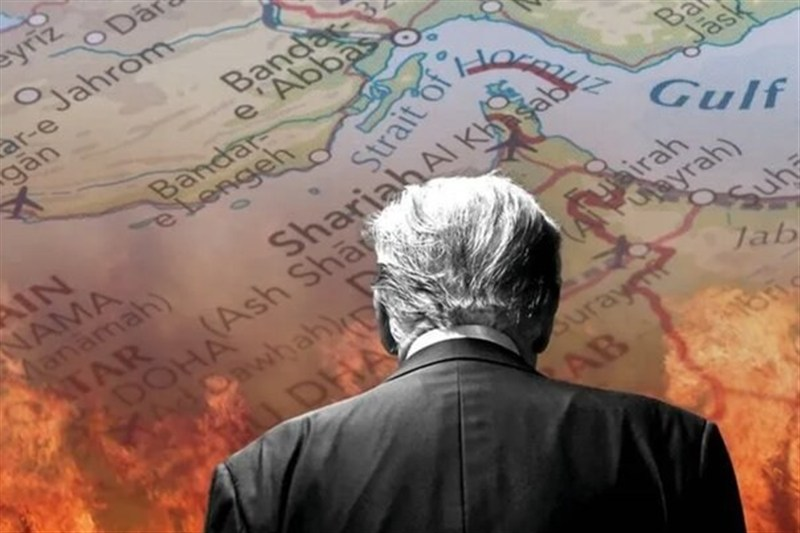
The Strait of Hormuz occupies a particularly important place in Mearsheimer’s analysis. The strategic waterway is one of the world’s main routes for transporting oil and energy, and any disruption to maritime traffic through it could affect global energy markets and the international economy.
Mearsheimer argues that Iran’s geographical position along the northern side of the strait gives it the ability to influence the security of energy transportation routes. From this perspective, threatening the security of the waterway could impose substantial economic and political costs on the United States and its allies.
He has also warned that an expansion of the conflict to other waterways, including the Bab al-Mandeb Strait, could intensify the energy crisis and spread its consequences to economies beyond the region.
Can Economic Pressure Work?
Alongside his opposition to military intervention, Mearsheimer has questioned the effectiveness of broad sanctions and efforts to impose an economic blockade on Iran.
He argues that maximum economic pressure could come closer to achieving Washington’s objectives only if major economic powers, particularly China and Russia, joined the campaign. Otherwise, Iran would retain opportunities to maintain some trade and economic relations with non-Western partners and circumvent certain restrictions.
In his view, attempts to completely isolate Iran’s economy are a high-risk strategy that could intensify the region’s economic crisis and increase global costs rather than change Tehran’s political calculations.
A central point in Mearsheimer’s analysis is the distinction between imposing economic costs on a country and achieving political objectives through such pressure. Sanctions may inflict substantial damage on Iran’s economy, he argues, but that does not necessarily mean they will succeed in changing Tehran’s strategic policies.
Qassem Soleimani’s Assassination: An Example of the Unintended Consequences of US Military Action
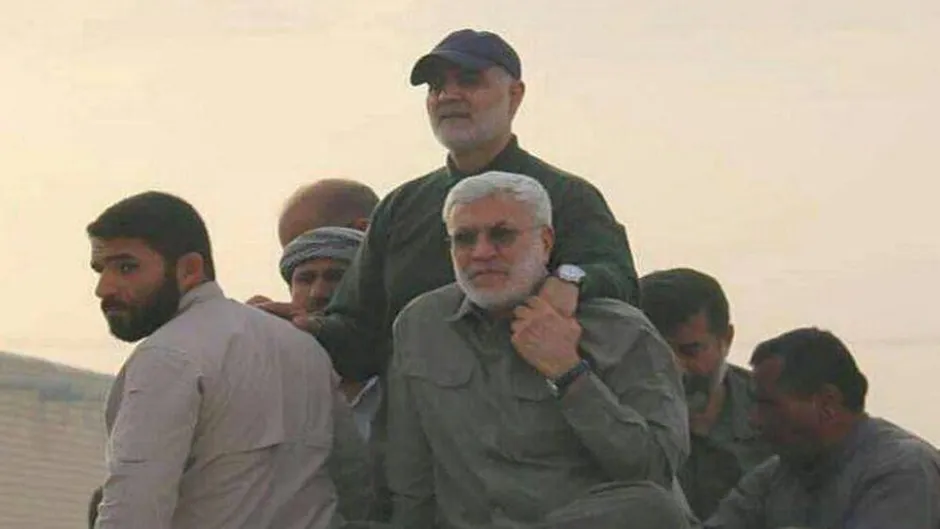
Mearsheimer’s positions on Iran are not limited to recent developments. In January 2020, following the assassination of Lieutenant General Qassem Soleimani, he described the US government’s decision as “remarkably stupid”.
At the time, he warned that Soleimani’s assassination could produce consequences contrary to Washington’s objectives, including increasing the likelihood that Tehran would move towards acquiring nuclear weapons, intensifying pressure for US forces to leave Iraq and weakening regional cooperation against the Islamic State group.
In Mearsheimer’s view, such actions demonstrate that US decision-makers sometimes fail to properly calculate the long-term costs of their military interventions.
He also emphasised the limitations of Israeli military power in his assessment of the 12-day war between Iran and Israel in June 2025, arguing that Tel Aviv could not achieve all its objectives on its own. He further maintained that US military intervention had also failed to eliminate Iran’s nuclear capabilities.
Overall, his assessment of these developments rests on a common principle: inflicting military damage on a country does not necessarily change its strategic calculations or force it into political submission.
Conclusion
Mearsheimer’s views on Iran are built around a central argument: the United States’ military and economic power does not necessarily translate into an ability to impose its political will on Iran.
From a realist perspective, the Islamic Republic’s strategic behaviour should be analysed in the context of its security concerns, the preservation of its independence and its efforts to prevent the emergence of a regional order dominated by the United States and Israel. Accordingly, the development of missile capabilities, preservation of nuclear capacity and strengthening of regional ties are regarded in Tehran’s calculations as instruments for enhancing deterrence and reducing vulnerability to external pressure.
By criticising maximum-pressure policies, economic sanctions and the military option, Mearsheimer stresses the difference between inflicting damage on a country and forcing it to change its political behaviour. Military attacks may target parts of a country’s infrastructure and capabilities, he argues, but they cannot necessarily eliminate the foundations of its power and deterrence. Such actions may also produce unintended consequences, including stronger domestic solidarity, increased incentives to develop defensive and nuclear capabilities, and the weakening of political currents that favour compromise.
Sources Listed in the Original Article
- John Mearsheimer, The Tragedy of Great Power Politics (2001), W. W. Norton.
- John Mearsheimer, The Great Delusion: Liberal Dreams and International Realities (2018), Yale University Press.
- John Mearsheimer and Stephen Walt, “The Israel Lobby and U.S. Foreign Policy,” London Review of Books, March 23, 2006.
- John Mearsheimer and Sebastian Rosato, How States Think: The Rationality of Foreign Policy (2023), Yale University Press.
- Glenn Greenwald, interview with John Mearsheimer on the US-Israeli war against Iran, Gaza and Trump’s foreign policy, June 24, 2025.
- John Mearsheimer, “America Cannot Defeat Iran,” July 12, 2026, official Substack page.
- John Mearsheimer, “The US Economy and the Iran War,” August 20, 2026.
- John Mearsheimer, “Will Economic Strangulation of Iran Succeed?”, August 23, 2026.
- John Mearsheimer, “The Mother of All Strategic Mistakes,” September 1, 2026.
- Chris Hedges and John Mearsheimer, “The Iran War and the Imminent Economic Collapse,” September 25, 2026.
- John Mearsheimer, “Yemen and the Horizontal Escalation of War,” October 6, 2026.
- Tom Switzer, Trita Parsi and John Mearsheimer, “Will Trump and Israel Attack Iran Again?”, November 1, 2026.
- John Mearsheimer, “Iran Will Not Surrender,” November 12, 2026.
By Masoud Balkhi – DID News Agency